

Babyproofing Checklist by Room: A Practical Home Safety Guide
Babyproofing is not about making a home look like a fortress. It is about noticing what becomes reachable as your baby rolls, crawls, pulls up, and explores with both hands and mouth.
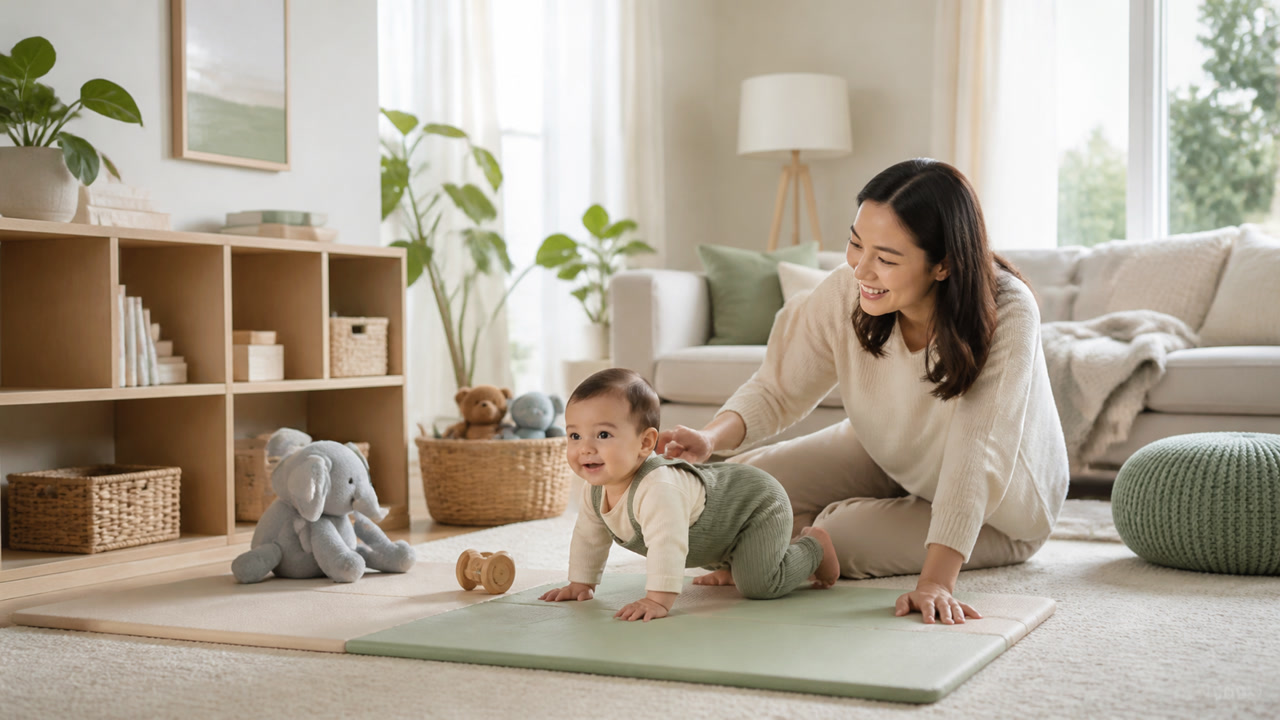
Start at your baby’s level. Sit or crawl through each room and look for cords, low shelves, unstable furniture, small objects, open containers, and items that could become reachable next month. Babyproofing works best as an ongoing habit because mobility changes quickly.
Living areas: secure the big things
Anchor bookcases, dressers, and TVs to the wall. Move breakables, cords, and small objects out of reach. Use outlet covers where needed, keep blind cords inaccessible, and create one simple floor zone where your baby can practice movement with you nearby.
- Check that shelves and lamps cannot tip or be pulled down.
- Keep batteries, coins, magnets, and small toy parts secured.
- Recheck coffee tables and low storage after every room reset.
Kitchen and bathroom: lock, lift, and stay close
Store medicines, cleaning products, sharp tools, and laundry pods high up or in locked cabinets. Turn pot handles away from the stove edge, empty buckets and tubs promptly, and never leave a baby alone near water, even briefly.
For water-specific routines, keep our baby bath safety guide nearby as a practical companion.
Bedroom and changing area: prepare before you begin
Keep supplies within arm’s reach before placing your baby on a changing surface. Even with a strap, keep one hand on your baby and never step away. Check crib setup regularly and use only a safety-approved sleep space.
Update as your baby changes
A new roll, crawl, or pull to stand changes the map of your home. Repeat the room scan after each new movement skill. If you are unsure about a product, setup, or exposure, ask your pediatrician or local poison control service for specific advice.