
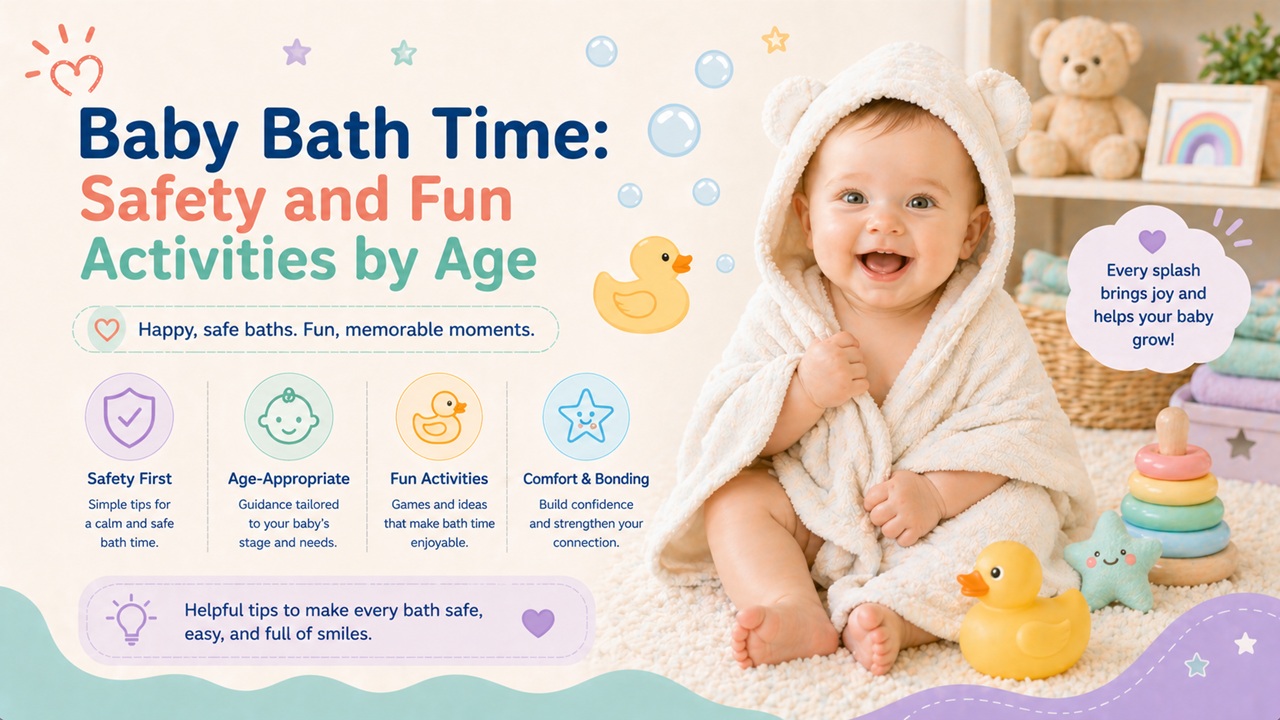
Baby Bath Time: Safety Tips and Fun Activities by Age
Bath time can be one of the most enjoyable parts of your daily routine — but only when safety comes first. Here's your complete guide to bathing your baby safely from newborn through toddlerhood.
Bath time is a daily ritual that evolves dramatically during the first year of life. What begins as a nerve-wracking sponge bath on the changing table transforms into a splashy, giggly highlight of the day. Understanding how to keep your baby safe at each stage — while maximizing the sensory learning and bonding that bath time provides — is one of the most practical skills a new parent can develop.
Bathing a Newborn: The Sponge Bath Phase
Until your baby's umbilical cord stump falls off (typically 1–3 weeks after birth) and any circumcision wound has healed, pediatricians recommend sponge baths rather than immersion baths. Lay your baby on a warm, padded surface — a changing table with a towel works well — and use a soft washcloth dipped in warm water to gently clean one area at a time, keeping the rest of the body covered with a dry towel to prevent chilling.
Focus on areas where moisture and milk collect: behind the ears, neck folds, under the arms, between fingers, and in diaper creases. Use plain warm water for the face and a tiny amount of fragrance-free baby cleanser for the body if needed. Newborns don't actually get very dirty, so sponge baths two to three times per week are sufficient — daily baths can strip the natural oils from their delicate skin.
Transitioning to the Tub
Once the cord stump has fallen off and healed completely, you can begin tub baths. For the first several months, a baby-sized tub or basin is far safer and more practical than the family bathtub. Choose one with a contoured interior or mesh sling that supports your baby in a semi-reclined position, keeping their head well above the waterline.
Fill the tub with only 2–3 inches (5–8 cm) of water. This is enough to keep your baby warm without creating a drowning risk. Many parents find it easiest to set the baby tub on a counter or table at a comfortable height rather than bending over the bathtub — just ensure it's stable and on a non-slip surface.
Water Temperature: The Critical Safety Factor
The ideal bath water temperature for babies is 37°C (98.6°F) — essentially body temperature. Water above 38°C (100°F) can scald a baby's thin, sensitive skin in seconds. Before every bath, test the water with your elbow or the inside of your wrist (these areas are more temperature-sensitive than your hands) or use a bath thermometer for certainty.
Set your home water heater to no higher than 48°C (120°F) to prevent accidental scalding if a hot tap is bumped during bath time. Always fill the tub by running cold water first and adding hot water to reach the right temperature, then swirl to eliminate hot spots before placing your baby in.
Essential Bath Supplies
- Baby tub or basin with non-slip surface
- Bath thermometer (inexpensive and invaluable)
- Two soft washcloths — one for washing, one for draping over baby's chest for warmth
- Fragrance-free baby wash — look for tear-free formulas
- Hooded towel — ready and within arm's reach before you begin
- Clean diaper and clothes — laid out and ready for after the bath
- Non-slip mat if using the regular bathtub
Gather everything before you start. Once your baby is in the water, you should never leave them or turn away — not even for a second.
Bathing Frequency by Age
Many new parents are surprised to learn that daily baths aren't necessary or even recommended for young babies. Over-bathing can dry out infant skin and disrupt its natural protective barrier.
- Newborn to 3 months: 2–3 times per week, with daily spot-cleaning of face, neck, and diaper area.
- 3–6 months: 2–3 times per week, increasing if your baby starts solids or gets particularly messy.
- 6–12 months: Every other day or daily once they're crawling, eating solids, and getting into everything.
- Toddlers: Daily baths become more practical as children explore outdoors and get genuinely dirty.
Making Bath Time Fun by Age
0–3 months: At this age, bath time is primarily about gentle sensory experience. Pour warm water slowly over your baby's body with a cup, sing softly, and make eye contact. The sensation of warm water and your calm voice is stimulation enough.
3–6 months: Introduce soft, squeezable bath toys and plastic cups for gentle pouring. Babies at this age begin to kick and splash intentionally — let them enjoy the cause-and-effect of making water move.
6–9 months: Stacking cups, rubber ducks, and simple pouring toys become favorites. Babies can sit with support and use both hands to explore objects in the water. Narrate what's happening — "The duck is swimming! Splash, splash!"
9–12 months: Interactive toys like water wheels, foam letters that stick to tile, and boats provide extended engagement. Older babies enjoy games like filling and dumping containers, and may resist getting out of the tub.
The One Rule That Saves Lives
Drowning is the leading cause of injury death in children ages 1–4, and it can happen in as little as one inch of water in under 60 seconds — silently, without splashing or crying. The single most important bath safety rule is absolute: never leave your baby unattended in or near water, not even for a moment.
This means no answering the phone, no running to grab a forgotten towel, no checking on an older sibling in another room. If you must leave, take your baby with you wrapped in a towel. Bath seats and rings are not safety devices — they can tip over and give a false sense of security. They are convenience tools only, and a parent's hands and eyes must remain on the baby at all times.
Common Concerns
Dry skin and eczema. If your baby has dry or eczema-prone skin, keep baths short (5–10 minutes), use lukewarm rather than warm water, choose fragrance-free cleansers sparingly, and apply a thick emollient or prescribed cream immediately after patting skin dry — within three minutes of leaving the water for maximum moisture retention.
Cradle cap. The flaky, yellowish scales on your baby's scalp are harmless seborrheic dermatitis. Gently massage the scalp with a soft brush or washcloth during bath time to loosen scales. A small amount of baby oil applied before the bath can help soften stubborn patches. Most cradle cap resolves on its own by 6–12 months.
Fear of the bath. Some babies suddenly develop bath anxiety, often around 6–9 months when stranger and separation anxiety peaks. Reduce water depth, let them play with water in a shallow basin first, bathe together (adjusting water temperature for baby), or try a brief shower while you hold them securely.
Building Bath Time into Your Routine with Magerly
A consistent bath time routine signals to your baby that sleep is approaching, making it a powerful tool for establishing healthy sleep habits. Magerly helps you build and maintain daily routines by tracking patterns and suggesting optimal timing based on your baby's age and schedule. You can log bath time alongside feeding, naps, and bedtime to visualize the complete daily rhythm.
As your baby grows, bath time milestones — sitting independently in the tub, first intentional splash, learning to pour — are all part of their developmental journey that Magerly helps you celebrate and remember.
Wrapping Up
Bath time is a unique opportunity that combines hygiene, sensory development, bonding, and pure fun into a few minutes of your day. By keeping the water warm (not hot), your hands on your baby (always), and the experience playful and calm, you're creating positive associations with self-care that will last a lifetime. Stay safe, have fun, and enjoy those slippery baby giggles.