
Tummy Time Guide: When to Start and How to Make It Fun
Tummy time is one of the simplest yet most important exercises for your baby's development. Here's everything you need to know about building strength, preventing flat spots, and keeping your little one happy face-down.
If you've spent any time in a pediatrician's waiting room or parenting group, you've heard the phrase "tummy time." It sounds simple enough — place your baby on their stomach while they're awake — but this deceptively basic activity is one of the most critical exercises for healthy motor development in the first year of life. Since the "Back to Sleep" campaign dramatically reduced SIDS rates in the 1990s, babies spend far more time on their backs, making intentional supervised tummy time essential for building the strength and coordination they'll need for every physical milestone ahead.
Why Tummy Time Matters
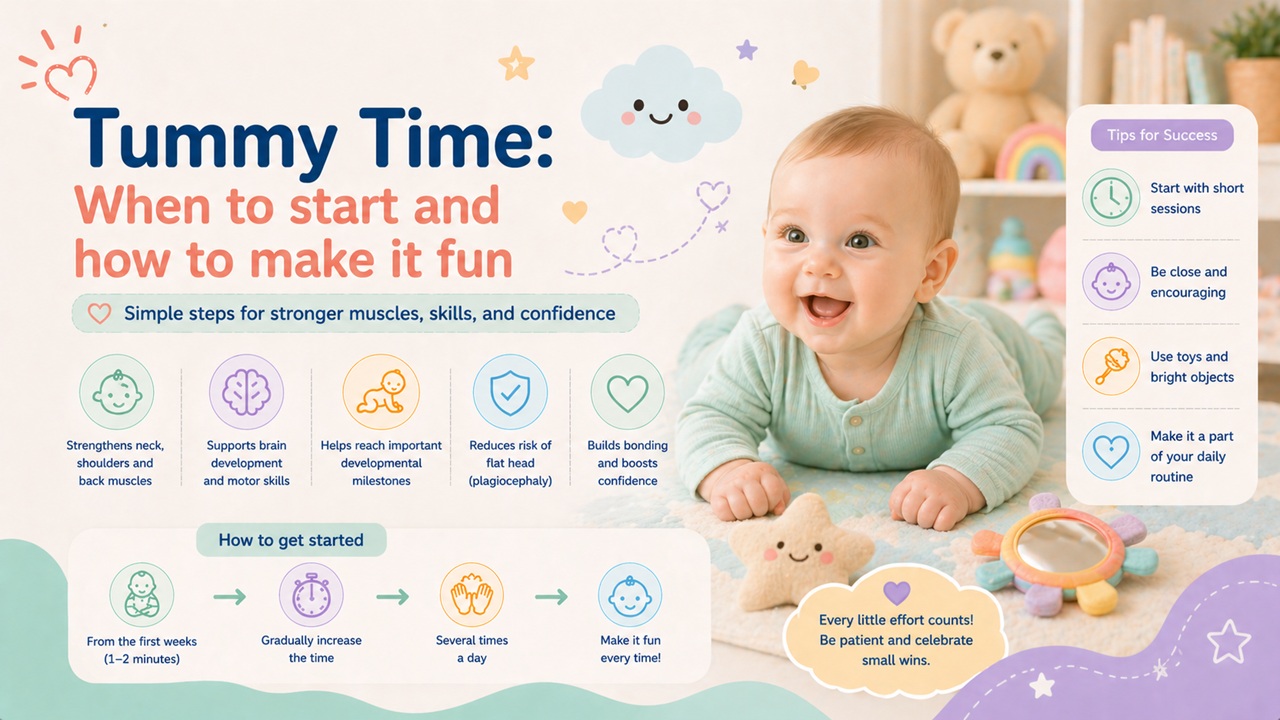
When a baby lies on their stomach, they must work against gravity to lift their head, push up on their arms, and eventually shift their weight. This effort strengthens the muscles of the neck, shoulders, upper back, and core — the same muscle groups required for rolling over, sitting up, crawling, and ultimately walking. Without adequate tummy time, babies may develop delays in reaching these gross motor milestones.
Beyond muscular development, tummy time helps prevent positional plagiocephaly — the flat spots that can develop on the back or side of a baby's skull from spending extended time in one position. It also promotes visual development by encouraging babies to track objects at different angles and distances, and provides early sensory experiences as they feel different textures against their hands, arms, and face.
When to Start
The American Academy of Pediatrics recommends beginning tummy time from the very first day home from the hospital. Newborns can do tummy time on a parent's chest (skin-to-skin counts!) while you recline at a slight angle. This position lets your baby feel secure while still working those neck muscles to turn their head and make eye contact with you.
For floor-based tummy time, you can begin as soon as your baby's umbilical cord stump falls off and any circumcision has healed — typically within the first two weeks. Start with very brief sessions of one to two minutes, two to three times per day, and gradually increase as your baby's tolerance grows.
How Long Per Session by Age
Tummy time duration should increase progressively as your baby builds endurance. Here's a general guide based on pediatric recommendations:
- Newborn to 1 month: 1–2 minutes per session, 2–3 times daily. Total daily goal: 3–5 minutes spread throughout the day.
- 1–2 months: 3–5 minutes per session, 3–4 times daily. By the end of this period, aim for 10–15 minutes total per day.
- 2–3 months: 5–10 minutes per session. Many babies begin to enjoy tummy time more as they gain head control.
- 3–4 months: 10–20 minutes per session. Your baby may start pushing up on their forearms (mini push-ups) and looking around with interest.
- 4–6 months: 20–30 minutes or more per session. By now, many babies can push up on extended arms, pivot in circles, and reach for toys.
- 6+ months: As much as your baby enjoys. Once babies are rolling freely and crawling, they naturally spend plenty of time on their bellies during play.
These are guidelines, not rigid rules. Some babies tolerate longer sessions earlier; others need more gradual building. The key is consistency — short, frequent sessions are more effective than one long session that ends in frustration.
Positions and Techniques
Tummy time doesn't have to mean placing your baby flat on the floor and hoping for the best. Several positions work well depending on age and temperament:
Chest-to-chest. Lie back in a recliner or prop yourself with pillows and place your baby tummy-down on your chest. This is ideal for newborns and fussy babies because your warmth, heartbeat, and face provide comfort and motivation to lift their head.
Lap position. Lay your baby across your thighs while you sit, with their head slightly higher than their hips. Gently pat or rub their back. This position works well after feeding (with a brief waiting period) because it can help with gas.
Football hold. Carry your baby face-down along your forearm, with your hand supporting their chest. This lets them experience the tummy-down position while you move around the house — a great option for babies who resist floor time.
Rolled towel support. Place a small rolled towel or nursing pillow under your baby's chest and armpits during floor tummy time. This slight elevation reduces the effort needed to lift the head and can make the experience more comfortable for younger babies.
Side-lying. While not technically "tummy" time, placing your baby on their side (supported by a rolled blanket behind their back) helps develop oblique muscles and offers variety. Always supervise and alternate sides.
Making Tummy Time Fun
The secret to successful tummy time is engagement. A bored or isolated baby will fuss; a stimulated baby will work harder and longer without realizing it.
- Get down on their level. Lie face-to-face with your baby on the floor. Make eye contact, talk, sing, or make silly faces. Your face is the most fascinating thing in their world.
- Use a mirror. A baby-safe floor mirror placed in front of your child captures their attention and encourages head lifting. Babies are endlessly fascinated by reflections.
- Rotate toys. Place brightly colored or high-contrast toys just out of reach to motivate reaching and pivoting. Crinkle toys, rattles, and textured balls are particularly effective.
- Try water mats. Inflatable tummy-time water mats provide visual stimulation with floating shapes and a cool, interesting texture that encourages exploration.
- Include siblings and pets. Older siblings playing nearby or a gentle family pet can provide entertainment that keeps baby engaged longer than any toy.
- Play music. Background music or singing gives your baby something to listen to and can set a positive, relaxed mood for the session.
When Your Baby Hates Tummy Time
It's extremely common for babies to protest tummy time, especially in the early weeks when the position feels unfamiliar and effortful. If your baby cries the moment you place them on their belly, know that you're not alone — and it doesn't mean something is wrong.
Start with the positions described above that feel less challenging (chest-to-chest, lap, football hold) and work toward floor time gradually. Keep sessions very short — even 30 seconds of tummy time "counts" — and always end on a positive note rather than waiting until your baby is in full meltdown mode. Try tummy time when your baby is well-rested and recently fed (but not immediately after a meal), and choose a time of day when they tend to be most content.
Consistency matters more than duration. A baby who does eight 30-second sessions throughout the day is building strength just as effectively as one who does a single four-minute stretch.
Connection to Crawling and Walking
Research published in the journal Pediatrics has demonstrated a clear correlation between the amount of supervised tummy time babies receive and the age at which they reach major motor milestones. Babies who get regular tummy time tend to roll, crawl, and pull to stand earlier than those who spend most of their awake time in containers (swings, bouncers, car seats).
The progression is logical: tummy time builds head control, which enables rolling, which strengthens the core for sitting, which develops the bilateral coordination for crawling, which builds the leg and hip strength for standing and walking. Each milestone creates the foundation for the next, and it all begins with those first minutes on the belly.
Safety Tips
- Always supervise tummy time — never leave your baby unattended face-down.
- Use a firm, flat surface. Soft mattresses, couches, and fluffy blankets create suffocation risks.
- Stop the session if your baby falls asleep. Roll them onto their back in a safe sleep environment.
- Avoid tummy time immediately after feeding to reduce spit-up.
- Keep small objects, loose fabric, and pet hair away from the tummy time area.
Tracking Tummy Time Progress with Magerly
Seeing progress over weeks can be motivating for parents who feel like tummy time is a daily battle. Magerly helps you log tummy time sessions and observe patterns — which times of day work best, how duration increases week over week, and how tummy time milestones (first head lift, pushing up on arms, pivoting) connect to the bigger developmental picture.
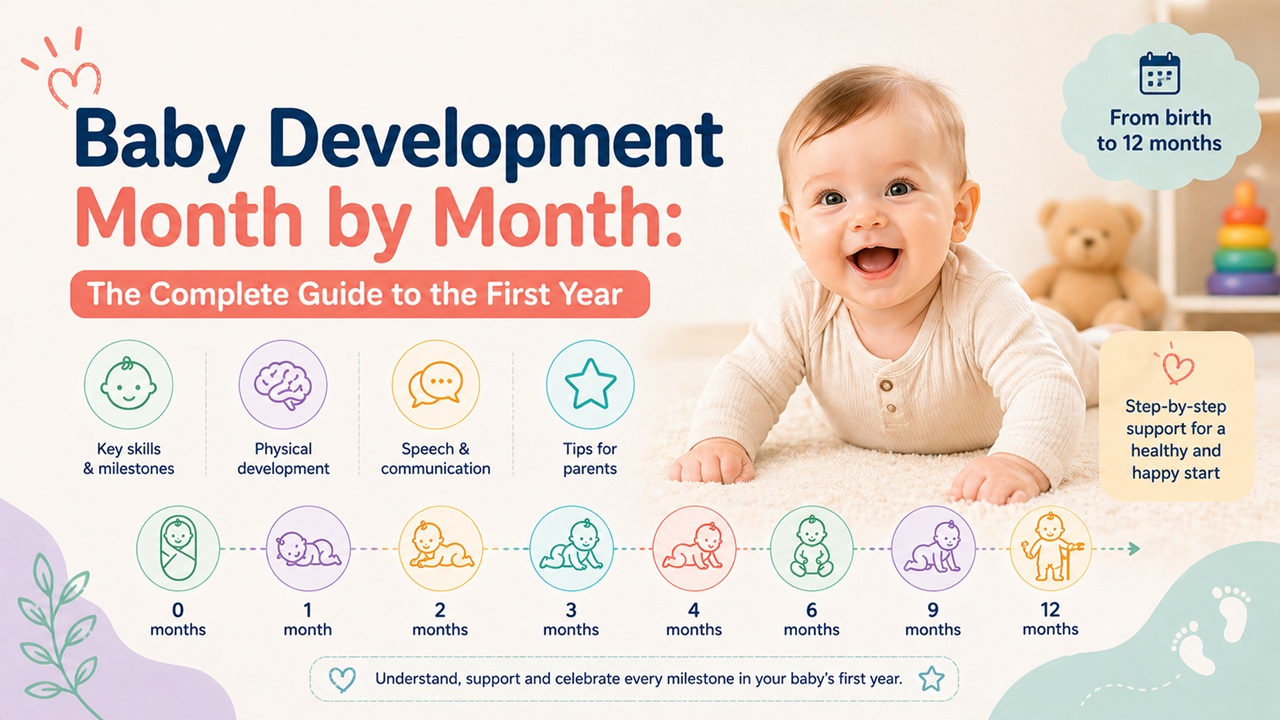
The app's milestone tracker includes all the physical achievements that tummy time supports, from the first wobbly head lift at two weeks to confident crawling at eight months. When you can see the trajectory mapped out, those frustrating early sessions feel a lot more worthwhile. Magerly also sends age-appropriate activity suggestions, including creative tummy time ideas tailored to your baby's current developmental stage.
Building a Strong Foundation
Tummy time is not glamorous parenting. There are no Instagram-worthy moments in those first few weeks of fussing and face-planting. But this humble daily practice is building the physical foundation your baby needs for every motor milestone that follows. Start early, stay consistent, get creative with positions and entertainment, and trust that the effort is paying off even when your baby would rather be anywhere else. Before you know it, they'll be pushing up, reaching, rolling, and launching themselves into a world of movement — all thanks to those minutes spent strengthening on their belly.