
First Year Milestones: Month-by-Month Baby Development Guide
A comprehensive month-by-month guide to what your baby will learn, from newborn reflexes to first birthday skills.
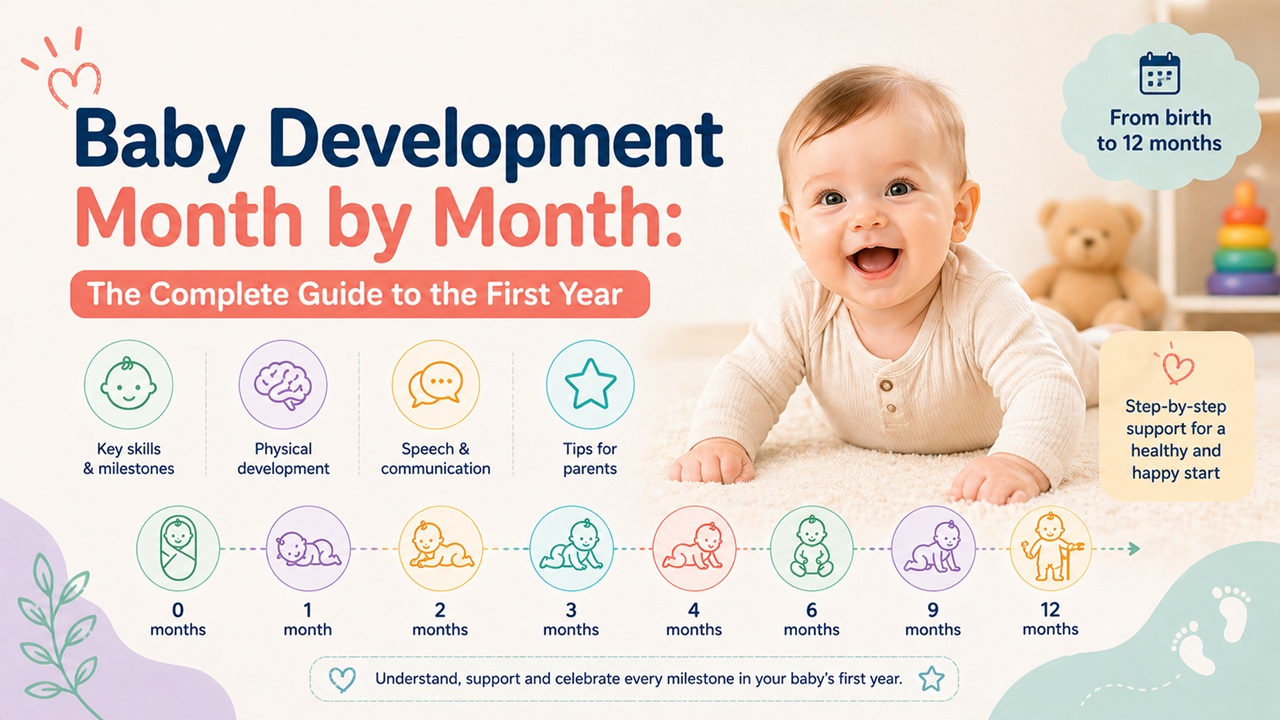
The first twelve months of a baby's life contain more rapid development than any other period in the human lifespan. In just one year, your child will transform from a newborn who can barely lift their head into a babbling, crawling, possibly walking little person with a budding personality. This guide walks through the key milestones you can expect month by month, while keeping one essential truth front and center: every baby develops at their own pace, and the ranges listed here are guidelines, not deadlines.
Month 1: The Adjustment Period
Your newborn enters the world equipped with a set of reflexes—rooting, sucking, grasping, and the startle (Moro) reflex. Vision is blurry, limited to roughly 8–12 inches, which happens to be the distance to a parent's face during feeding. Babies at this age can hear well and will turn toward familiar voices. Tummy time in short sessions (2–3 minutes a few times a day) begins building the neck strength that underpins every motor milestone to come.
Month 2: First Social Smiles
Around six to eight weeks, most babies produce their first intentional social smile—one of the most rewarding moments in early parenthood. Your baby begins to coo and make vowel-like sounds. Head control improves during tummy time, and your baby may briefly lift their head at a 45-degree angle. They start tracking moving objects with their eyes and may show fascination with high-contrast patterns.
Month 3: Growing Awareness
By three months, many babies can hold their head steady when supported upright. They begin to bring their hands together, swat at dangling toys, and discover their own fingers as objects of fascination. Socially, three-month-olds smile at familiar faces, enjoy being talked to, and may begin to laugh. Cooing becomes more varied, with chains of sounds rather than isolated vowels.
Month 4: Reaching and Grabbing
Four months often brings a significant leap in hand-eye coordination. Babies begin reaching for objects deliberately and may grasp a rattle placed in their hand. Rolling from front to back may start around this time. Your baby's personality becomes more visible—they express excitement by kicking and waving their arms, and they may show displeasure when a toy is taken away. Babbling with consonant sounds ("ba," "da") may begin.
Month 5: Becoming More Active
At five months, many babies can roll in both directions. They enjoy bouncing when held in a standing position on your lap. Object play becomes more sophisticated—babies transfer objects from hand to hand and bring everything to their mouth for oral exploration. Socially, your baby may begin to show wariness around unfamiliar people, an early sign of developing attachment.
Month 6: Sitting and Solid Foods
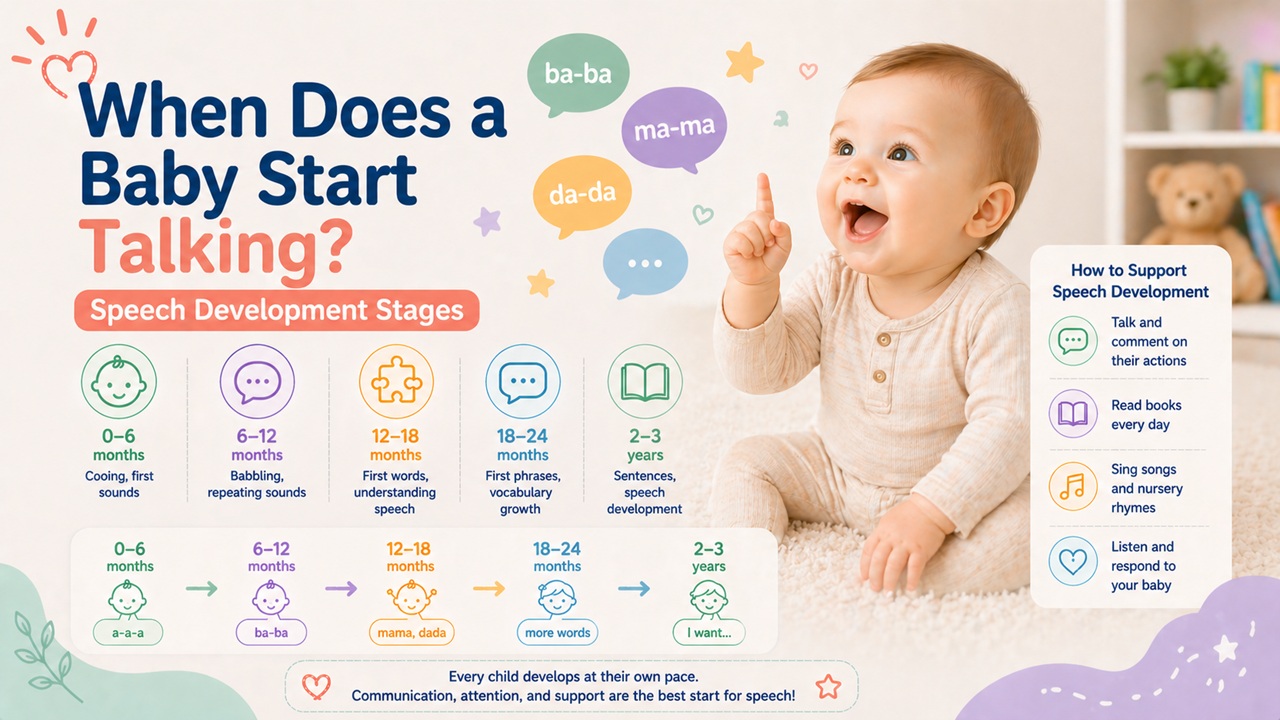
Six months is a major transition point. Many babies can sit with minimal support, and some sit independently. This milestone opens up a whole new perspective on the world. It is also the age at which most pediatricians recommend introducing solid foods alongside continued breastmilk or formula. Babbling becomes more complex, with repeated syllable strings ("bababa," "mamama"). Your baby understands their own name and turns when called.
Month 7: Exploring the Environment
By seven months, sitting is more stable and babies begin experimenting with movement—rocking on hands and knees, pivoting, or army-crawling. The pincer grasp (using thumb and forefinger together) begins to emerge, allowing your baby to pick up smaller objects. Object permanence is developing: your baby may look for a toy that has been partially hidden. Separation anxiety often intensifies around this age as attachment deepens.
Month 8: Crawling Takes Off
Many babies begin traditional hands-and-knees crawling around eight months, though some scoot, roll, or find other creative ways to get around. Pulling to stand using furniture may start. Babbling increasingly mimics the rhythm and intonation of real speech. Your baby understands simple words like "no" and "bye-bye" and may wave on cue. Games like peek-a-boo become a favorite, demonstrating growing memory and social awareness.
Month 9: Understanding Language
Nine-month-olds understand far more language than they can produce. They follow simple requests ("give me the ball"), point at objects they want, and use gestures to communicate. Fine motor skills advance—babies can pick up small pieces of food with a neat pincer grasp. Cruising (sidestepping while holding furniture) may begin. This is often the age when babies become little scientists, dropping objects repeatedly to observe cause and effect.
Month 10: Building Independence
At ten months, your baby is increasingly mobile and determined. Cruising becomes more confident, and some babies stand briefly without support. They can stack objects, place items into containers, and enjoy emptying things out. Language comprehension grows rapidly, and some babies produce their first meaningful word (often "mama" or "dada" used specifically for a parent). Imitation becomes more deliberate—your baby may try to brush their hair or talk on a toy phone.
Month 11: Almost a Toddler
Eleven-month-olds are on the cusp of several major milestones. Some take their first independent steps; others are content with speedy crawling. Vocabulary typically includes one to three words alongside a rich repertoire of gestures. Your baby understands simple commands and may cooperate with dressing (pushing an arm through a sleeve). Socially, they engage in back-and-forth play—rolling a ball to you and waiting for you to roll it back.
Month 12: The First Birthday
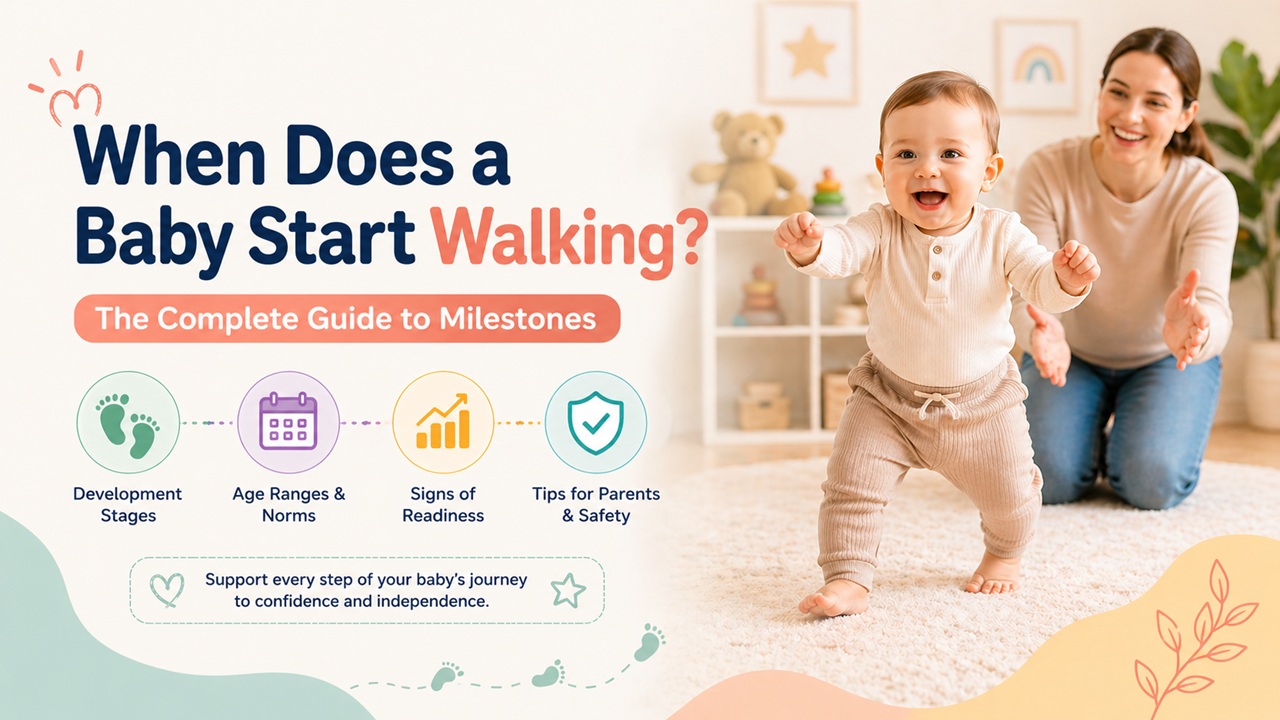
By twelve months, many babies are walking or very close to it. They typically say one to five words and understand dozens more. The pincer grasp is refined enough to pick up tiny crumbs. Your one-year-old shows clear preferences for people, toys, and foods. They engage in simple pretend play—feeding a doll, talking on a phone—and may show empathy by patting someone who appears upset. It is a remarkable transformation from the helpless newborn of a year ago.
Tips for Supporting Development
- Talk and read constantly. Language exposure in the first year has a proven impact on vocabulary development. Narrate your day, read board books, and respond to your baby's babbling as if having a conversation.
- Prioritize tummy time. It builds the core, neck, and shoulder strength that powers every gross motor milestone from rolling to walking.
- Follow your baby's lead. If they are fascinated by a crinkly wrapper, let them explore it (safely). Self-directed play is how babies learn best.
- Create a safe space for movement. Once your baby becomes mobile, baby-proof a room where they can crawl, cruise, and explore without constant redirection.
- Limit screen time. The American Academy of Pediatrics recommends avoiding screen time for children under 18 months (except video calls). Face-to-face interaction is far richer for developing brains.
Remember: Every Baby Has Their Own Timeline
Milestone charts, including this one, describe averages and ranges. Your baby may reach some milestones early and others later—that is completely normal. Premature babies should be assessed using their adjusted age. If you have concerns about any area of development, bring them up with your pediatrician. Early identification of delays leads to more effective early intervention, so never hesitate to ask.
How Magerly Tracks All These Milestones
Remembering which milestones to watch for at each age can feel impossible when you are sleep-deprived and juggling feedings and diaper changes. Magerly takes the mental load off by providing age-specific milestone checklists delivered right to your phone. As your baby grows, the app updates automatically to show you what to expect next, offers activity suggestions to support each developmental area, and lets you record achievements with a tap. Over time, you build a beautiful timeline of your child's first year—one you can look back on with pride and share with family or your pediatrician.