
Baby Teething Timeline: Signs, Symptoms, and Relief Tips
That first tooth is a milestone worth celebrating — even if it comes with a few tears. Here's everything you need to know about when teeth arrive, what to expect, and how to keep your baby comfortable.
Teething is one of those rites of passage that every baby (and parent) goes through, yet it remains surrounded by myths and misconceptions. Some babies breeze through it barely noticing; others have days of fussiness and disrupted sleep. Understanding the science behind teething helps you separate real symptoms from coincidences and respond with safe, effective remedies.
When Does Teething Start?
Most babies cut their first tooth between 4 and 7 months of age, though the range is wide. Some infants are born with a tooth already visible (natal teeth occur in about 1 in 2,000–3,000 births), while others don't see their first tooth until after their first birthday. Both extremes are typically normal.
Teething actually begins well before anything is visible. The tooth forms deep inside the jawbone and gradually migrates upward through the gum tissue. The pressure and inflammation involved in this process is what produces the classic teething symptoms — usually starting a few days before the tooth breaks through the gum surface.
Genetics play a significant role in timing. If you or your partner were early or late teethers, your baby may follow the same pattern. Premature babies may also teethe later when measured from birth date, though the timing is typically on track when adjusted for gestational age.
The Order of Tooth Eruption
While every child is unique, primary (baby) teeth generally arrive in a predictable sequence. Here is the typical order and timeline based on data from the American Dental Association:
- Bottom central incisors (2 teeth): 6–10 months. These are almost always first, and parents often discover them when the baby bites down during feeding.
- Top central incisors (2 teeth): 8–12 months. The classic "bunny teeth" that make for adorable photos.
- Top lateral incisors (2 teeth): 9–13 months. These flank the central incisors, completing the upper front row.
- Bottom lateral incisors (2 teeth): 10–16 months.
- First molars (4 teeth): 13–19 months. These are larger and can be more uncomfortable than incisors due to their broader surface area pushing through the gums.
- Canines (4 teeth): 16–23 months. The pointed "fang" teeth fill the gap between incisors and molars.
- Second molars (4 teeth): 23–33 months. The last to arrive, completing the full set of 20 primary teeth.
By age 3, most children have all 20 baby teeth. These teeth will serve them until they begin losing them around age 6, when permanent teeth start to take over.
Recognizing Teething Symptoms
Teething symptoms are real, but they're often milder and more localized than popular belief suggests. Research published in Pediatrics reviewed dozens of studies and identified the following as genuinely associated with teething:
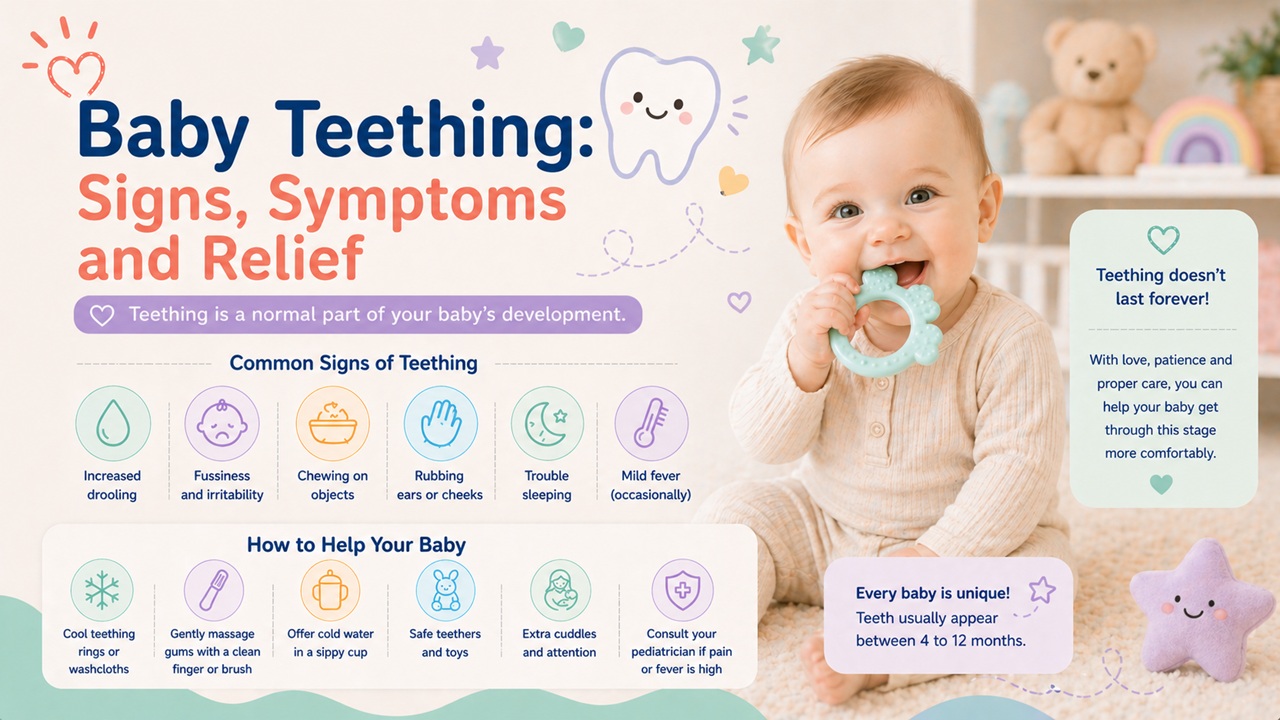
- Increased drooling: Saliva production ramps up as the body's natural response to gum inflammation. You may notice damp chins, bibs, and shirts.
- Gum swelling and tenderness: The gum tissue directly over an erupting tooth may appear red, swollen, or have a visible bluish bump (eruption cyst), which is harmless.
- Irritability and fussiness: Discomfort from gum pressure can make babies cranky, especially in the days immediately before a tooth emerges.
- Increased biting and chewing: Counter-pressure on the gums feels soothing, so babies instinctively gnaw on fingers, toys, and anything within reach.
- Sleep disruptions: Teething pain can cause temporary night wakings or shorter naps, particularly with molar eruptions.
- Decreased appetite: Sore gums may make sucking or chewing uncomfortable, leading to brief feeding reluctance.
- Mild rash around the mouth: Constant drool can irritate the skin on the chin and cheeks.
What Teething Does NOT Cause
This is important: teething does not cause high fever, diarrhea, severe rash, or respiratory symptoms. A large systematic review in the journal Pediatrics (2016) concluded that while teething may be associated with a very slight temperature elevation (below 100.4°F / 38°C), true fever — defined as 101°F (38.3°C) or higher — is not caused by teething.
The confusion arises because the peak teething period (6–24 months) coincides with the age when maternal antibodies wane and babies become more susceptible to infections. If your baby has a fever above 101°F, persistent diarrhea, vomiting, or seems genuinely ill, treat it as a potential illness and consult your pediatrician rather than attributing it to teething.
Safe Teething Relief Methods
The good news is that several simple, safe strategies can meaningfully ease teething discomfort:
Cold teething rings and washcloths. Chilled (not frozen) teething rings or a clean, damp washcloth placed in the refrigerator for 15–20 minutes provide soothing counter-pressure and gentle numbing. Avoid freezing teethers solid, as extreme cold can damage delicate gum tissue.
Gum massage. Using a clean finger, gently rub your baby's gums with firm, circular motions. The pressure counteracts the sensation of the tooth pushing through. Many babies find this immediately calming. Silicone finger toothbrushes designed for infants can also serve this purpose.
Chewing opportunities. Offer safe, age-appropriate items to chew on: silicone teethers, textured teething toys, or even a peeled, chilled cucumber for older babies who are already eating solids (always supervise to prevent choking).
Pain medication (when needed). For significant discomfort — especially with molars — infant acetaminophen (Tylenol) or ibuprofen (Motrin/Advil, for babies 6 months and older) can be used at appropriate doses. Always consult your pediatrician for dosing guidance based on your baby's weight, and avoid aspirin entirely for children.
Drool management. Keep a soft bib handy and gently pat (don't rub) the chin and neck dry. Applying a thin layer of petroleum jelly or lanolin to the chin can protect against drool rash.
Unsafe Remedies to Avoid
Several popular teething products have been flagged by the FDA and medical organizations as unsafe:
- Benzocaine (Orajel, Anbesol): Topical numbing gels containing benzocaine can cause methemoglobinemia, a serious condition that reduces the blood's ability to carry oxygen. The FDA advises against their use in children under 2.
- Lidocaine products: Viscous lidocaine can be accidentally swallowed in dangerous amounts, potentially causing seizures or heart problems.
- Amber teething necklaces: Despite marketing claims, there is no scientific evidence that amber releases succinic acid in therapeutic amounts. These necklaces pose genuine strangulation and choking risks. Both the AAP and FDA recommend against them.
- Homeopathic teething tablets: Some have been found to contain inconsistent and potentially dangerous levels of belladonna. The FDA issued warnings in 2016 and 2017.
Dental Care for Babies
Dental care should begin before the first tooth appears. Wipe your baby's gums with a soft, damp cloth after feedings to remove bacteria. Once the first tooth erupts, switch to a soft-bristled infant toothbrush with a rice-grain-sized smear of fluoride toothpaste, twice daily.
The American Academy of Pediatric Dentistry recommends scheduling your baby's first dental visit by their first birthday or within six months of the first tooth — whichever comes first. This initial visit establishes a dental home, allows the dentist to check for early issues, and gives you personalized guidance on oral hygiene.
Avoid putting your baby to bed with a bottle of milk, formula, or juice. Prolonged contact with sugary liquids leads to "baby bottle tooth decay," which can cause significant damage to primary teeth and affect the alignment of permanent teeth later.
Tracking Teething Milestones with Magerly
When you're managing a household and a teething baby simultaneously, it's hard to remember exactly when each tooth appeared. Magerly's milestone tracker includes teething events, letting you log each new tooth with the date and even a photo of that brand-new grin.
This record has practical value beyond the memory book. When your dentist asks about the eruption timeline at that first visit, you'll have precise dates. And if you're noticing patterns — like your baby always sleeping poorly when a new molar is on the way — the data in Magerly can help you connect the dots and prepare for the next one.
Keeping Perspective
Teething can be a trying period, but it's also temporary. Each tooth takes only a few days of active discomfort to break through, and the worst is usually over before you know it. By the time your child reaches age 3 with a full set of 20 gleaming baby teeth, those tough teething nights will feel like a distant memory.
In the meantime, arm yourself with safe remedies, keep your pediatrician's number handy for anything that seems unusual, and remember: every new tooth is a sign that your baby is growing exactly as they should. With tools like Magerly to track the journey, you'll look back on this time with a clear, detailed record of every tiny milestone — drool, tears, and all.