
Baby Nutrition and Breastfeeding: A Complete First Year Guide
Feeding your baby is one of the most fundamental and sometimes stressful aspects of new parenthood. This evidence-based guide walks you through every stage from birth to twelve months.
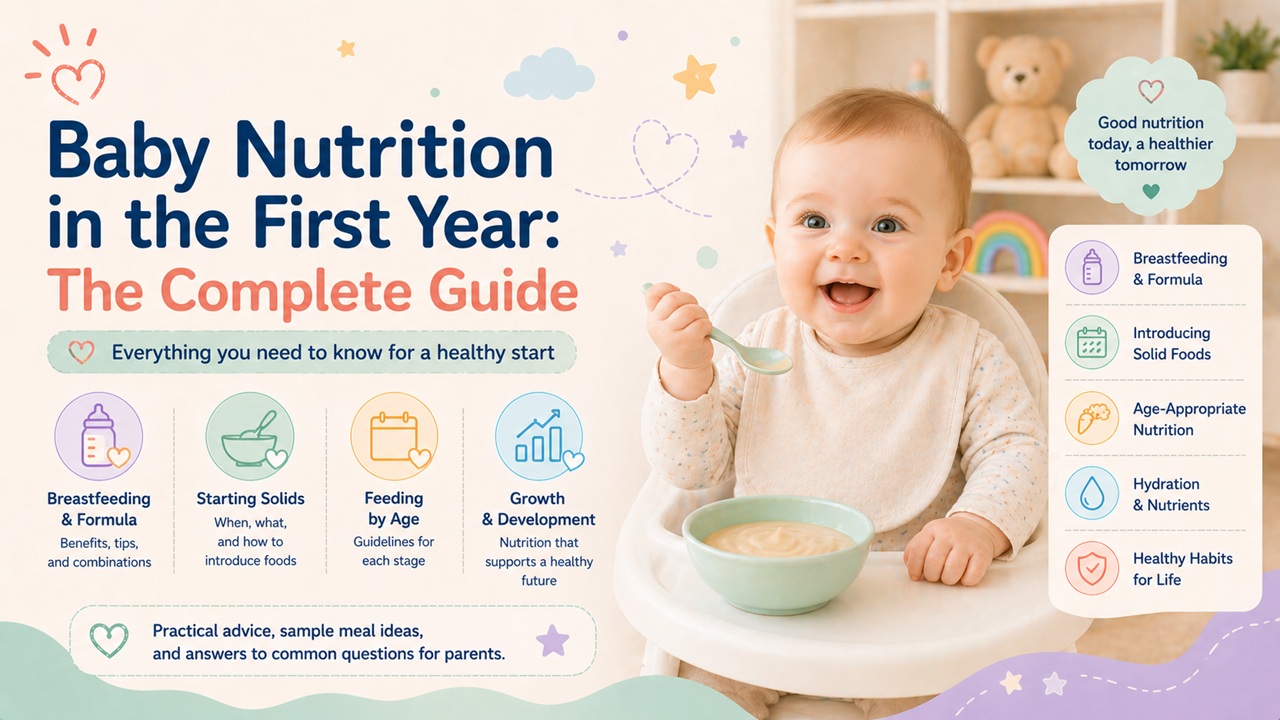
Nutrition during the first year of life lays the foundation for your child's growth, immune health, and even long-term dietary habits. Whether you breastfeed, formula feed, or combine both, understanding the evolving nutritional needs of your baby helps you make confident, informed choices at every stage.
Breastfeeding Basics and Benefits
Breast milk is uniquely engineered for human infants. It contains the ideal balance of proteins, fats, vitamins, and carbohydrates, and its composition shifts dynamically — not just over months, but within a single feeding session. The foremilk that flows first is thinner and more hydrating; the hindmilk that follows is richer in fat and calories.
The health benefits of breastfeeding are well established. The World Health Organization (WHO) and AAP both recommend exclusive breastfeeding for the first six months, continued alongside solid foods through at least twelve months. Research shows breastfed infants have lower rates of ear infections, respiratory illnesses, gastrointestinal infections, and SIDS. Longer-term studies suggest modest reductions in the risk of childhood obesity and type 2 diabetes.
Colostrum — the thick, yellowish fluid produced in the first few days — is sometimes called "liquid gold" for good reason. Packed with antibodies (particularly secretory IgA), white blood cells, and growth factors, it coats the newborn's digestive tract and provides critical early immune protection.
Practical tip: In the early weeks, expect to nurse 8–12 times per day. Frequent feeding is normal and essential for establishing milk supply. Lactation follows a supply-and-demand model: the more the baby nurses, the more milk the body produces.
Formula Feeding: What You Need to Know
Formula feeding is a safe, nutritionally complete alternative to breastfeeding. Modern infant formulas are carefully regulated and provide all the essential nutrients a baby needs for healthy growth. If breastfeeding isn't possible or isn't the right choice for your family, formula ensures your baby thrives.
Most formulas are cow's-milk-based, with the protein modified for easier digestion. Soy-based formulas are available for babies with cow's milk protein intolerance or families that prefer plant-based options. Specialized hydrolyzed formulas are designed for infants with allergies or severe reflux. Your pediatrician can help you select the right type.
Preparation safety: Always follow the manufacturer's mixing instructions precisely. Over-diluting formula reduces caloric and nutritional intake; over-concentrating can stress a baby's kidneys. Use clean, sterilized bottles for infants under three months, and never microwave formula (it heats unevenly and can cause burns).
Feeding Schedules by Age
0–1 month: Breastfed newborns nurse on demand, typically every 1.5–3 hours. Formula-fed newborns consume about 2–3 ounces per feeding, every 3–4 hours. In the first week, amounts start small (0.5–1 ounce) as the stomach is only the size of a marble.
1–3 months: Feeding frequency decreases slightly as stomach capacity grows. Breastfed babies nurse 7–9 times per day. Formula-fed babies take 4–5 ounces per feeding, 6–8 times daily. Total daily intake averages 24–32 ounces of formula.
3–6 months: Babies become more efficient feeders. Breastfeeding sessions may shorten but remain frequent. Formula intake stabilizes at around 6–8 ounces per feeding, 4–6 times daily. Total daily intake plateaus around 32 ounces — exceeding this rarely provides benefit.
6–9 months: Solid foods are introduced (more on this below), but breast milk or formula remains the primary calorie source. Milk feedings gradually decrease to 3–5 times daily as solid food intake increases.
9–12 months: Solids become a more significant part of the diet. Babies still need 24–30 ounces of breast milk or formula daily. Three structured meals plus 1–2 snacks alongside milk feedings is typical by the end of the first year.
Introducing Solid Foods at 6 Months
The current consensus from the AAP, WHO, and European Society for Paediatric Gastroenterology is that solid foods should be introduced around six months. Signs of readiness include: sitting upright with minimal support, showing interest in food, loss of the tongue-thrust reflex (which pushes food out of the mouth), and good head and neck control.
Start with single-ingredient foods, one at a time, waiting two to three days between each new food to monitor for allergic reactions. Iron-fortified cereals, pureed vegetables, and pureed fruits are all appropriate first foods. There's no evidence that introducing vegetables before fruits prevents a sweet preference — babies are born liking sweet flavors.
Texture should progress from smooth purees to mashed, then lumpy, then soft finger foods over the 6–12 month window. Delaying texture introduction past nine months has been associated with increased feeding difficulties later.
Baby-Led Weaning vs. Traditional Purees
Baby-led weaning (BLW) involves offering soft, age-appropriate finger foods from the start, allowing the baby to self-feed. Traditional weaning begins with spoon-fed purees and gradually increases texture. Both approaches are valid and evidence-based.
BLW proponents highlight that it encourages independence, exposes babies to varied textures early, and may support healthy appetite self-regulation. Critics note a potential choking risk and messier mealtimes. A 2016 randomized trial (the BLISS study) found no increased choking risk with BLW when parents were educated on safe food shapes and sizes.
Many families adopt a combined approach: offering purees alongside soft finger foods. There's no wrong method, as long as the baby is exposed to a variety of flavors and textures before their first birthday.
Common Food Allergies and Early Introduction
Current evidence has shifted dramatically regarding allergen introduction. Previous guidelines recommended delaying common allergens; updated recommendations from the AAP and LEAP study now advise early introduction — typically around 6 months — for peanut, egg, cow's milk products, tree nuts, wheat, soy, fish, and shellfish.
The landmark LEAP trial demonstrated that early peanut introduction (starting between 4–11 months) reduced peanut allergy risk by up to 80% in high-risk infants. Similar findings have been replicated for egg. Introduce allergens one at a time during a meal, at home, and observe for at least two hours. Signs of an allergic reaction include hives, vomiting, wheezing, or facial swelling — seek medical attention immediately if these occur.
Babies with severe eczema or an existing food allergy are at higher risk and may benefit from allergy testing before introduction. Discuss timing with your pediatrician.
Foods to Avoid in the First Year
- Honey: Risk of infant botulism. Avoid entirely before 12 months.
- Cow's milk as a drink: Not appropriate as a primary beverage before 12 months (though cooked dairy in foods is fine from 6 months).
- Added salt and sugar: Babies' kidneys cannot handle excess sodium, and early sugar exposure may shape long-term preferences.
- Choking hazards: Whole grapes, whole nuts, raw carrots, popcorn, hot dogs, chunks of hard cheese, and large spoonfuls of nut butter.
- Unpasteurized foods: Including certain soft cheeses and raw juices.
Hydration
Before six months, breast milk or formula provides all the hydration a baby needs — even in hot weather. Supplemental water is unnecessary and can actually be dangerous for young infants, as it can dilute electrolytes and cause water intoxication.
After six months, when solids begin, small amounts of water can be offered in an open cup during meals — about 2–4 ounces per day. Fruit juice is not recommended for infants under 12 months due to its high sugar content and lack of fiber compared to whole fruit.
Growth Spurts and Feeding
Babies go through growth spurts at roughly 2–3 weeks, 6 weeks, 3 months, and 6 months, though timing varies. During a spurt, your baby may feed much more frequently — sometimes seeming insatiable for 2–3 days. This cluster feeding is normal and, for breastfed babies, serves the dual purpose of satisfying increased caloric needs and signaling the body to increase milk production.
Using Magerly to log feeding sessions during these periods can help you see the pattern clearly: a sudden spike in feeding frequency followed by a return to baseline within a few days. This objective view can provide reassurance that your baby's behavior is a growth spurt, not a sign that something is wrong.
Tracking Feeding with Magerly
Keeping track of feeding times, amounts, and which breast was last used (for nursing mothers) can feel overwhelming in the sleep-deprived early weeks. Magerly's feeding tracker simplifies this with quick-tap logging for both breast and bottle feeds, duration tracking, and visual daily summaries.
The data becomes especially useful during pediatric visits, where your doctor may ask about feeding frequency and intake. Instead of guessing, you can share precise numbers. Parents who track feeding alongside growth measurements often find it easier to identify whether intake changes correlate with growth spurts or plateaus.
Nourishing Your Baby, Nourishing Yourself
Feeding your baby — however you choose to do it — is an act of love and a significant time investment during the first year. Breastfeeding mothers should prioritize their own nutrition and hydration, aiming for an extra 300–500 calories per day and abundant water. Formula-feeding parents should feel zero guilt about their choice; the science is clear that formula-fed babies grow up healthy and thriving.
As your baby transitions from an all-liquid diet to exploring the textures and flavors of real food, mealtimes become opportunities for bonding, learning, and even fun. Embrace the mess, follow your baby's cues, and remember that a diverse, relaxed approach to feeding in the first year sets the stage for a lifetime of healthy eating habits. And with Magerly keeping track of the details, you're free to focus on what matters most — enjoying these remarkable early months.