
How to Track Your Baby's Growth: Tips for New Parents
Practical advice on what to track, how often to measure, and the best tools to monitor your baby's development.
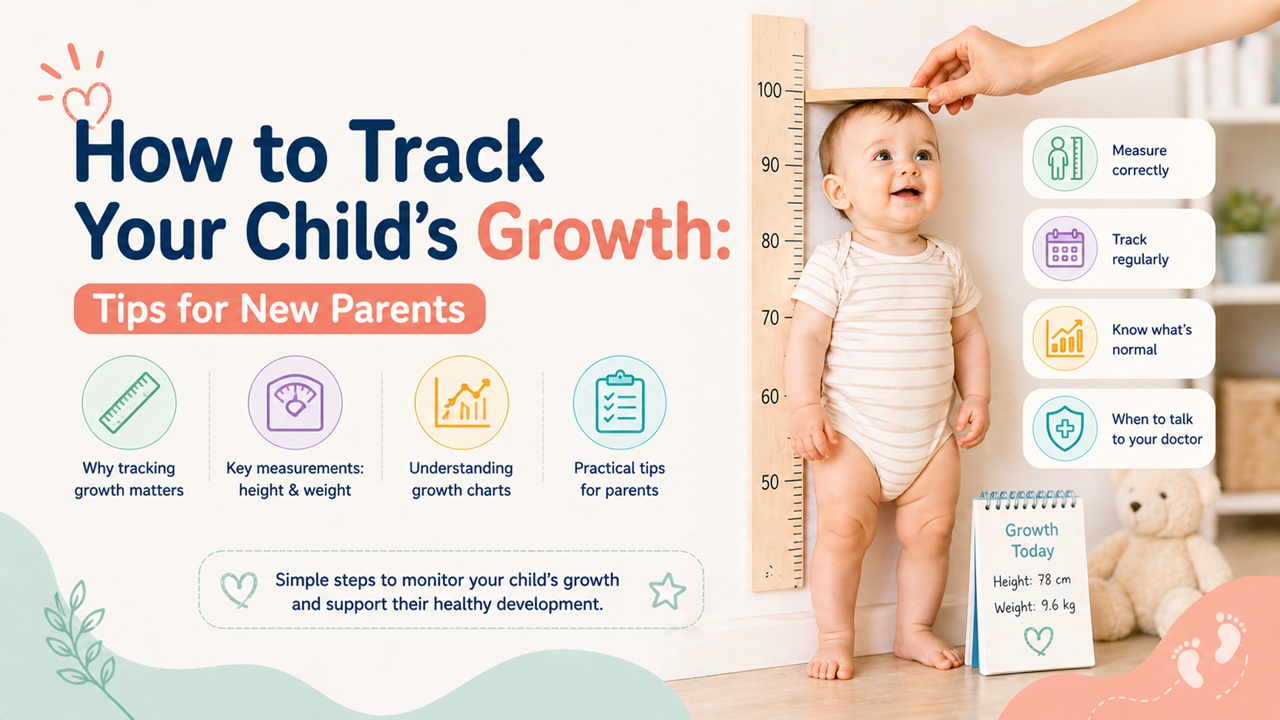
From the moment your baby is born, healthcare providers begin measuring and charting their growth. But growth tracking does not end at the pediatrician's office. Understanding what to measure, how often, and how to do it accurately at home empowers you to be an active partner in monitoring your child's health. Whether you are a first-time parent or adding a new sibling to the family, these practical tips will help you track your baby's growth with confidence.
What Measurements to Track
Three core measurements form the basis of pediatric growth monitoring during the first two years:
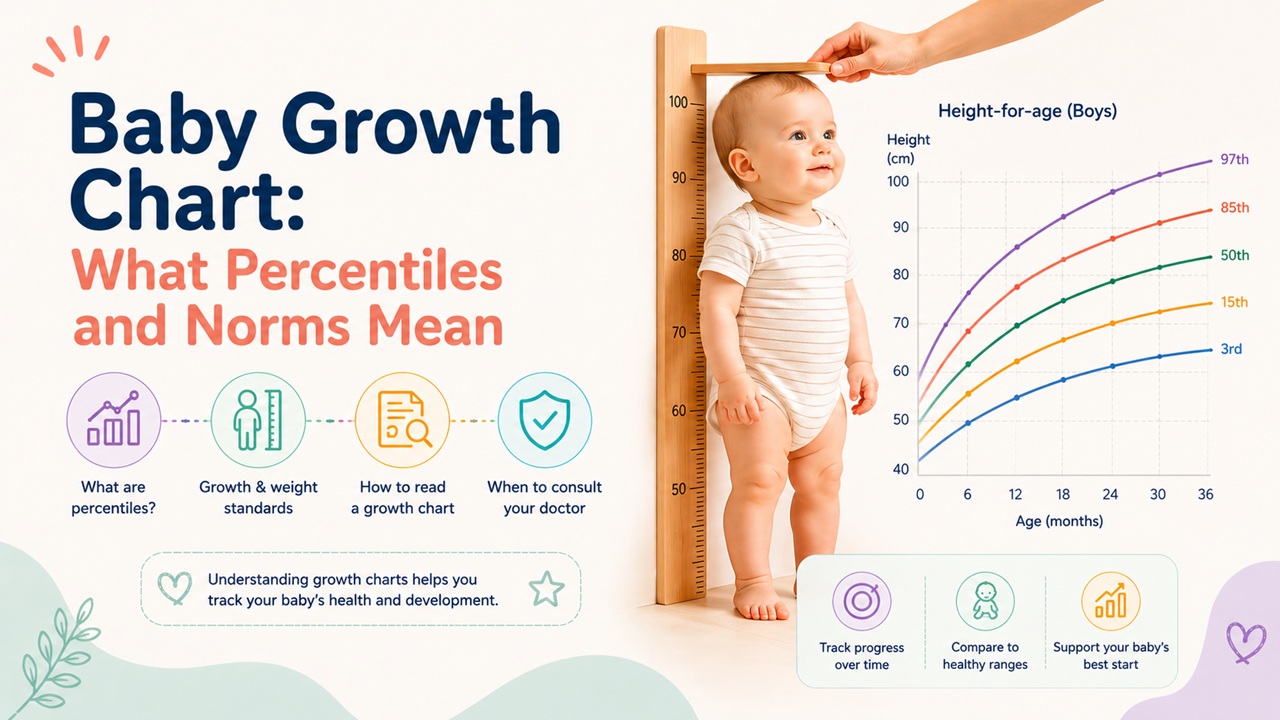
Weight is the most sensitive indicator of short-term nutritional status. In the first few days of life, babies typically lose 5–10% of their birth weight before regaining it by around two weeks. After that, most infants gain roughly 150–200 grams (5–7 ounces) per week during the first three months, with the rate gradually slowing as they grow.
Length (measured lying down until age two) reflects long-term nutrition and genetic growth potential. Babies typically grow about 25 centimeters (10 inches) during the first year. Length is harder to measure accurately at home than weight, which is why pediatrician measurements are especially valuable for this metric.
Head circumference is a proxy for brain growth and is routinely measured at well-child visits during the first two years. While you may not measure this at home, knowing your baby's numbers and how they trend over time is important. Your pediatrician will flag any concerns.
How Often Should You Measure?
Your pediatrician will weigh and measure your baby at every well-child visit, which typically occur at 1, 2, 4, 6, 9, 12, 15, 18, and 24 months. Between visits, a reasonable home schedule depends on your baby's age and health status:
- Newborns (0–3 months): Weekly weight checks can be reassuring, especially if you are breastfeeding and want to confirm adequate milk intake. Many communities offer free weigh-in clinics at lactation centers or public health offices.
- Infants (3–12 months): Monthly weight checks are generally sufficient for a healthy, thriving baby. If your pediatrician has raised concerns about growth, they will advise a more frequent schedule.
- Toddlers (12+ months): Growth slows considerably in the second year. Measurements at well-child visits (every three to six months) are typically enough unless there are specific concerns.
One important caveat: avoid the temptation to weigh your baby daily. Normal fluctuations due to feeding, diaper status, and time of day can create misleading swings that cause unnecessary anxiety.
Best Practices for Accurate Home Measurements
Consistency is the key to meaningful home measurements. Small variations in technique can produce numbers that look alarming when they are really just measurement error.
Weighing your baby: Use a dedicated infant scale for the most accurate results. Place the scale on a hard, flat surface (not carpet). Weigh your baby at the same time of day, ideally before a feeding and with a clean diaper or naked. If you do not have an infant scale, you can use the "tare method" on a regular scale: step on the scale holding your baby, then step on alone, and subtract the difference. This is less precise but adequate for tracking trends.
Measuring length: This is notoriously tricky because babies do not tend to lie still in a perfectly straight line. Lay your baby on a flat surface and gently straighten their legs. Mark the positions of the top of the head and the bottom of the heel, then measure the distance between the marks. Having a second person help hold the baby's head in position makes a significant difference. Do not use a soft measuring tape stretched along a squirming baby—the results will be unreliable.
Measuring head circumference: Wrap a flexible, non-stretchable measuring tape around the widest part of your baby's head—typically just above the eyebrows and ears, around the most prominent part of the back of the skull. Measure three times and record the largest number. This measurement is most accurately done by your pediatrician, so home measurements are optional.
Digital vs. Paper Tracking
For decades, parents recorded measurements in baby books or on printed growth charts. Paper tracking still works, but digital tools offer significant advantages:
- Automatic plotting: Digital apps plot measurements on standardized growth charts instantly, so you can see trends without doing manual calculations.
- Portability: Your phone is always with you, which means you can record a measurement the moment you take it rather than trying to remember the number later.
- Shareability: Digital records can be easily shared with your pediatrician, co-parent, or other caregivers.
- Contextual reminders: Apps can remind you when it is time for a measurement or a well-child visit, reducing the chance of a missed appointment.
Paper books have their charm—they are tangible keepsakes—but for practical growth monitoring, a dedicated app is hard to beat.
Benefits of Consistent Tracking
Growth tracking is not about achieving a particular number or percentile. Its value lies in revealing patterns over time. Consistent records allow you to:
- Confirm that your baby is following a healthy growth trajectory rather than relying on a single snapshot.
- Spot early signs of issues such as faltering growth or unusually rapid weight gain, which are only visible when you compare data points across weeks and months.
- Provide your pediatrician with between-visit data that enriches the clinical picture.
- Build confidence in your parenting by seeing tangible evidence that your baby is thriving.
Using Magerly as Your Growth Tracking Tool
If you are looking for a straightforward way to log and visualize your baby's growth, Magerly was built exactly for this purpose. The app lets you record weight, length, and head circumference measurements in seconds and plots them on WHO-referenced growth charts right on your phone. You can track multiple children, view trend lines at a glance, and access daily expert tips about nutrition and development that are personalized to your baby's age. When it is time for a pediatrician visit, having a clean, organized growth history in your pocket makes the conversation more productive and helps ensure nothing gets overlooked.
Tips for Pediatrician Visits
Well-child visits are your best opportunity to discuss growth and development with a professional. A few practices can help you make the most of them:
- Bring your data. Whether you use a notebook or an app like Magerly, having your between-visit measurements available gives the pediatrician a fuller picture.
- Write down your questions beforehand. It is easy to forget what you wanted to ask when you are wrangling a wiggly baby in a busy office.
- Ask about trends, not single numbers. Instead of asking "Is the 25th percentile okay?" ask "Is my baby growing consistently along their curve?"
- Discuss feeding. Growth and nutrition are inseparable, so share any feeding challenges or changes (transitioning to solids, for instance) with your provider.
- Trust your instincts. If something feels off—even if the numbers look fine on paper—mention it. Parental intuition is a valid clinical data point.
Final Thoughts
Tracking your baby's growth does not need to be stressful or time-consuming. A few minutes each week or month to record key measurements, a reliable tool to visualize the data, and a good relationship with your pediatrician are all you need. The goal is not perfection—it is awareness. When you understand your baby's growth story, you are better equipped to support their health and celebrate every ounce gained and every centimeter grown.