
When Do Babies Roll Over? Complete Development Guide
Discover the typical rolling timeline, signs your baby is ready, and how to safely encourage this exciting motor milestone.
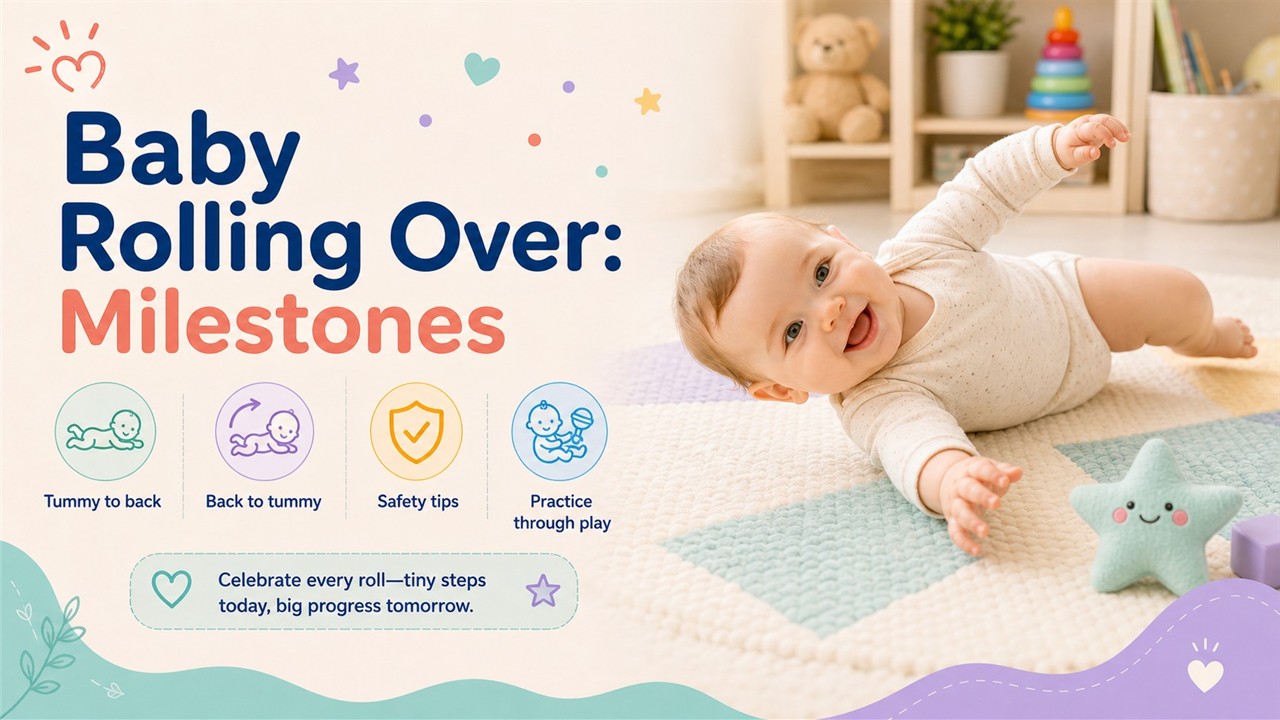
Rolling over is one of the first major motor milestones your baby will achieve, and it marks the beginning of independent movement. That first roll—whether from tummy to back or back to tummy—signals that your little one is building the strength, coordination, and body awareness needed for all the physical milestones that follow, from sitting to crawling to walking.
The Typical Rolling Age Range
Most babies begin rolling over between 3 and 6 months of age. The first roll usually happens from tummy to back, often around 3 to 4 months, because babies can use their arms to push up and gravity helps them tip to one side. Rolling from back to tummy typically comes a bit later—around 5 to 6 months—since it requires more core strength and coordination to lift against gravity.
However, every baby develops on their own schedule. Some babies roll early at 2 months (often catching parents by surprise on the changing table), while others don't roll consistently until closer to 7 months. Both scenarios can be perfectly normal. Premature babies should be assessed using their adjusted age when evaluating milestone timelines.
Signs Your Baby Is Getting Ready to Roll
Rolling doesn't happen overnight. Before that first roll, you'll likely notice several preparatory behaviors:
- Head control: Your baby can hold their head steady when held upright and lifts their head during tummy time. This is the foundation for all rolling.
- Mini push-ups: During tummy time, your baby pushes up on their forearms or even straightened arms, lifting their chest off the surface.
- Rocking side to side: You may notice your baby shifting weight from one side to the other during tummy time, or arching their back while on their tummy.
- Hip lifting: When on their back, your baby may lift their hips or bring their feet to their mouth, building the core strength needed for back-to-tummy rolls.
- Reaching across midline: When your baby reaches for a toy across the center of their body, they're practicing the weight shift that leads to rolling.
Tummy-to-Back Rolling
This is typically the first type of roll babies master. During tummy time, a baby pushes up on their arms and accidentally (at first) tips to one side, using the momentum of their heavy head to complete the roll onto their back. Early tummy-to-back rolls often surprise the baby as much as the parent.
Over the following days and weeks, what started as an accident becomes intentional. Your baby learns to push off with one arm while turning their head, using the weight shift to roll smoothly from front to back. This usually becomes consistent by 4 months.
Back-to-Tummy Rolling
Rolling from back to tummy is more challenging because the baby must generate momentum against gravity without the leverage of pushing off the floor. This roll requires strong core muscles, hip flexors, and coordination between the upper and lower body.
You'll typically see your baby practice by lifting their legs high, grabbing their feet, and rocking to the side. Eventually, they'll swing one leg across their body and use that momentum to pull the rest of their body over. Once babies master this roll (usually around 5-6 months), they often start combining both directions to move across the floor—their first form of independent locomotion.
Safety Considerations
Once your baby shows any signs of rolling, safety adjustments become essential:
- Never leave baby unattended on elevated surfaces. Once rolling begins, changing tables, beds, and couches are all fall risks. Always keep one hand on your baby or move diaper changes to the floor.
- Adjust the sleep environment. The AAP recommends always placing babies on their backs to sleep. Once a baby can roll both ways independently, they can be left in whatever position they roll into—but the crib should be free of blankets, pillows, bumpers, and stuffed animals.
- Stop swaddling. Once your baby shows signs of rolling, it's time to transition out of the swaddle. A swaddled baby who rolls face-down cannot use their arms to push up or reposition, creating a suffocation risk. Transition to a sleep sack with arms free.
- Supervise floor time. A rolling baby can move farther than you expect. Ensure the floor area is clear of small objects and hazards.
How to Encourage Rolling
While you can't force a baby to roll before they're developmentally ready, you can create conditions that support the skill:
- Prioritize tummy time. Aim for 15-30 minutes of supervised tummy time spread throughout the day. This builds the arm, neck, and core strength essential for rolling.
- Use toys as motivation. Place an interesting toy slightly to one side during tummy time, encouraging your baby to shift weight and reach—the precursor to rolling.
- Gently guide the motion. You can place your hand on your baby's hip and gently help them experience the rolling motion so they understand the movement pattern.
- Give them floor time. Babies need space to move. Time spent in bouncers, swings, and car seats doesn't allow practice of rolling skills.
- Play on both sides. Interact with your baby from different sides to encourage them to turn and reach in both directions, preventing a preference for rolling only one way.
When Should You Be Concerned?
While the rolling window is broad, mention it to your pediatrician if:
- Your baby isn't rolling in either direction by 6 months (adjusted age for preemies).
- Your baby consistently rolls only to one side and never the other.
- Your baby seems unable to lift their head during tummy time by 4 months.
- Your baby was rolling and suddenly stops for weeks without explanation.
- You notice stiffness or floppiness in the limbs or trunk.
In most cases, babies who roll a bit later are simply focusing on other skills first (like babbling or social engagement) and catch up quickly. Occasionally, a delay may indicate a need for early intervention, which is why discussing concerns early is always worthwhile.
How Magerly Helps You Track Rolling Milestones
With so many small signs to watch for, it's easy to lose track of your baby's progress. Magerly makes milestone tracking effortless by providing age-specific checklists that highlight what to look for at each stage. You can log your baby's first roll, track whether they're rolling both directions, and see how their gross motor development is progressing over time. The app also sends timely reminders about upcoming milestones and offers daily tips for activities that support motor development—like creative tummy time ideas tailored to your baby's exact age.
The Big Picture
Rolling over might seem like a small thing, but it represents a remarkable achievement in coordination and strength. It's the gateway to all the mobility milestones that follow—sitting, crawling, pulling up, and eventually walking. Celebrate each roll, give your baby plenty of floor time to practice, and trust that they're building skills at exactly the pace that's right for them.