
Baby Massage Guide: Gentle Touch, Cues, and Simple Connection
Baby massage does not need a special setup or a long routine. A few calm minutes of responsive touch can become another way to notice your baby’s cues and enjoy being together.
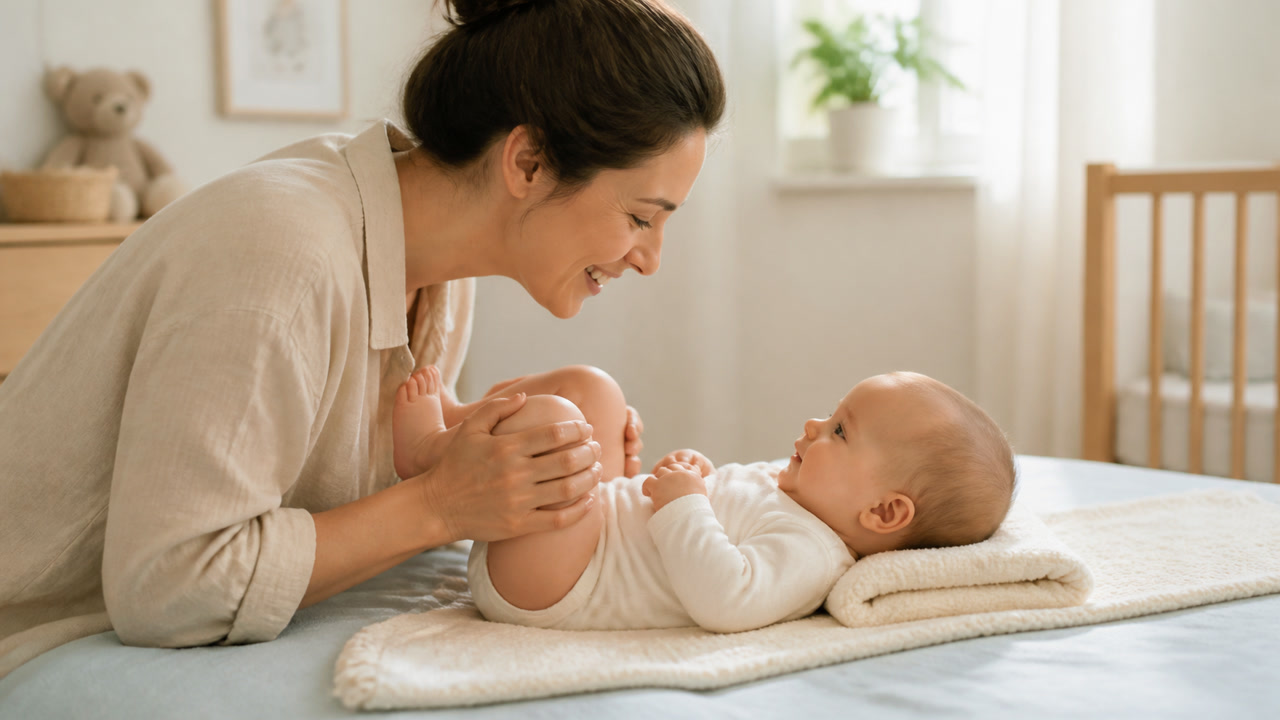
Choose a time when your baby is awake, calm, and not very hungry. A warm room, a safe flat surface, and clean hands are enough. You do not need to massage every part of the body or follow a strict sequence.
Let your baby set the pace
Start with one area, such as legs or feet, and use slow, gentle strokes. Look for relaxed limbs, eye contact, and interest. If your baby turns away, stiffens, cries, or becomes fussy, pause. A shorter massage is still a successful one.
- Wait until at least 30 minutes after a feed when possible.
- Use firm but gentle pressure rather than tickling touches.
- Keep oils optional and avoid scented or adult products.
Turn it into a familiar cue
Try massage after a bath, before pajamas, or during a quiet daytime reset. Pair it with a simple song or a few calm words. Predictable touch can make transitions feel easier without turning the routine into another task to complete.
For more ways to make ordinary time playful, explore music and movement activities for babies.
Keep safety simple
Never leave a baby unattended on a changing table, bed, or other raised surface. Skip massage on irritated, injured, or infected skin and ask a pediatrician if your baby has a medical condition or you are unsure whether touch is comfortable for them.