
Music and Movement Activities for Babies: Simple Play by Age
Music is one of the easiest ways to turn a normal moment into connection. Your baby does not need perfect pitch, special toys, or a long activity plan. They need your voice, rhythm, repetition, and safe movement.
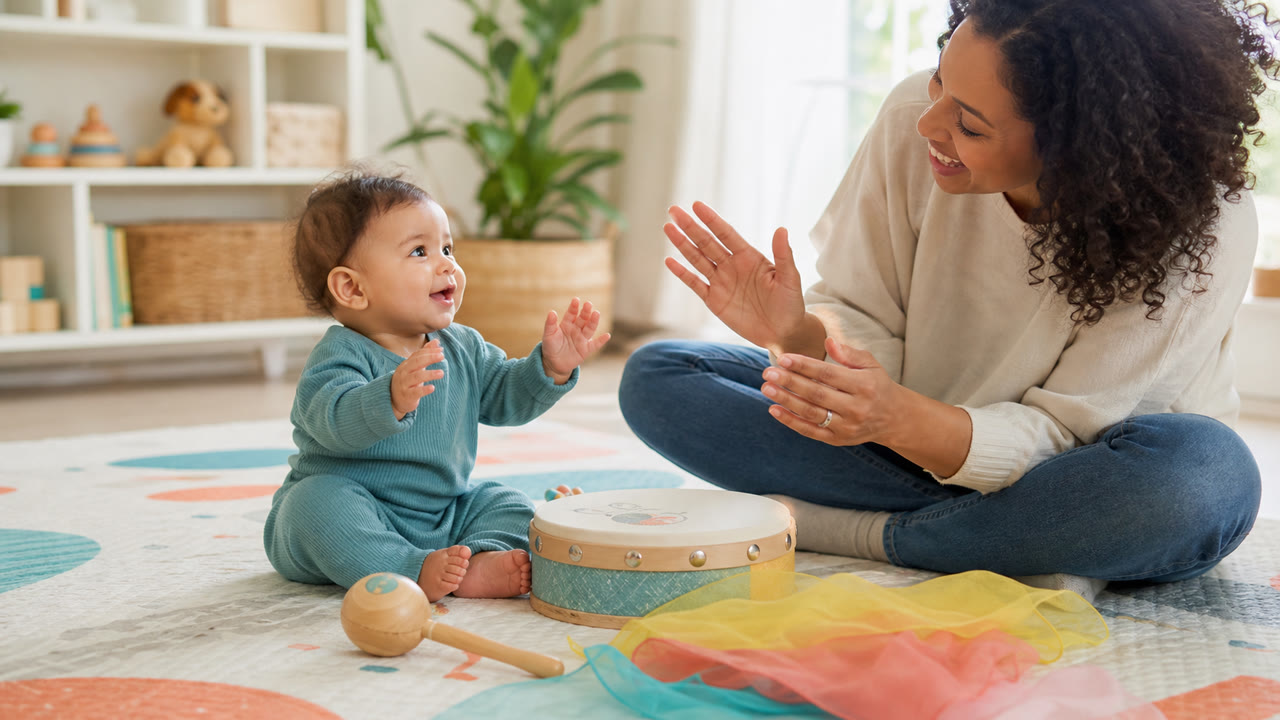
Babies are built to notice rhythm. They hear voices before birth, calm to familiar sounds, and learn through repeated patterns. A short song while changing a diaper, a gentle bounce before a nap, or a clapping game after breakfast can support attention, language, body awareness, and emotional connection.
Keep music play simple and safe. Use low volume, avoid loud headphones or speakers close to the baby, and watch your child's cues. Turning away, fussing, arching, or rubbing eyes may mean the activity is too much or the baby is ready for a break.
0-3 months: voice and gentle rhythm
Newborns benefit most from closeness. Sing slowly, hum, rock gently, or sway while holding your baby securely. During awake floor time, place your face where your baby can see it and use a calm repeating phrase.
- Hum the same tune before naps.
- Tap a slow rhythm on your own knee while your baby watches.
- Use soft contrast: quiet voice, pause, then quiet voice again.
4-6 months: reaching, rolling, and sound discovery
As hand control grows, babies may enjoy rattles, crinkly fabric, soft drums, and songs with predictable pauses. Place a toy slightly to the side during supervised floor time to invite reaching and rolling practice.
Try a simple pause game: sing a familiar line, stop before the last word, and wait. Your baby may kick, smile, vocalize, or look at you to ask for more. Those tiny responses are communication practice.
7-9 months: clapping and turn-taking
Older babies begin to understand back-and-forth play. Clap your hands, then wait. Tap a soft drum, then offer the drum. Shake a rattle, then pause so your baby can answer with sound or movement.
- Sing action songs with simple gestures.
- Use everyday objects safely: a wooden spoon on an upside-down bowl can become a drum.
- Keep objects large enough and sturdy enough for mouthing and banging.
10-12 months: dancing, imitation, and first choices
Near the end of the first year, many babies love imitation. They may bounce, wave, clap, or move toward a favorite song. Offer two safe instruments or scarves and let your baby choose. Choice builds attention and confidence.
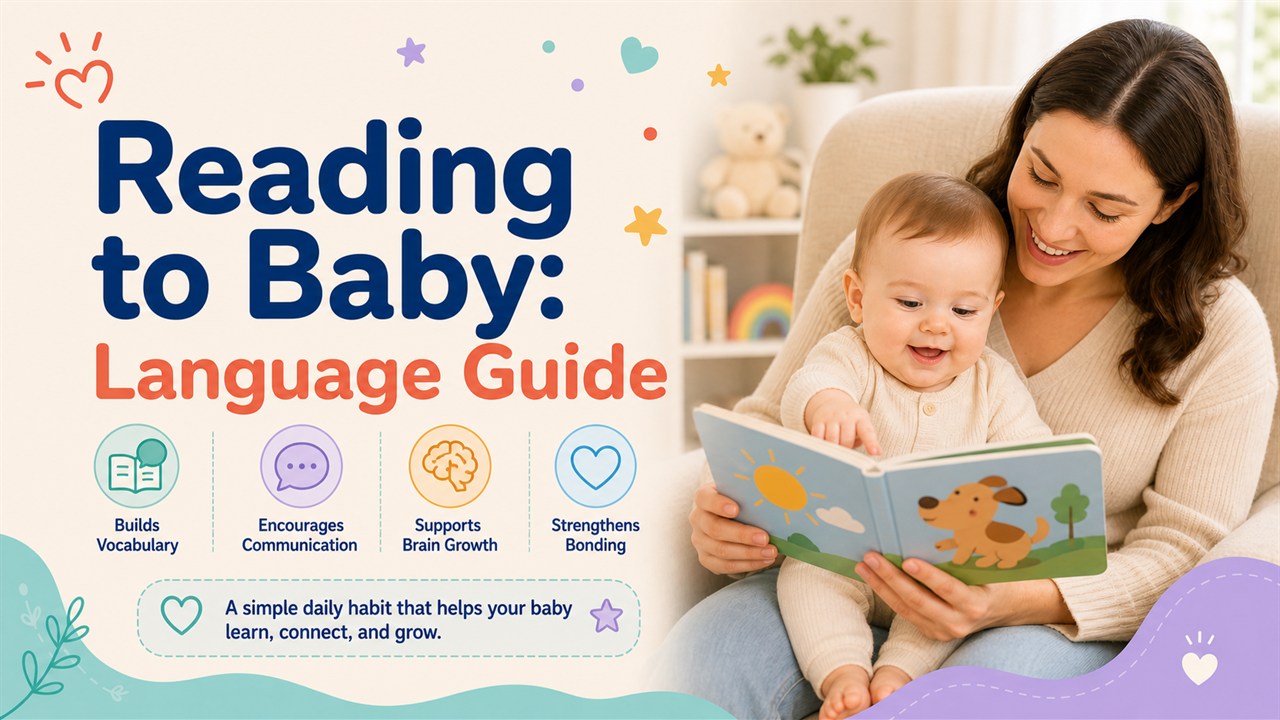
Music also pairs beautifully with books. Sing a repeated line from a board book, point to pictures, and let your baby turn pages. For more ideas, see our article on reading to babies.
How to make music play manageable
You do not need a separate lesson. Attach music to routines you already do: one song for diaper changes, one for cleanup, one for bath time, one for bedtime. Repetition is comforting, and it gives your baby a chance to predict what comes next.
If your baby is sensitive to sound, start quieter and shorter. If your baby loves movement, add safe floor play and dancing. The best activity is the one your baby can enjoy with you today.