
Reading to Babies: How Books Support Language Development
Reading to a baby is not about finishing the story. It is about your voice, shared attention, pictures, rhythm, and the cozy repetition that turns words into connection.
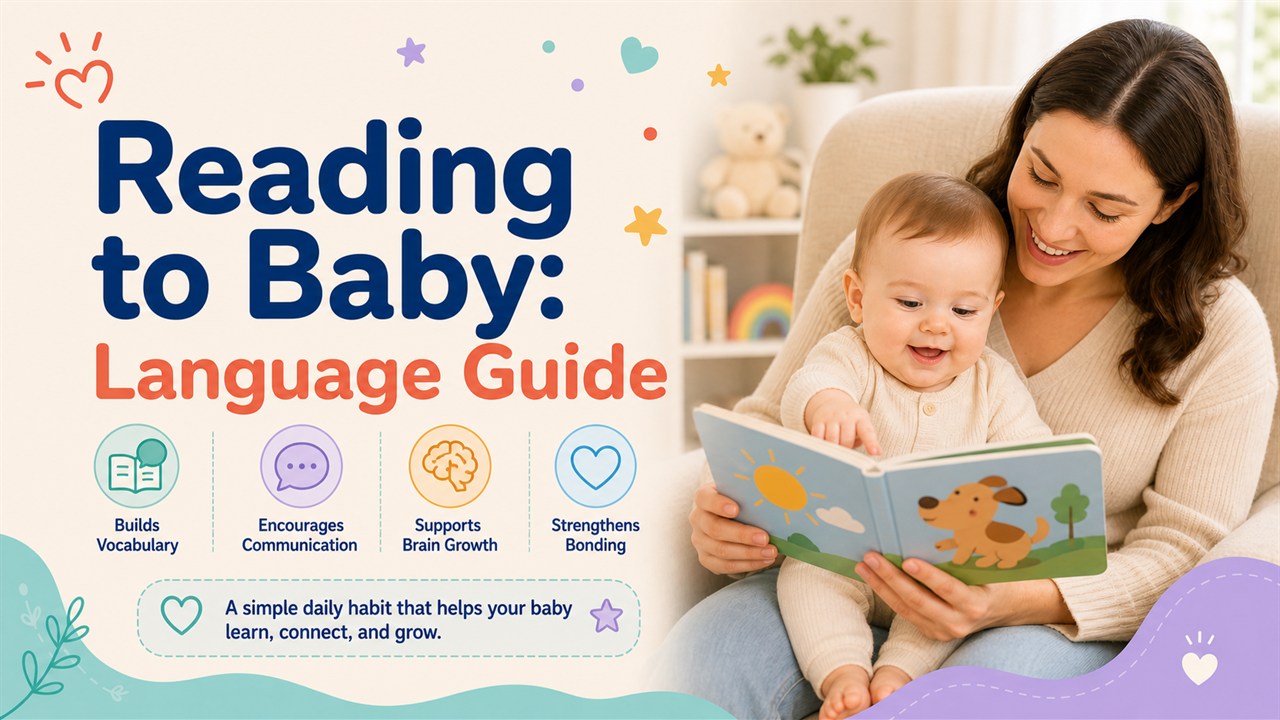
You can read to your baby long before they understand the plot. In the early months, books are mostly about voice, rhythm, closeness, faces, and repeated words. Your baby hears speech sounds, watches your mouth, studies pictures, and learns that communication is warm and shared.
There is no pressure to make reading academic. A two-minute board book, a single page named again and again, or a bedtime rhyme counts. The habit matters more than the length.
What babies learn from books
- Sounds: your baby hears the rhythm of language, repeated syllables, and expressive intonation.
- Attention: looking at a page together builds shared focus.
- Motor skills: reaching, patting, holding, and turning board pages practice hand control.
- Meaning: pictures help connect words with people, animals, objects, and actions.
- Bonding: predictable reading time can become a calming relationship ritual.
0-3 months: voice first
Choose short rhymes, lullabies, or books with strong contrast. Hold your baby close enough to see your face. You can read the same page several times, exaggerate expression, or simply describe the picture. If your baby looks away, that is a cue to pause.
4-6 months: grab, mouth, repeat
At this age babies often want to touch and mouth books. That is interest, not misbehavior. Use sturdy board books, cloth books, or bath books. Name one picture per page: "dog," "ball," "baby," "more." Pause and let your baby kick, squeal, or reach before you turn the page.
7-12 months: pointing, sounds, and favorite pages
Older babies may pat pictures, turn several pages at once, copy sounds, or look for a favorite image. Ask simple questions, then answer them yourself: "Where is the duck? There it is." Repeating the same book is useful because familiarity lets your baby predict what comes next.
Books about faces, daily routines, animals, vehicles, and babies are often especially engaging. If your baby crawls away halfway through, let the session end. A positive ending protects the habit.
Build a tiny reading routine
Link reading to something that already happens: after the morning feed, before nap, after bath, or before bedtime. Keep two or three books in the same place. Use the same closing phrase so your baby begins to recognize the rhythm of the routine.
For bilingual families, read in the language that feels warm and natural. Babies benefit from rich, responsive language in any language they hear consistently.
How reading supports first words
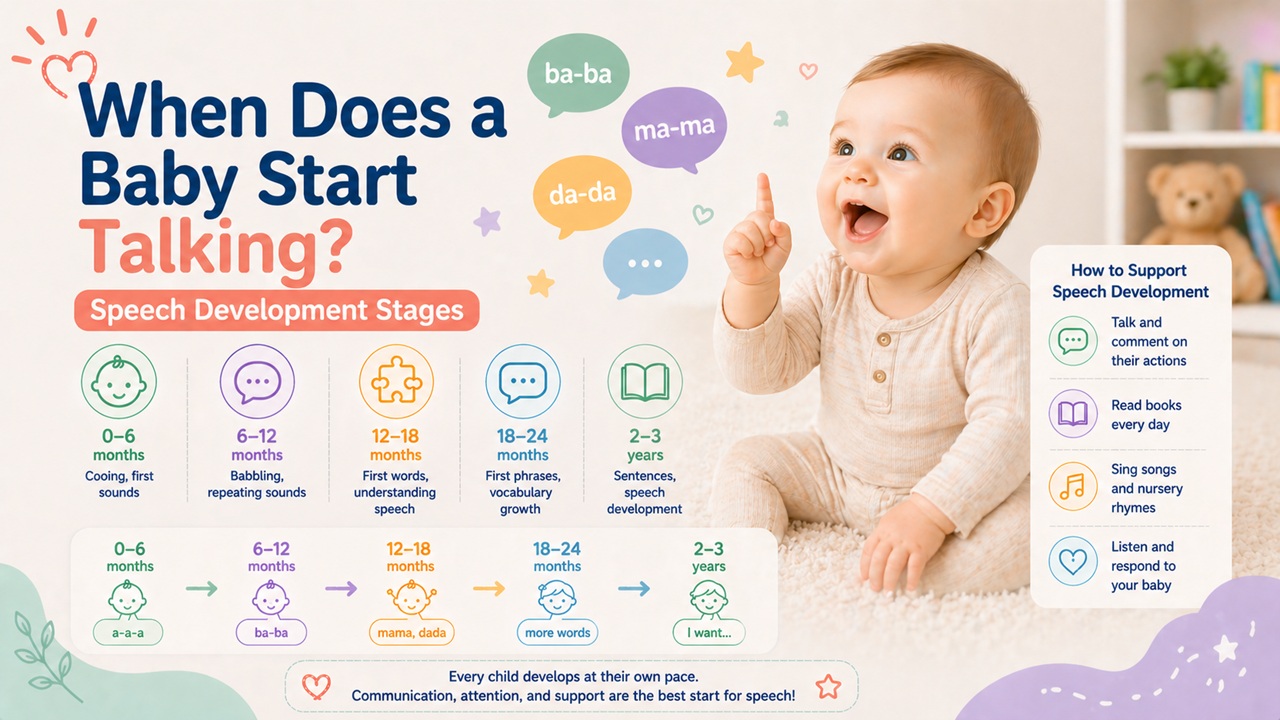
Reading is one part of a larger language environment. It works best with talking, singing, turn-taking sounds, pointing, and everyday narration. For speech milestones and practical play ideas, read our baby talking and language development guide.
When to ask for advice
Talk with your pediatrician if your baby does not respond to sound, rarely makes eye contact, loses babbling or social skills, or you have concerns about hearing. Hearing and language are closely connected, and early support matters.
How Magerly helps you remember the little firsts
Magerly helps you record early literacy moments: first favorite book, first page turn, first animal sound, first pointing, and first word attempts. These details are easy to forget in the blur of daily care, but together they tell a beautiful story of connection.