
Sensory Play Ideas for Babies: Safe Activities by Age
Babies learn with their whole body. Sensory play gives them safe chances to feel, listen, look, move, and discover how the world responds.
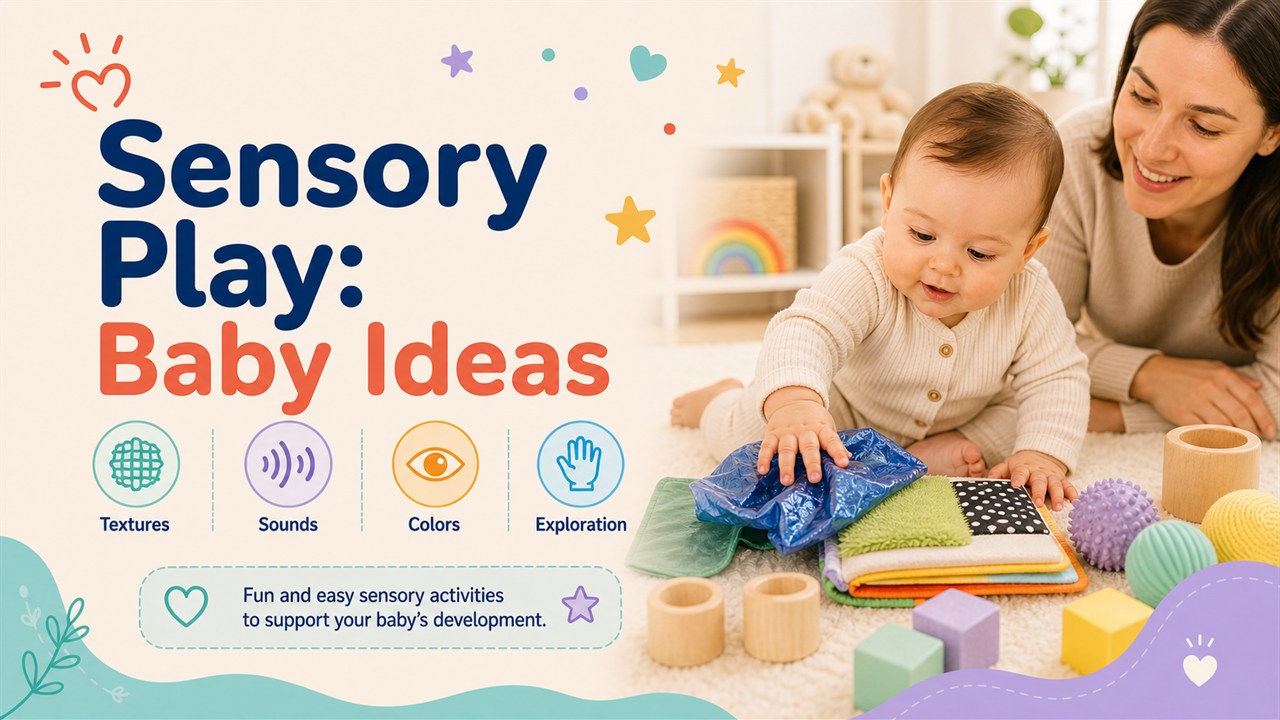
Sensory play simply means play that engages the senses: touch, sight, sound, movement, smell, and, later, taste. For babies, this is not an extra enrichment project. It is everyday learning. A crinkly book, warm bath water, a song with clapping, a soft scarf, or a safe spoon on the tray can all become experiments.
The best sensory play is simple, closely supervised, and matched to your baby's stage. It should feel calm and inviting, not overstimulating. If your baby turns away, cries, stiffens, or rubs their eyes, pause and try again another day.
0-3 months: gentle contrast and connection
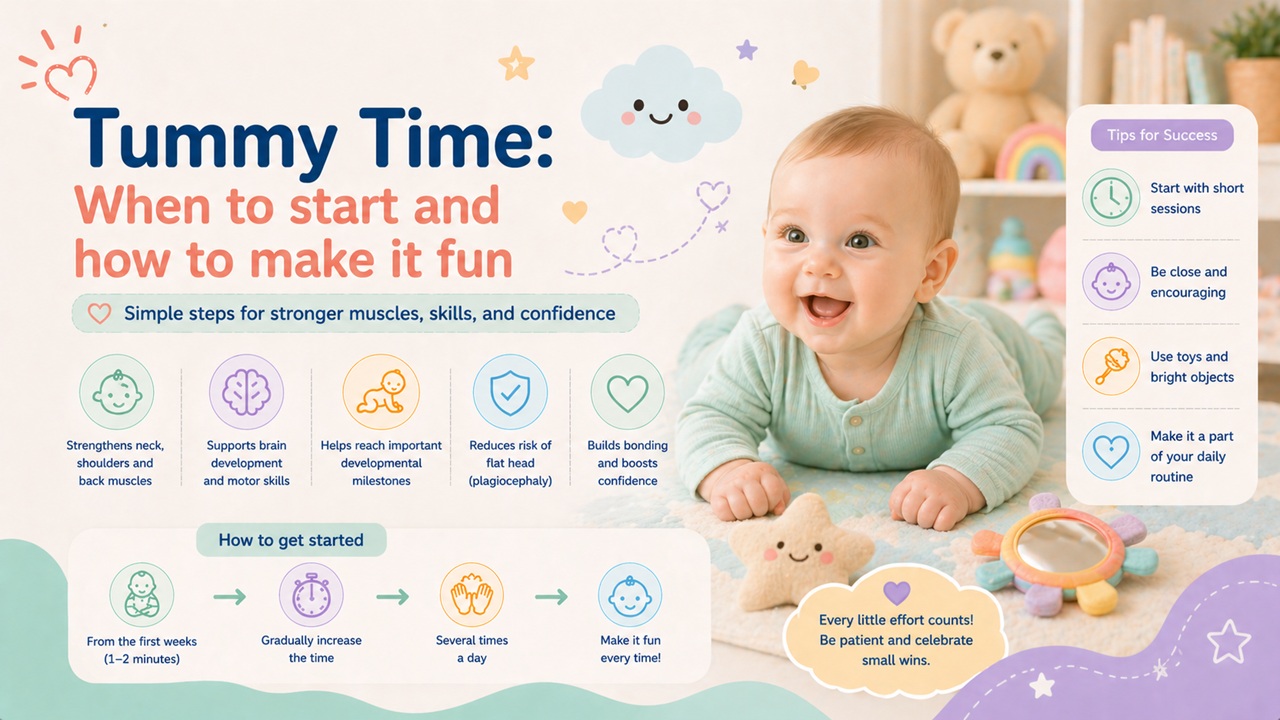
Newborns need very little. High-contrast cards, slow face-to-face play, lullabies, and a soft hand on the back during tummy time are enough. Try moving your face slowly from side to side while your baby is alert, or place a black-and-white card near the changing area for short visual focus.
Touch can be simple too: skin-to-skin time, a warm bath, or gently stroking the arms and legs after a diaper change. Keep sessions short and watch your baby's cues.
4-6 months: reaching, rattles, and textures
As babies start reaching and bringing objects to the mouth, texture play becomes more active. Offer a silicone teether, a soft cloth, a crinkle book, or a lightweight rattle. Place one object at a time within reach so your baby can focus.
Sound play can be as basic as shaking a rattle, tapping a plastic bowl, or singing the same short song before naps. Repetition helps babies predict what comes next, which makes play feel secure.
7-9 months: cause and effect
This is a wonderful age for containers. Let your baby drop large blocks into a bowl, pull scarves from a tissue box, bang two safe objects together, or splash with hands in a shallow tray of water. Stay within arm's reach around water, even if it is only a small amount.
Babies at this stage often explore with their mouth. Choose items that are too large to choke on, washable, and free of loose parts. Avoid water beads, small pom-poms, uncooked beans, beads, coins, and anything that could swell, break, or be inhaled.
10-12 months: problem solving through play
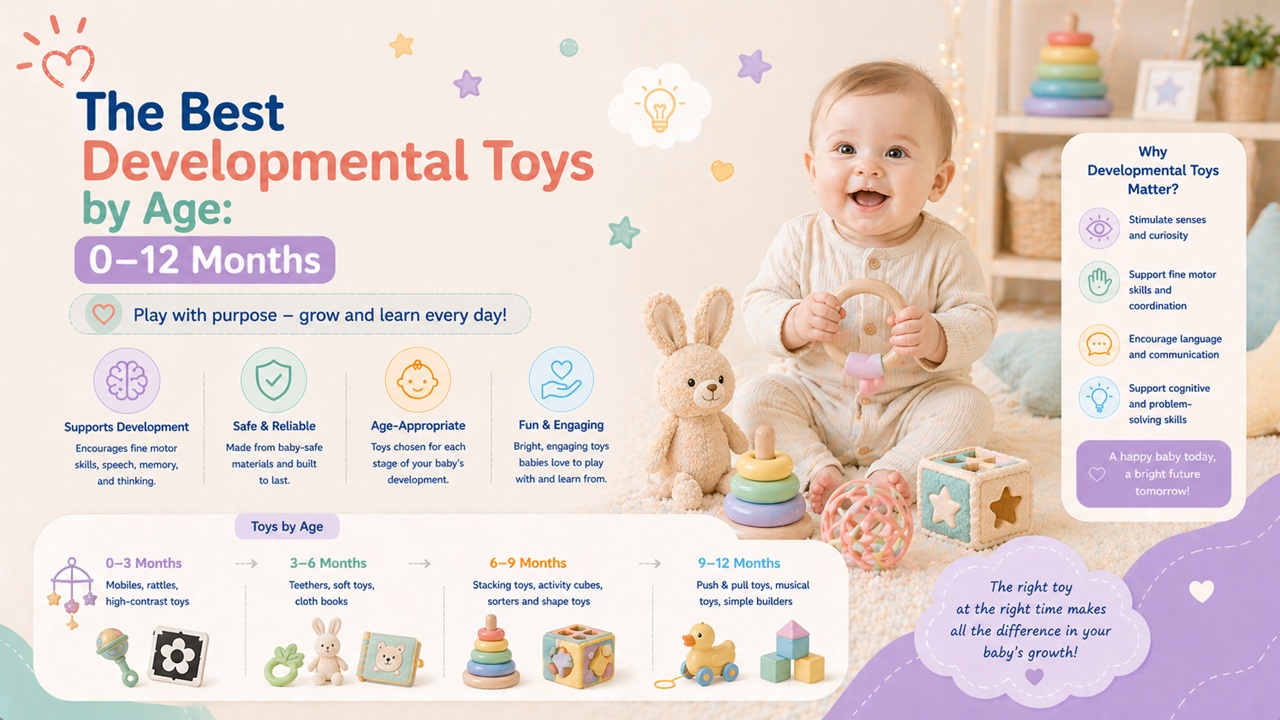
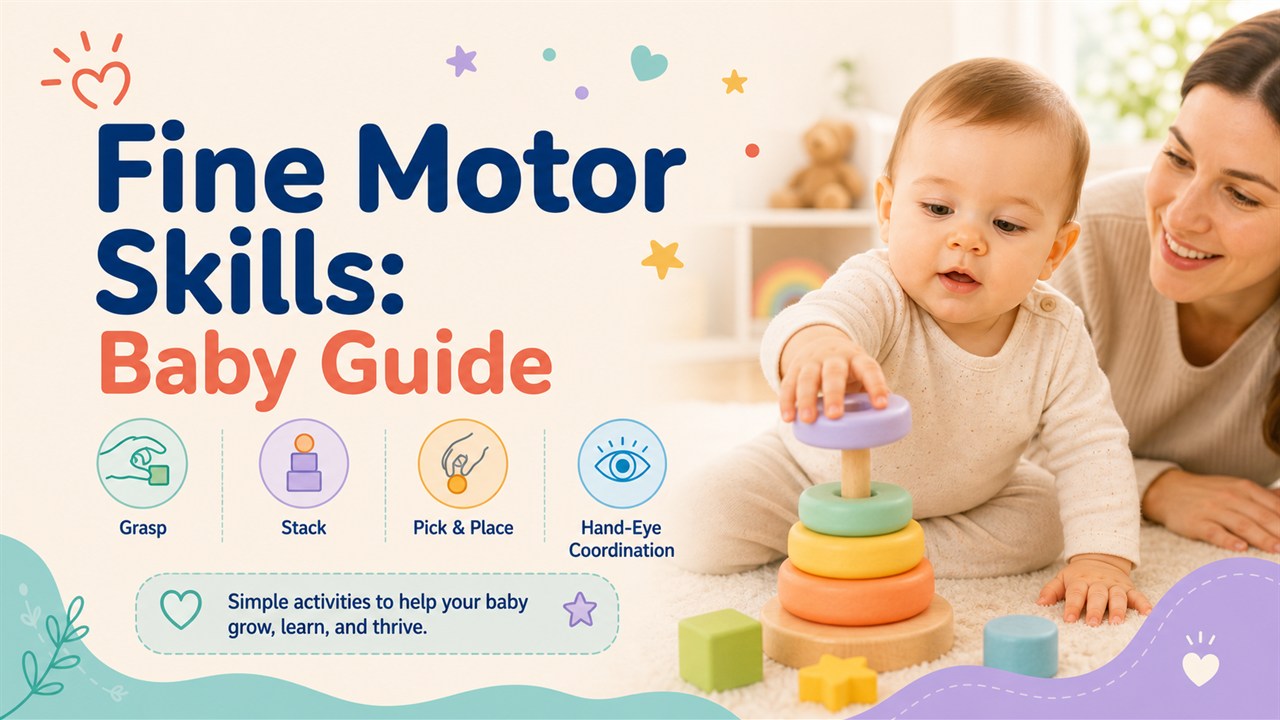
Older babies enjoy simple challenges: nesting cups, chunky shape sorters, peekaboo scarves, large knobs, soft balls rolling through a tunnel, or a basket of safe household objects. Rotate a few items instead of presenting everything at once.
Pair sensory play with language. Narrate what your baby is doing: "soft scarf," "loud tap," "cold spoon," "ball rolls." These small words connect sensations with meaning and support early communication.
A quick safety checklist
- Supervise closely and stay within reach around water.
- Skip small objects, water beads, balloons, button batteries, magnets, and anything sharp or breakable.
- Use non-toxic, washable materials and check toys for loose parts.
- Stop if your baby seems overwhelmed, tired, or uncomfortable.
- Talk with your pediatrician if your baby consistently avoids touch, sound, or movement in a way that worries you.
How Magerly helps you plan play
Magerly's age-based tips make it easier to choose activities that fit your baby today, not six months from now. You can save favorite play ideas, track milestones, and connect sensory play with related guides like tummy time and developmental toys by age.
The heart of sensory play is attention. Offer one safe invitation, follow your baby's interest, and let discovery stay slow enough to enjoy.