
Baby Gestures and Pointing: Early Ways Babies Share Meaning
Before words arrive, babies communicate with their whole bodies: a reach, a wave, a lifted arm, a look toward something interesting. Responding to those attempts turns everyday moments into conversation.
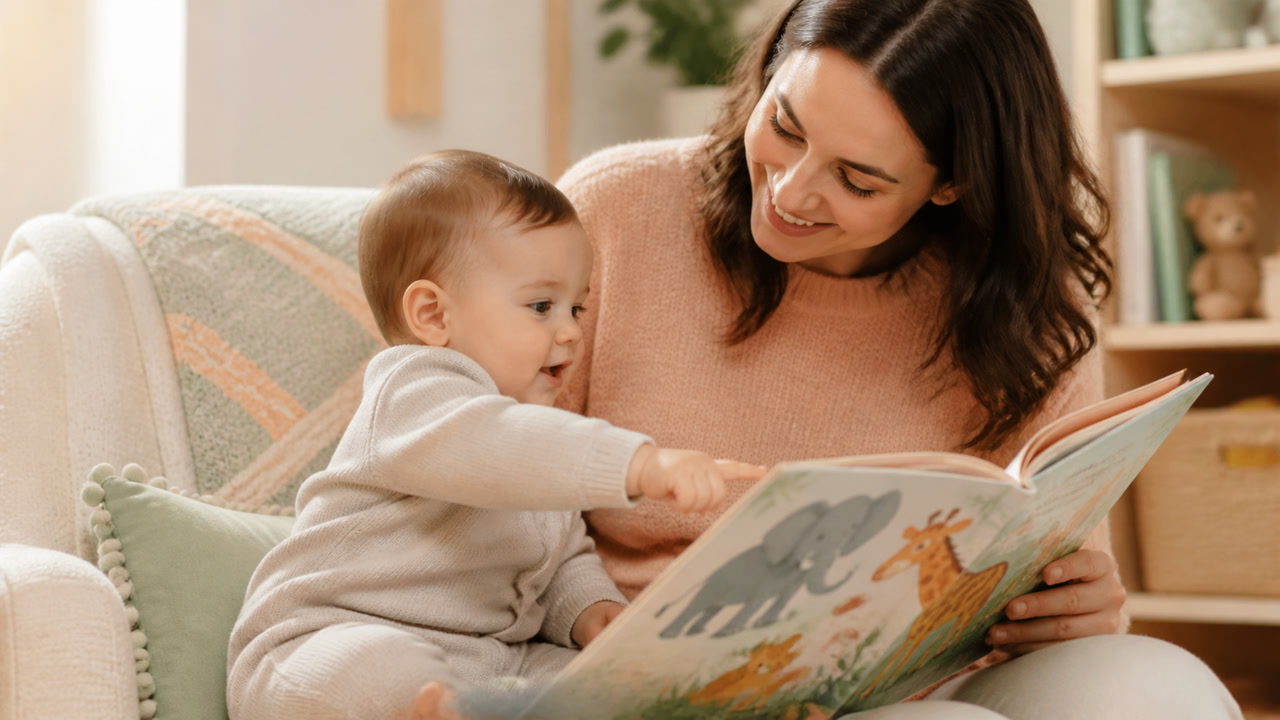
Gestures are not a replacement for speech; they are one of the paths toward shared meaning. Your baby may reach to be picked up, hold out an object, wave, clap, or point at something worth seeing. Notice the attempt before worrying about the exact form.
Respond as if it is a conversation
When your baby points, look where they are looking and add a few words: “Yes, a dog. The dog is running.” When they hold out a cup, name the request and respond: “You want the cup.” This back-and-forth shows that communication works.
- Point to interesting things during walks and books.
- Use everyday gestures such as waving and clapping naturally.
- Pause after you speak so your baby has room to respond.
Make shared attention easy
Read a sturdy picture book, look in a mirror together, or sit by a window and name a few things you both notice. Keep the language warm and simple. The goal is connection, not teaching a list of words.
For more language-rich play, pair this with our guide to reading to babies.
Use milestones as conversation starters
Children develop at different rates. Share concerns with your pediatrician if your baby loses communication skills they had, rarely responds to sound or interaction, or you have a persistent feeling that something is not right. Your observations are useful information.