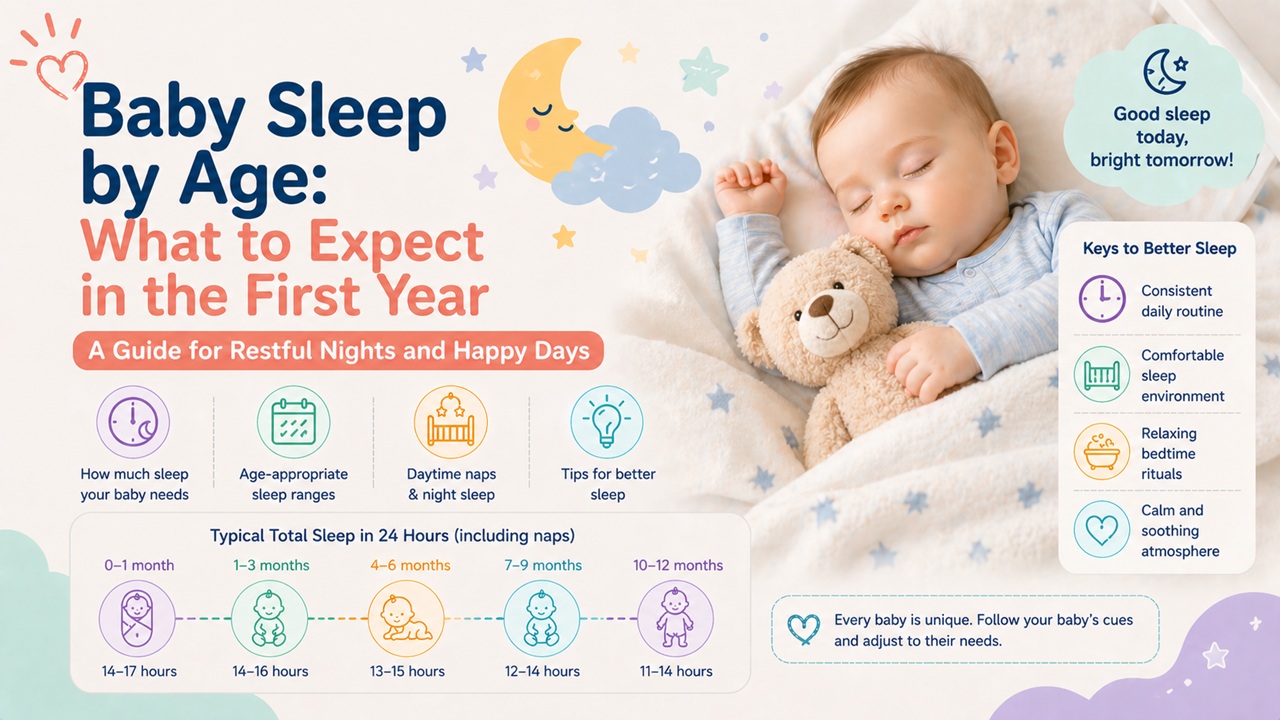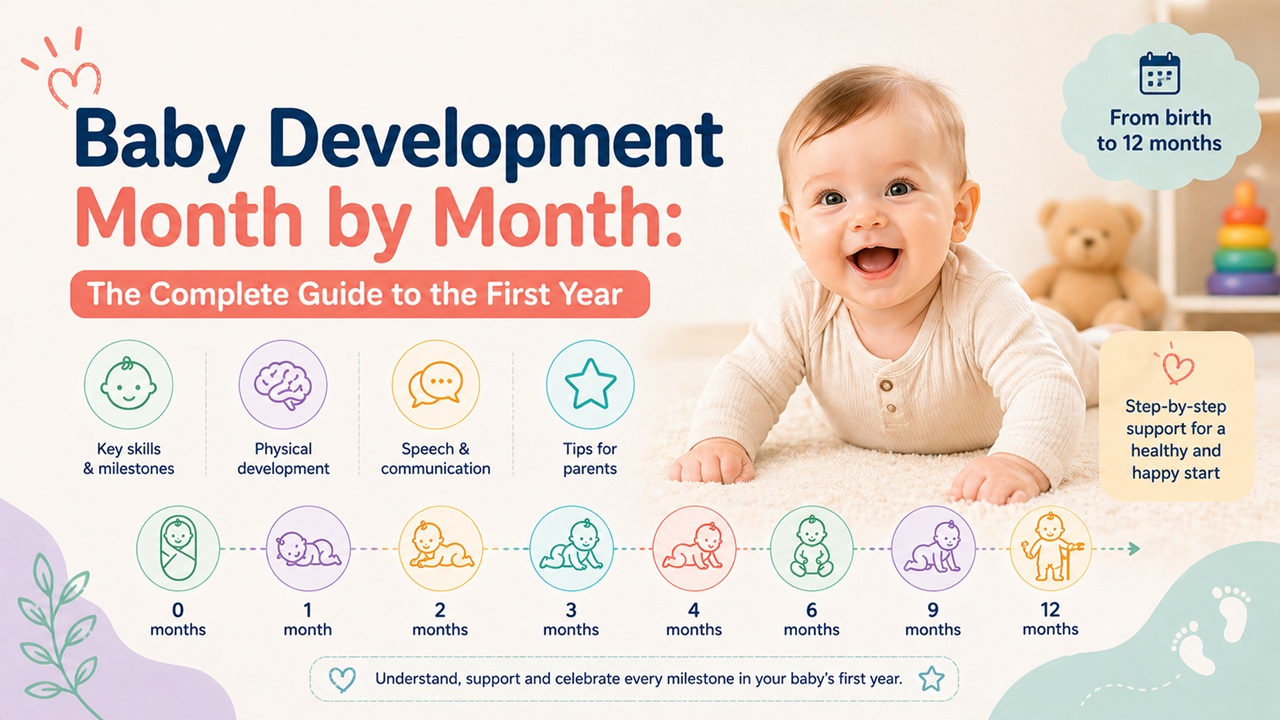

Baby Daily Routine by Age: Simple Rhythms for the First Year
Babies do not need a perfect timetable. What helps most is a predictable rhythm: eat, rest, play, connect, and repeat in a way that fits your child and your family.
A daily routine gives babies a sense of what usually comes next. It can make transitions calmer, help parents notice patterns, and create more room for connection. But a routine is not the same as a strict schedule. In the first year, growth spurts, naps, teething, travel, and temperament can change the day quickly.
Think of routine as a flexible loop rather than a clock. Your baby wakes, eats, plays, rests, and reconnects. Some days the loop is short and sleepy; other days it is full of practice, curiosity, and movement. Tracking the rhythm in Magerly can help you see what is normal for your child instead of chasing a generic timetable.
0-3 months: comfort and cues
In the newborn stage, routines are mostly about responding to cues. Feed when your baby shows hunger signs, offer sleep when they become drowsy, and keep wake windows gentle. Short moments of tummy time, face-to-face talking, and soft singing are enough developmental practice.
- Keep daytime bright and interactive, and nighttime quiet and boring.
- Use simple repeating cues: diaper, feed, cuddle, sleep.
- Try one tiny daily anchor, such as a morning window-light cuddle or an evening bath.
4-6 months: more awake play
As babies become more alert, the day often starts to feel more patterned. Many babies enjoy a wake-up routine, active floor play, feeding, a short story or song, and then sleep. This is also a good age for reaching games, rolling practice, and supervised tummy time.
If you are introducing solids around this stage, keep food practice relaxed. Feeding is not only nutrition; it is sensory learning, hand practice, and social time. For food readiness and safety, pair this article with the baby-led weaning guide.
7-9 months: exploration and repetition
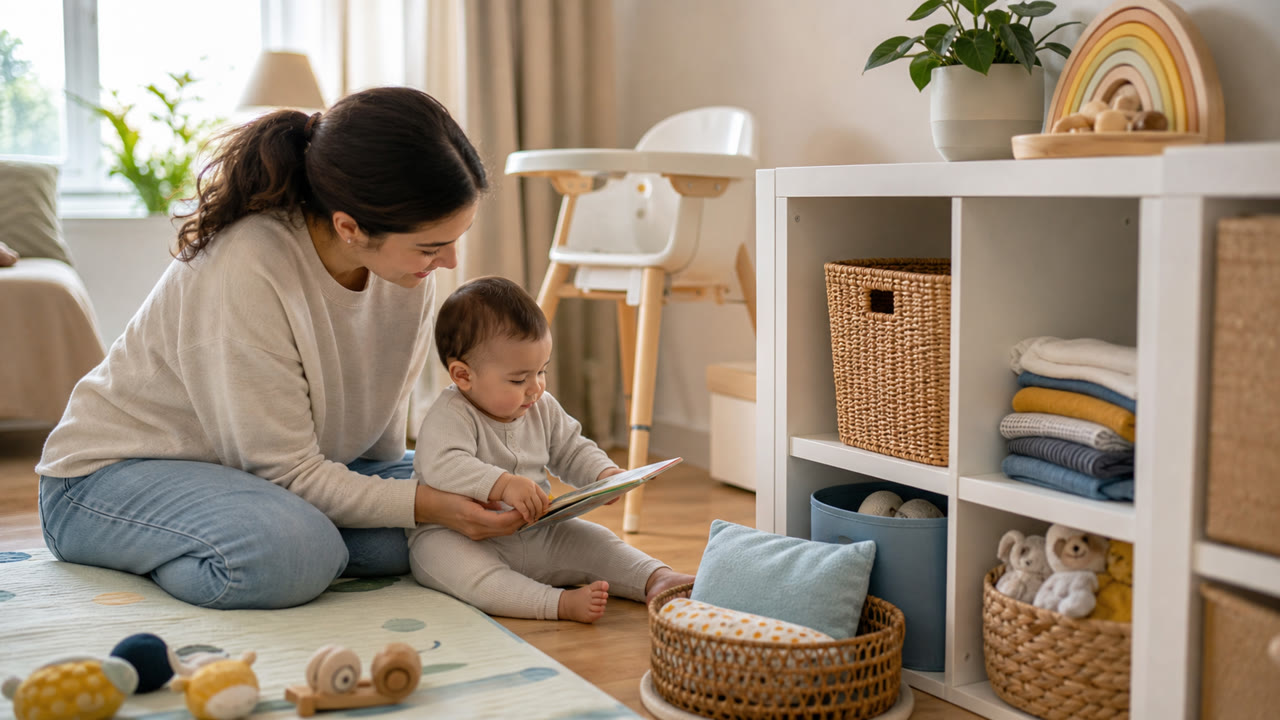
Older babies often want to move, reach, bang, drop, crawl, and check whether you are still nearby. A useful routine gives space for movement and predictable pauses. Try alternating active play with calmer activities: floor time, meal, walk, book, nap.
- Create a safe floor zone where your baby can practice movement every day.
- Repeat favorite songs and games. Repetition builds memory and confidence.
- Use short cleanup rituals so transitions become familiar.
10-12 months: independence with reassurance
Toward the end of the first year, routines can support independence. Your baby may help turn pages, hold a spoon, wave, crawl toward a favorite toy, or pull to stand. Keep the order of the day predictable, but leave room for choice: which book, which safe toy, which song.
This is also when separation feelings can become more noticeable. A consistent goodbye, nap, and bedtime ritual can help. If goodbyes are hard, read our separation anxiety guide.
A routine should reduce pressure, not add it
A helpful routine makes the day easier to understand. It should not make you feel like you failed because a nap shifted or a feeding took longer than expected. If your baby is growing, connecting, resting, and getting chances to play safely, the rhythm is doing its job.
Talk with your pediatrician if feeding, sleep, growth, or development feels persistently difficult, or if your baby loses a skill they previously had. Support works best when it is practical, kind, and tailored to your child.