
Baby-Led Weaning: A Complete Beginner's Guide
Everything you need to know about letting your baby self-feed from the start—signs of readiness, best first foods, safety essentials, and practical meal ideas.
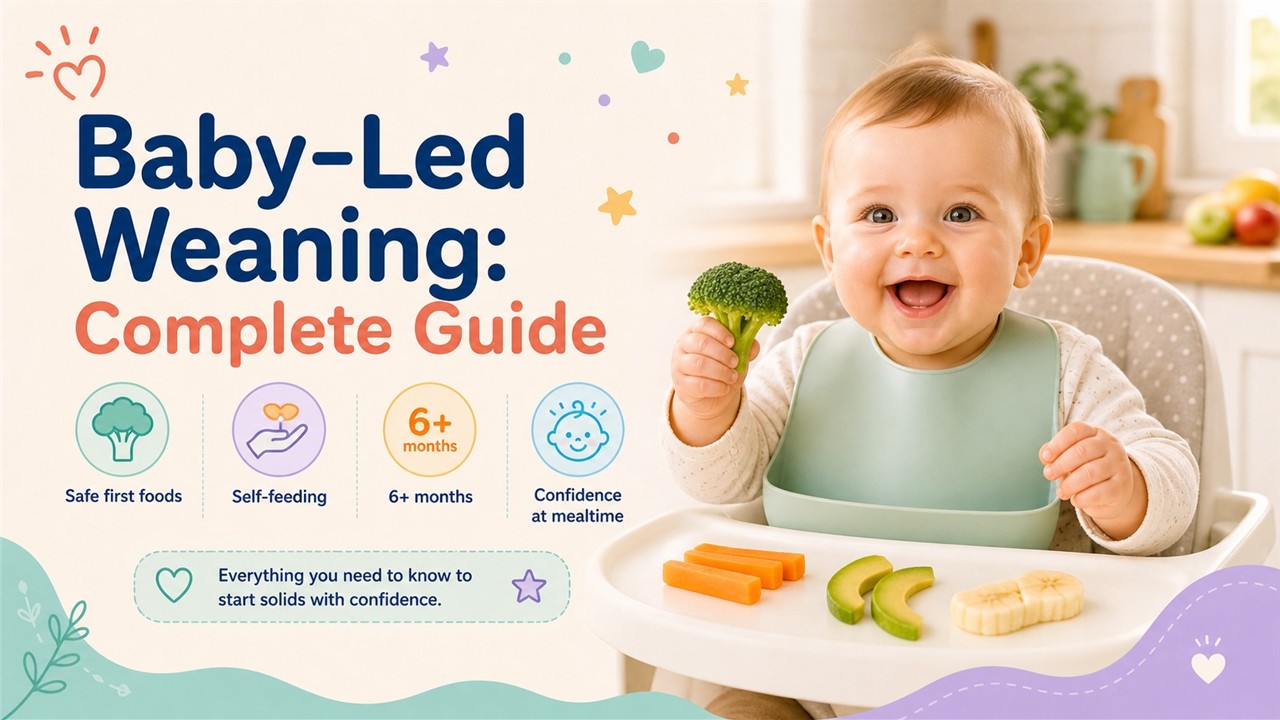
Baby-led weaning (BLW) is an approach to introducing solid foods that skips purees and spoon-feeding in favor of letting babies feed themselves soft, age-appropriate finger foods from the very start. Popularized by British health visitor Gill Rapley, the method has gained widespread adoption among parents and pediatricians worldwide. If you're curious about whether BLW is right for your family, this guide covers everything you need to get started safely and confidently.
What Is Baby-Led Weaning?
In traditional weaning, parents spoon-feed smooth purees and gradually increase texture over time. Baby-led weaning flips this approach: instead of being fed, the baby feeds themselves from the family table. Foods are offered in soft, graspable pieces that the baby can pick up, explore, and eat at their own pace.
The philosophy behind BLW is that babies are capable of self-regulating their food intake and that allowing them to explore food independently supports the development of fine motor skills, hand-eye coordination, chewing ability, and a healthy relationship with eating.
Signs Your Baby Is Ready (6 Months+)
Most health organizations, including the WHO and AAP, recommend starting solids around 6 months. For BLW specifically, your baby should demonstrate all of the following signs of readiness:
- Can sit upright with minimal support. A baby needs good trunk control to eat safely. They should be able to sit in a high chair without slumping.
- Has lost the tongue-thrust reflex. Young babies automatically push food out of their mouth with their tongue. This reflex needs to fade before solids can work.
- Shows interest in food. Watching you eat intently, reaching for your plate, opening their mouth when food approaches.
- Can bring objects to their mouth. This indicates the hand-to-mouth coordination needed for self-feeding.
- Can make chewing motions. Even without teeth, babies can gum soft foods effectively.
Best First Foods for BLW
The ideal first BLW foods are soft enough to squish between your thumb and forefinger, cut into pieces large enough for a baby to grip (finger-length strips work well for beginners), and nutritious. Great options include:
- Steamed vegetables: Broccoli florets (natural handle!), sweet potato sticks, carrot sticks (cooked very soft), zucchini spears
- Soft fruits: Ripe avocado slices, banana (leave half the peel for grip), ripe pear, mango slices, very ripe peach
- Proteins: Shredded chicken, soft-cooked meatballs, flaked salmon, strips of omelet, well-cooked lentils
- Starches: Toast strips with thin nut butter, soft-cooked pasta (fusilli is easy to grip), rice cakes, oatmeal fingers
- Iron-rich foods: Dark meat chicken, beef strips cooked until very tender, iron-fortified cereals mixed into other foods
Foods to Avoid
- Choking hazards: Whole grapes, cherry tomatoes (cut in quarters), whole nuts, popcorn, raw apple chunks, hot dog rounds, hard raw vegetables
- Honey: Not safe before 12 months due to botulism risk
- Added salt and sugar: Babies' kidneys cannot handle excess sodium; avoid processed foods
- Cow's milk as a drink: Not recommended as a main drink before 12 months (cooking with it is fine)
- Low-fat foods: Babies need full-fat versions for brain development
Gagging vs. Choking: The Critical Difference
Understanding the difference between gagging and choking is essential for any parent starting BLW. They look very different and require very different responses.
Gagging is normal and protective. It's a reflex that pushes food forward in the mouth when it hits too far back before the baby is ready to swallow. A gagging baby is noisy—they may cough, splutter, or retch. Their face may redden temporarily. Gagging is common in the early weeks of BLW and decreases as your baby learns to manage food in their mouth. The best response is to stay calm and let your baby work through it.
Choking is silent. A choking baby cannot cough or cry because the airway is blocked. They may turn blue, appear panicked, or make no sound at all. Choking requires immediate first aid intervention. All parents starting BLW (or any solids) should take an infant CPR and choking first aid course.
To minimize choking risk: always supervise meals, ensure baby is sitting upright, offer appropriate textures, avoid known choking hazards, and never let a baby eat in a car seat or while moving.
BLW vs. Traditional Purees
Neither approach is universally "better"—and many families successfully combine both (sometimes called "combination feeding"). Here's how they compare:
- Motor skill development: BLW encourages early development of pincer grasp, hand-eye coordination, and chewing skills.
- Mess factor: BLW is significantly messier initially. A good splash mat and bibs with sleeves are essential.
- Family meals: BLW babies can eat modified versions of what the family is eating, reducing meal prep burden.
- Food intake: BLW babies may consume less food volume initially since they're learning the mechanics. Breast milk or formula remains the primary nutrition source until 12 months regardless of weaning method.
- Pickiness: Some research suggests BLW babies may be less picky eaters later, though evidence is still mixed.
Practical Tips for Getting Started
- Start with one meal a day. Choose a time when your baby is alert and not too hungry (offer breast/bottle first).
- Offer 2-3 foods per meal. Keep it simple. Include at least one food you know they can manage.
- Expect most food to end up on the floor. In the early weeks, eating is about exploration, not nutrition. A dog or a splash mat will be your best friend.
- Never put food in your baby's mouth. The foundational principle of BLW is that the baby controls what goes in.
- Eat together. Babies learn by imitation. Sit with your baby and eat the same foods when possible.
- Offer water in an open cup. Small sips from an open cup help develop oral motor skills.
- Introduce allergens early. Current guidelines recommend introducing common allergens (peanut, egg, dairy, wheat, fish) early and often, from around 6 months.
How Magerly Supports Your Weaning Journey
Starting solids is an exciting milestone, and Magerly helps you track it all. Log which foods your baby has tried, note any reactions, and track their progression from first tastes to confident self-feeding. The app's milestone checklists include feeding milestones so you can celebrate each new achievement, from first successful pincer grasp to drinking from a cup. Plus, daily tips tailored to your baby's age include age-appropriate food suggestions and safety reminders.
Trust the Process
Baby-led weaning can feel nerve-wracking at first—especially the gagging (it's hard not to panic). But most families who stick with it find that within a few weeks, their baby is confidently managing a wide variety of foods. Remember that milk remains the primary source of nutrition until 12 months. The first weeks and months of solids are about exploration, learning, and developing a positive relationship with food. Trust your baby's ability to learn, stay present at mealtimes, and enjoy watching them discover the wonderful world of eating.