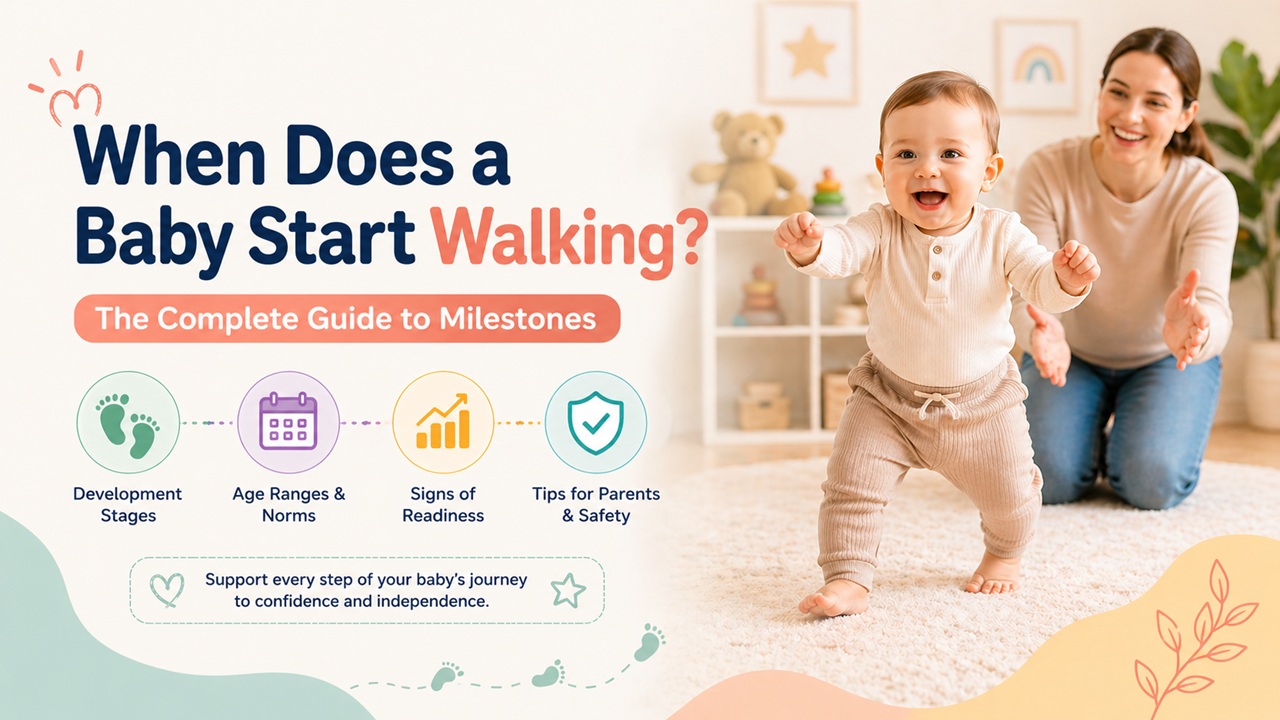

When Do Babies Start Crawling? Stages & Tips
Everything you need to know about baby crawling—from the earliest army crawl to confident hands-and-knees movement.
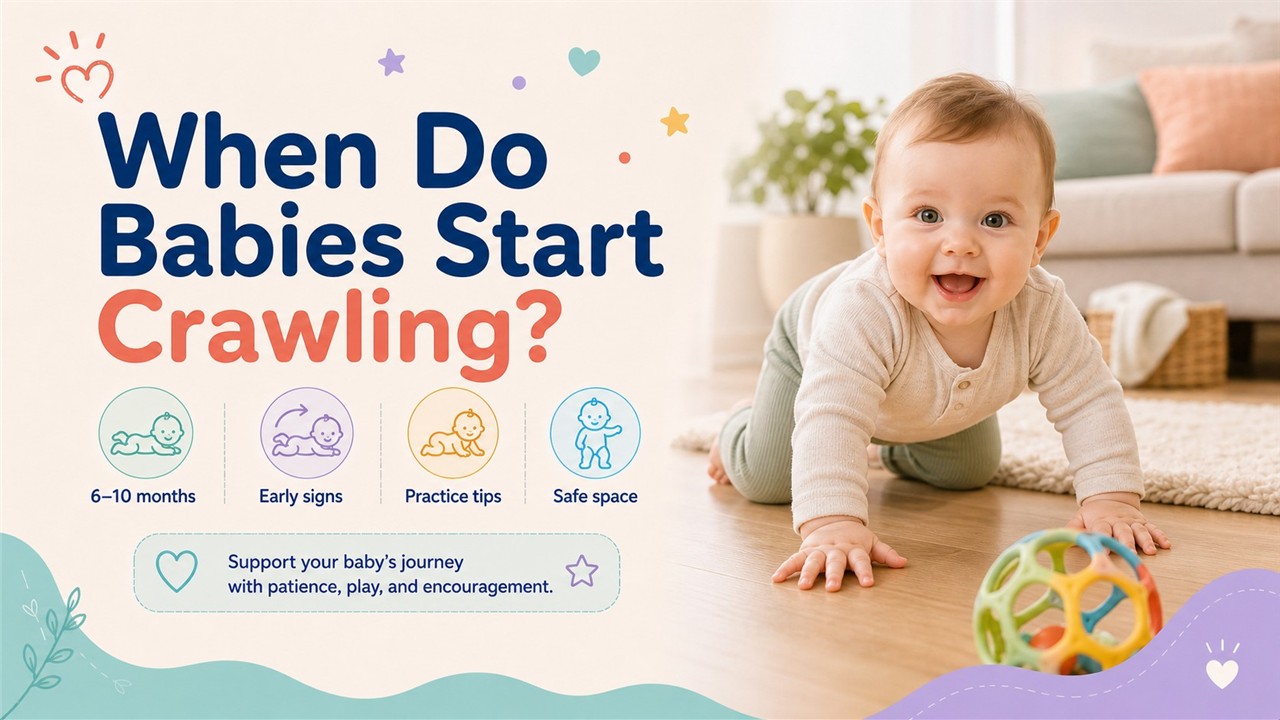
Crawling is one of the most eagerly anticipated milestones of the first year. It marks the moment your baby transitions from a stationary observer to an active explorer, capable of moving independently toward the things that interest them. While crawling itself is not a mandatory milestone (some babies skip it entirely), it plays an important role in building strength, coordination, and spatial awareness.
When Do Most Babies Start Crawling?
Most babies begin crawling between 6 and 10 months of age, with the average being around 8 to 9 months. However, some babies start as early as 5 months while others don't crawl until 11 or 12 months—and some skip crawling altogether in favor of scooting, rolling, or going straight to pulling up and cruising.
The American Academy of Pediatrics notes that the style and timing of crawling varies enormously among healthy babies and is influenced by factors like body weight, muscle tone, temperament, and how much floor time they get. A baby who spends most of their day in a bouncer or carrier simply has fewer opportunities to practice the movements that lead to crawling.
Different Crawling Styles
Not all babies crawl the same way. Here are the most common crawling styles, all of which are considered normal:
- Classic hands-and-knees crawl: The textbook crawl—baby moves forward on alternating hands and knees in a cross-pattern (right hand with left knee, left hand with right knee). This is the most common style.
- Army crawl (commando crawl): Baby pulls themselves forward on their belly using their forearms, with legs dragging behind. This often precedes hands-and-knees crawling.
- Bear crawl: Like hands-and-knees but with straight legs, so the baby walks on hands and feet with their bottom in the air.
- Bottom scoot: Baby sits upright and scoots forward using their arms and legs, sliding on their bottom. This is perfectly valid locomotion.
- Crab crawl: Baby moves sideways or backward, often pushing with their arms more than pulling. Many babies crawl backward before figuring out forward motion.
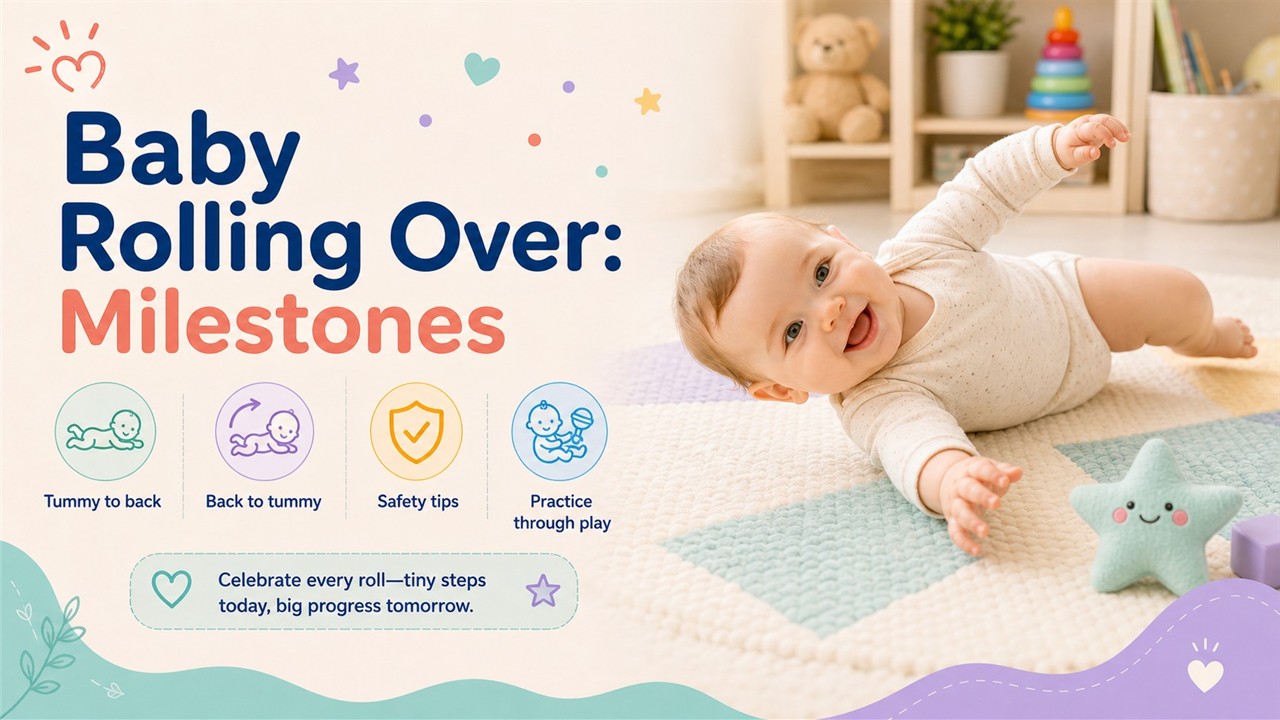
- Roll-and-reach: Some babies combine rolling with reaching to get where they want to go, especially before they figure out a more efficient method.
Pre-Crawling Signs
Before your baby starts crawling, you'll notice several building-block behaviors:
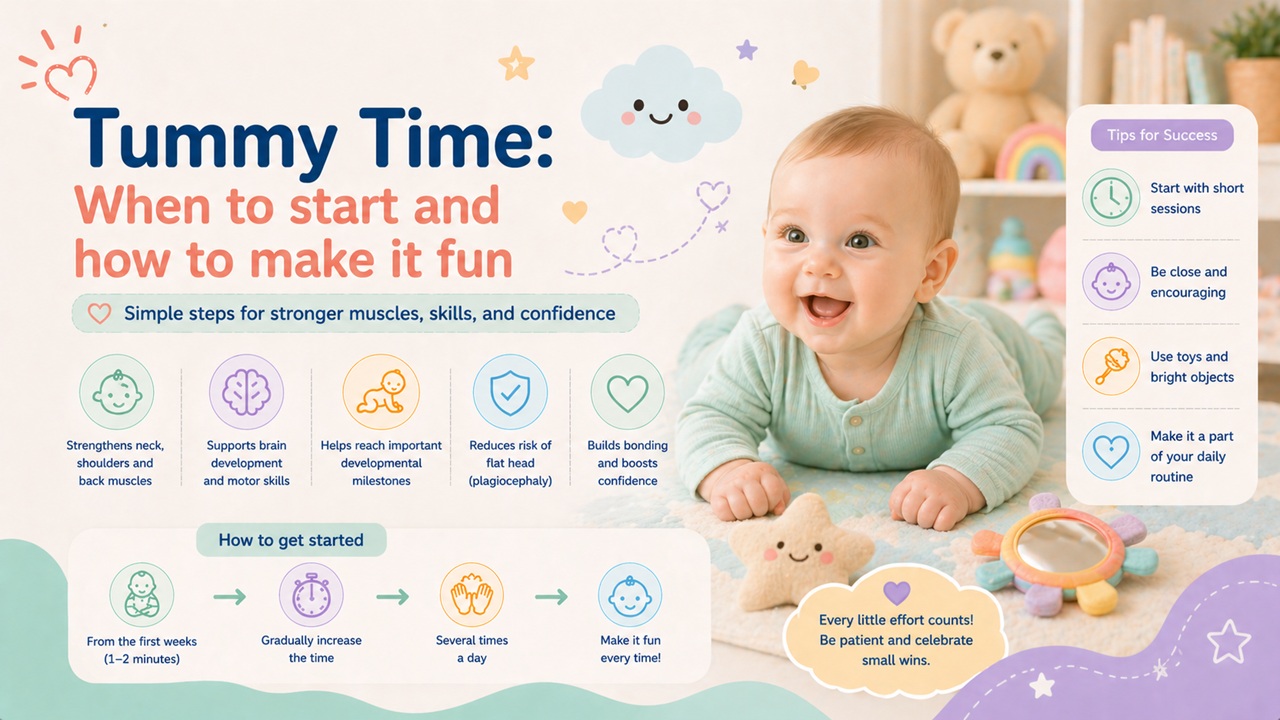
- Strong tummy time: Lifting head and chest high off the floor, pushing up on extended arms.
- Rocking on hands and knees: Getting into the crawling position and rocking back and forth without moving forward yet. This is the classic "about to crawl" sign.
- Pivoting: Spinning in a circle on their belly while reaching for toys.
- Pushing backward: Many babies figure out backward movement before forward, as pushing with arms naturally propels them in reverse.
- Lunging forward from sitting: Toppling from a sitting position onto hands, then figuring out what to do next.
How to Encourage Crawling
You can support your baby's journey to crawling with these strategies:
- Maximize floor time. Babies need lots of supervised time on the floor—both on their tummy and their back. This is where crawling skills develop. Limit time in containers (swings, bouncers, exersaucers).
- Create motivation. Place a favorite toy just out of reach during tummy time. This gives your baby a reason to move. Get down on the floor yourself—babies are highly motivated to reach their parents.
- Support the rocking stage. When your baby is rocking on hands and knees, you can place your hands behind their feet to give them something to push off against.
- Dress for movement. Bare knees grip better than slippery pants on hard floors. If it's cold, look for pants with grippy knee patches or let baby practice on carpet.
- Clear a safe space. Create a baby-proofed area where your little one can explore without constant "no." This encourages confidence and independent movement.
Baby-Proofing for Crawlers
Once your baby becomes mobile, your home needs a safety overhaul. Get down on your hands and knees to see the world from their perspective:
- Cover electrical outlets with safety plugs.
- Secure heavy furniture and TVs to the wall to prevent tip-overs.
- Install baby gates at stairs (top and bottom).
- Move cleaning products, medications, and small objects out of reach.
- Check for small items on the floor—coins, buttons, pet food—that pose choking hazards.
- Pad sharp furniture corners (coffee tables are the biggest culprit).
- Secure cabinet doors with child-safety latches.
- Keep toilet lids closed and bathroom doors shut.
What If My Baby Doesn't Crawl?
Some babies skip crawling entirely and go straight to pulling up, cruising, and walking. This is generally considered a normal variation of development, not a cause for concern. The key question is whether your baby is finding some way to move independently—whether that's rolling, scooting, crawling, or cruising.
However, talk to your pediatrician if:
- Your baby shows no interest in moving toward objects by 9-10 months.
- Your baby cannot bear weight on their legs when held in a standing position by 9 months.
- Your baby seems to drag one side of their body or moves asymmetrically.
- Your baby has not developed any form of independent locomotion by 12 months.
From Crawling to What's Next
Once crawling is established, the next milestones come quickly. Your baby will soon start pulling up on furniture (usually within weeks of mastering crawling), then cruising along furniture edges, and eventually taking those first independent steps. Crawling also supports cognitive development—babies who move independently can explore their environment, test cause and effect, and develop spatial awareness in ways that aren't possible when stationary.
How Magerly Helps You Track Crawling Milestones
Magerly's milestone tracker includes all the pre-crawling and crawling stages so you can see your baby's progress clearly. Log each new movement achievement—from first army crawl to confident hands-and-knees exploration—and get personalized activity suggestions to support your baby's motor development. The app shows you what typically comes next so you know what to look for, and provides gentle reminders if a milestone window is approaching.
Celebrate the Journey
Whether your baby army-crawls at 6 months or bottom-scoots at 10 months, every style of independent movement is worth celebrating. The drive to explore is what matters most. Give your baby plenty of floor time, create a safe environment, and enjoy watching them discover the freedom of going wherever curiosity takes them.