
When Do Babies Sit Up? Signs, Stages, and Safe Practice
Sitting is one of the milestones that changes daily life. Your baby can see more, play differently, and use their hands in new ways. Like all motor skills, it grows through many small steps.
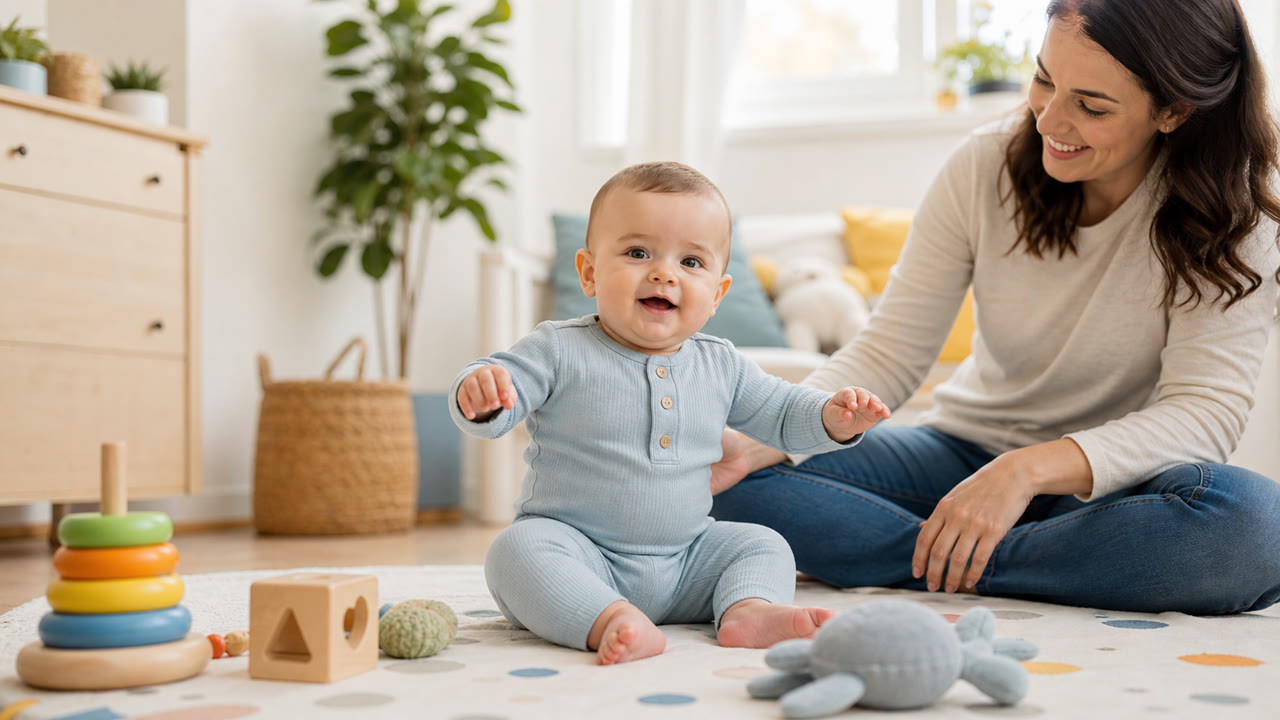
Most babies work toward sitting over several months. First they gain head control, then upper-body strength, then the ability to prop with hands, and later the balance to sit without support. Some babies sit briefly around 6 months, and many sit more steadily closer to 8 or 9 months.
The exact timing depends on temperament, floor time, prematurity, muscle tone, and other development. Instead of focusing on one date, watch the progression: stronger head control, pushing up during tummy time, reaching while supported, and using hands to steady the body.
The sitting stages
- Head control: your baby can hold the head steady when upright.
- Tripod sitting: your baby leans forward and uses hands on the floor for support.
- Supported sitting: your baby sits on your lap or between your legs with less wobbling.
- Independent sitting: your baby can sit without hands down for longer play.
- Moving in and out of sitting: an older baby can get into sitting from the floor and safely move out of it.
Safe ways to practice
The safest practice is low, supervised, and brief. Sit on the floor with your baby between your legs, place toys at chest height, and let your baby use their hands. Keep pillows nearby only as a soft boundary, not as a device that holds the baby in a position they cannot control.
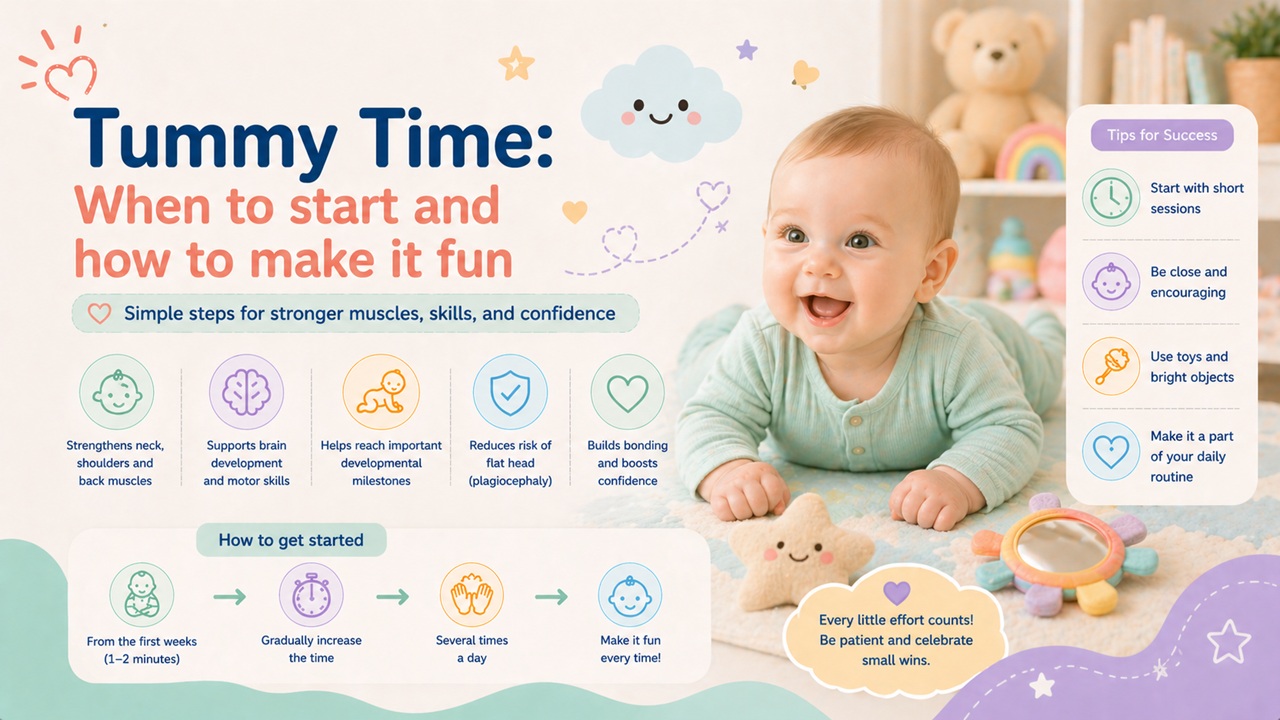
Tummy time still matters. Pushing up on the arms strengthens the neck, shoulders, back, and core that sitting depends on. If tummy time is frustrating, try shorter sessions more often and use ideas from our tummy time guide.
What to avoid
- Do not leave a baby sitting on a couch, bed, or other high surface.
- Avoid long sessions in seats that hold the body upright without active effort.
- Do not force a baby into sitting before they can control the head and trunk.
- Stay close. Early sitters can topple quickly.
Container seats can be useful for short practical moments, but they do not replace floor practice. Babies build strength by moving, wobbling, reaching, and correcting balance.
How sitting changes play
Once sitting becomes steady, play expands. Your baby can use both hands for blocks, cups, board books, soft balls, and simple cause-and-effect toys. This is a great time to support hand-eye coordination and early problem solving.
Sitting often appears around the same season as new feeding skills. Keep meals safe, upright, and supervised, and match food textures to readiness.
When to ask your pediatrician
Ask for guidance if your baby has very poor head control after the early months, seems unusually stiff or floppy, strongly uses one side more than the other, loses skills, or is not progressing toward supported sitting. If your baby was born early, use corrected age when discussing milestones.
Magerly can help you record the tiny steps: first tripod sit, sitting in your lap, reaching while seated, and longer independent play. The milestone is not only the final moment. It is the whole path your baby takes to get there.