
Teaching a Baby to Drink From a Cup: A Calm, Mess-Friendly Guide
Cup drinking is a coordination skill, not a performance test. Short, relaxed practice at meals lets your baby learn while spills remain an expected part of the process.
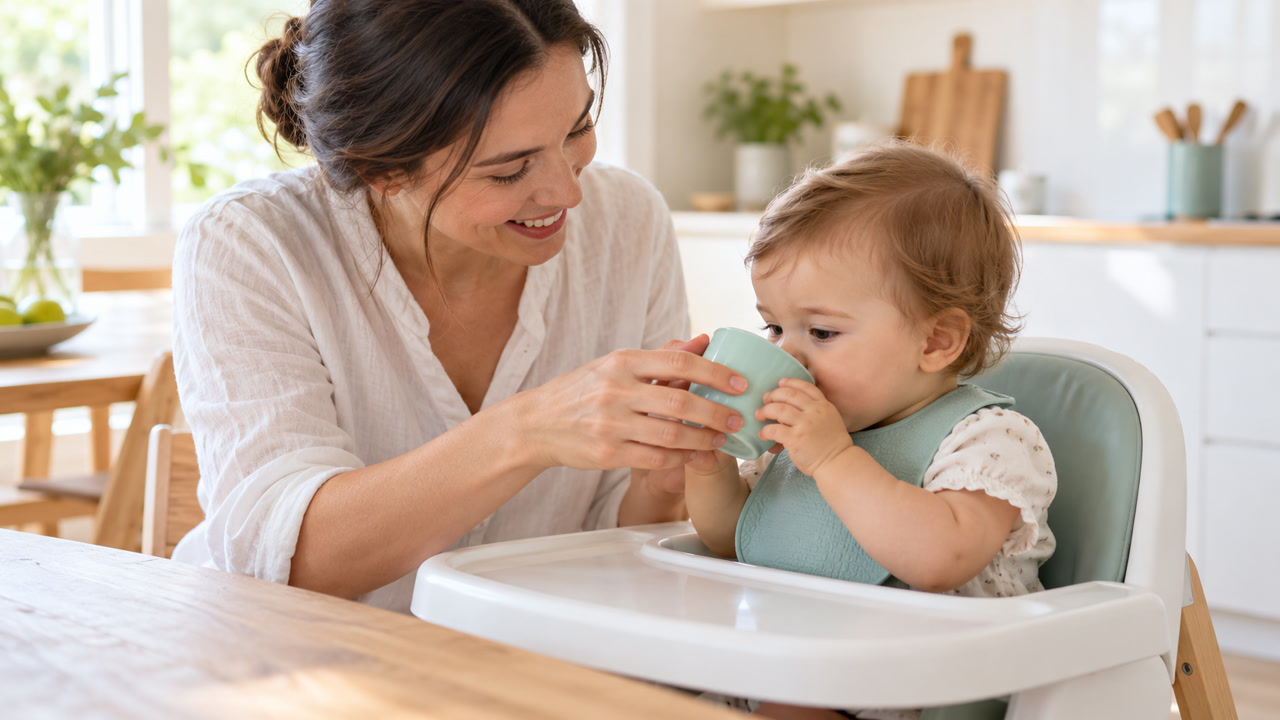
Around the time solid foods begin, many babies can start exploring a cup with adult help. The goal at first is familiarity: sitting upright, bringing the rim or straw to the mouth, taking a small sip, and stopping when the baby turns away.
Choose a simple cup
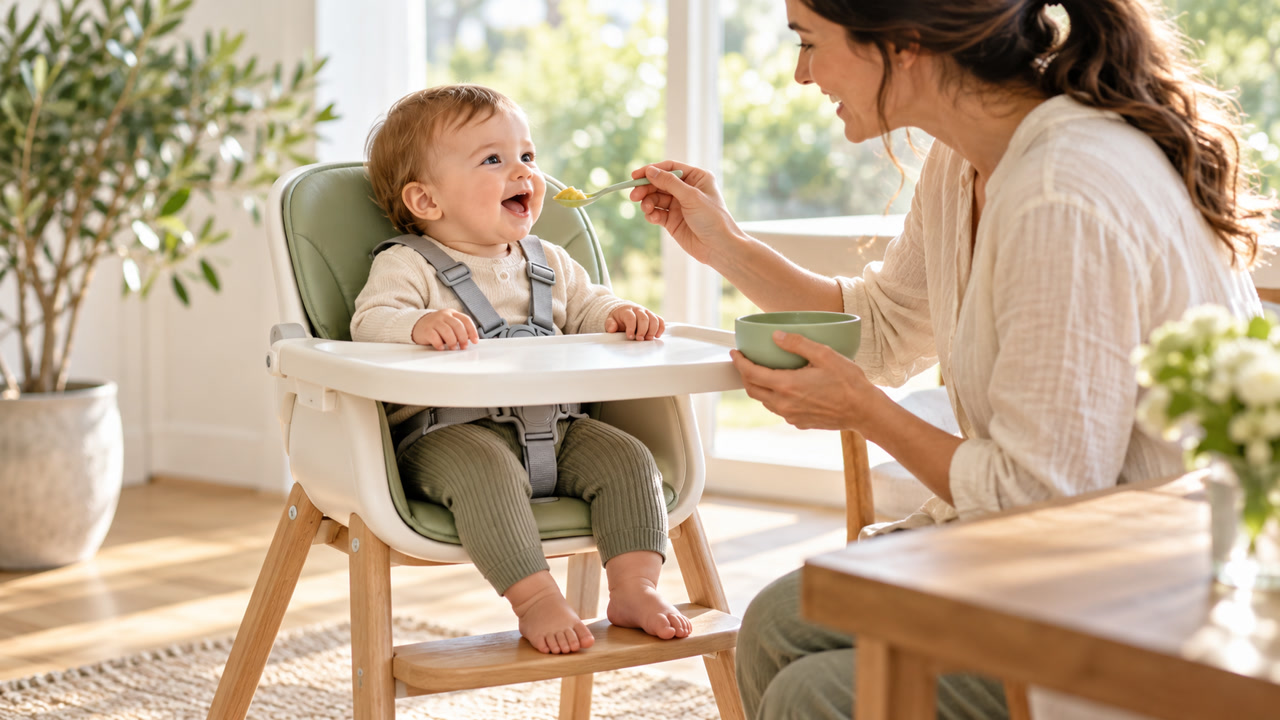
A small open cup that is easy for an adult to control or a straw cup can work well. Fill it with only a little liquid to reduce the speed and the mess. Sit your baby upright in a stable high chair and stay within arm’s reach.
Practice one small sip
- Bring the open cup to the lower lip rather than pouring into the mouth.
- Tilt just enough for the liquid to touch the lips.
- Let your baby sip and swallow at their own pace.
- Stop when they close their mouth, turn away, cough repeatedly, or become upset.
Offer practice during a familiar meal when your baby is alert, not extremely hungry. Pair it with the secure setup in our high-chair safety guide.
Expect gradual progress
At first, you will hold the cup and most liquid may spill. Many children become more independent after the first birthday. Continue breast milk or formula as advised during infancy, and ask your pediatrician what to offer in the cup for your child’s age. Seek guidance if your baby frequently coughs, chokes, has a wet-sounding voice after drinking, or struggles to gain weight.
Open cup, straw cup, or training cup?
An open cup teaches lip control and careful tipping. A straw cup practices closing the lips around a straw and drawing liquid upward. Either can be useful, and many families use both. A valve cup may limit spills but can require stronger sucking and may hide how much help the child still needs.
Choose a small, durable cup without removable pieces that could become a choking hazard. Follow the cleaning instructions, inspect valves and straws for damage, and avoid letting a baby walk or crawl with a hard spout in the mouth.
A simple practice sequence
- Seat the baby upright with stable support for the trunk and feet when possible.
- Use a small amount of familiar liquid and show the cup.
- Guide the hands while you control most of the weight and angle.
- Offer one or two sips, then pause and watch the baby's cues.
- Finish before frustration turns the practice into a struggle.
For a straw, place a small amount of liquid at the top or use a cup designed to help prime the straw. Do not force liquid into the mouth. Learning may take repeated brief attempts over several weeks.
What to serve and when
Breast milk or infant formula remains the main drink through the first year. Ask your pediatrician when and how to offer water based on age, meals, climate, and health. Avoid using cup practice to replace needed milk feeds before your child is ready.
Offer the cup at a regular meal when your baby is alert and moderately hungry. Keep it at the table rather than allowing continuous sipping throughout the day, especially once drinks other than water are introduced.
Coughing, gagging, and signs to assess
An occasional cough while learning can happen if liquid arrives too quickly. Pause, let the baby recover fully, reduce the amount, and adjust the angle. Gagging is noisy and involves air movement; choking may be silent and requires immediate first-aid action.
Ask for a feeding evaluation if coughing happens at most drinks, breathing changes, the voice sounds wet or gurgly, feeds take unusually long, the baby refuses liquids, or growth is a concern. A specialist can assess cup type, posture, flow, and swallowing safety.
Common questions about cup learning
What if the baby only chews the cup or straw?
Chewing is a normal way to explore. Offer a brief model, help with one sip, and end calmly. Repeated exposure often comes before purposeful drinking.
Is a 360-degree cup necessary?
No single cup is required. Different designs practice different movements. Choose one your child can use safely and cleanly, while continuing occasional practice with an open cup or straw if appropriate.
How much spilling is normal?
A great deal at first. Use a bib, small amount of liquid, and washable surface. Preventing every spill can lead the adult to control the cup so tightly that the baby gets little practice.
When should bottles be reduced?
The timing depends on age, growth, feeding history, and local guidance. Discuss a gradual transition with your pediatrician rather than abruptly removing a major source of nutrition and comfort.