
High Chair Safety: A Practical Checklist for Every Meal
A high chair makes family meals easier, but its height and hard surfaces mean that a small setup mistake can lead to a serious fall.
Use the chair only within the manufacturer’s age, size, and developmental limits. Before each meal, make a short safety check part of the routine, just like washing hands or putting on a bib.
Check stability and locks
- Place all feet on a level surface and confirm the chair does not wobble.
- Lock folding legs, wheels, seat attachments, and tray mechanisms.
- Keep the chair away from tables, counters, walls, cords, and hot appliances.
- Inspect straps, seams, screws, and cracked plastic regularly.
Buckle every time
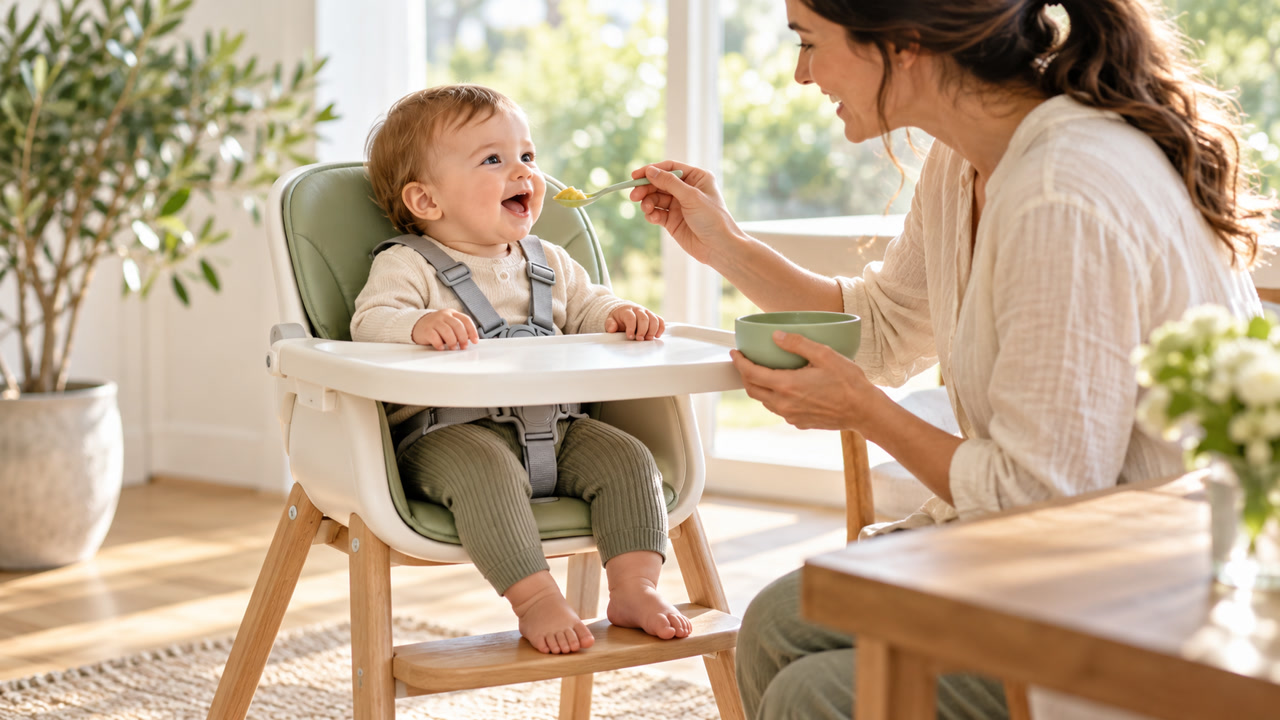
Use the full restraint system, including the crotch strap, and adjust it according to the instructions. The tray is not a restraint. Never allow standing or climbing, and do not let an older child hang from or play on the chair.
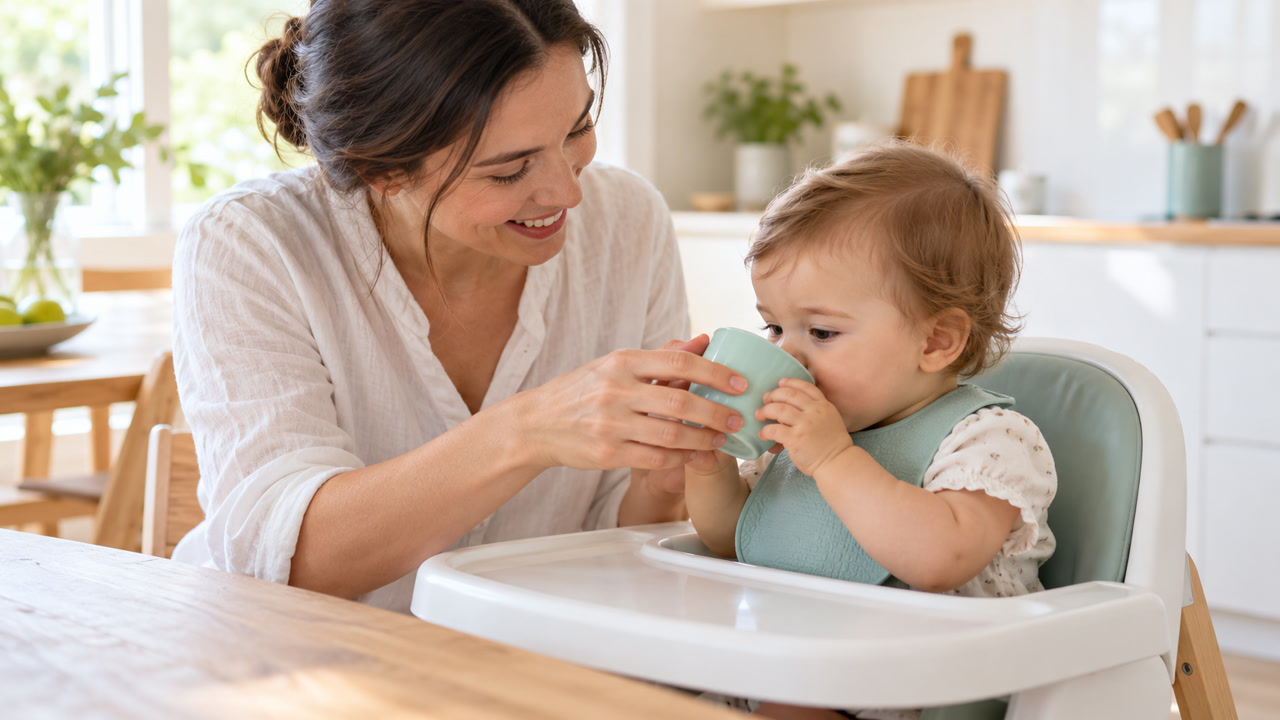
A stable upright position also supports cup practice and self-feeding. See how to introduce a cup without rushing the skill.
Stay close for the whole meal
Keep your baby within arm’s reach and actively supervise eating. If you must leave, take the child out rather than asking them to wait in the chair. At restaurants, check that a clip-on seat locks securely to a strong compatible table and that your child cannot push against a support and dislodge it.
Choosing a chair that fits your space
Look for a broad, stable base, a restraint system that includes a crotch strap, and locks that are easy for an adult to confirm. A footrest can improve comfort and stability during eating, but it does not replace the harness. Check that the model fits the child's current size and skills.
If you use a second-hand chair, locate the model information and instructions. Check for recalls, missing hardware, cracked plastic, torn straps, and repairs that change how the chair folds or locks. Do not improvise replacement straps or add cushions that interfere with the restraint.
A ten-second setup check
- All legs are fully open and every folding lock is engaged.
- Wheels are locked and the floor is level and dry.
- The harness lies flat and is adjusted close to the body.
- The chair is beyond kicking distance of tables, counters, walls, and cords.
- Hot drinks, knives, tablecloths, and serving dishes are out of reach.
Repeat the check after moving or folding the chair. A product that was secure yesterday can be left partly open after cleaning or transport.
Safer habits during meals
Prepare food before placing the baby in the chair so you are not repeatedly turning away. Sit close enough to respond to gagging, choking, or an attempt to climb. Keep pets and older children from bumping or pulling on the chair.
Remove the child as soon as the meal is over. A high chair is not a play space or a place to wait while an adult finishes chores. Clean dropped food promptly to prevent slips and to discourage pets from crowding underneath.
Portable and restaurant seats
For a clip-on seat, verify the table type and thickness allowed by the manufacturer. Avoid glass tops, loose tabletops, pedestal tables, and folding tables unless specifically approved. Check both clamps and make sure the baby's feet cannot push against a central support.
Restaurant high chairs vary in condition. Test stability, inspect the strap, wipe the contact surfaces, and ask for another chair if anything is missing. Bringing a compact approved restraint is useful only when it can be installed exactly as directed.
Common questions about high chairs
When is a baby ready?
Follow the chair instructions and feeding-readiness guidance. The child generally needs enough head and trunk control to remain upright with the support provided. A reclined baby should not be offered solid food.
Can the tray replace the harness?
No. A baby can slide under, climb over, or push against a tray. Use every required strap each time, even for a quick snack.
Are cushions safe?
Use only accessories approved for the exact model. An extra cushion can alter strap placement, reduce stability, or create gaps where a child becomes trapped.
What if my baby keeps trying to stand?
End the meal, remove the baby, and offer movement elsewhere. Recheck harness fit and meal timing. Repeated standing is not a reason to eat unrestrained.