
Postpartum Recovery: A Week-by-Week Guide for New Moms
Your body did something extraordinary. Now it needs time, patience, and support to heal. Here's what to expect in the weeks after birth — and how to take care of yourself while caring for your newborn.
The postpartum period — often called the "fourth trimester" — is a time of profound physical and emotional transformation. While the world's attention shifts to the new baby, the mother's body is undergoing a recovery process every bit as significant as pregnancy itself. Understanding what's normal, what's not, and how to support your healing can make the difference between struggling in silence and recovering with confidence.
Week 1: The Immediate Aftermath
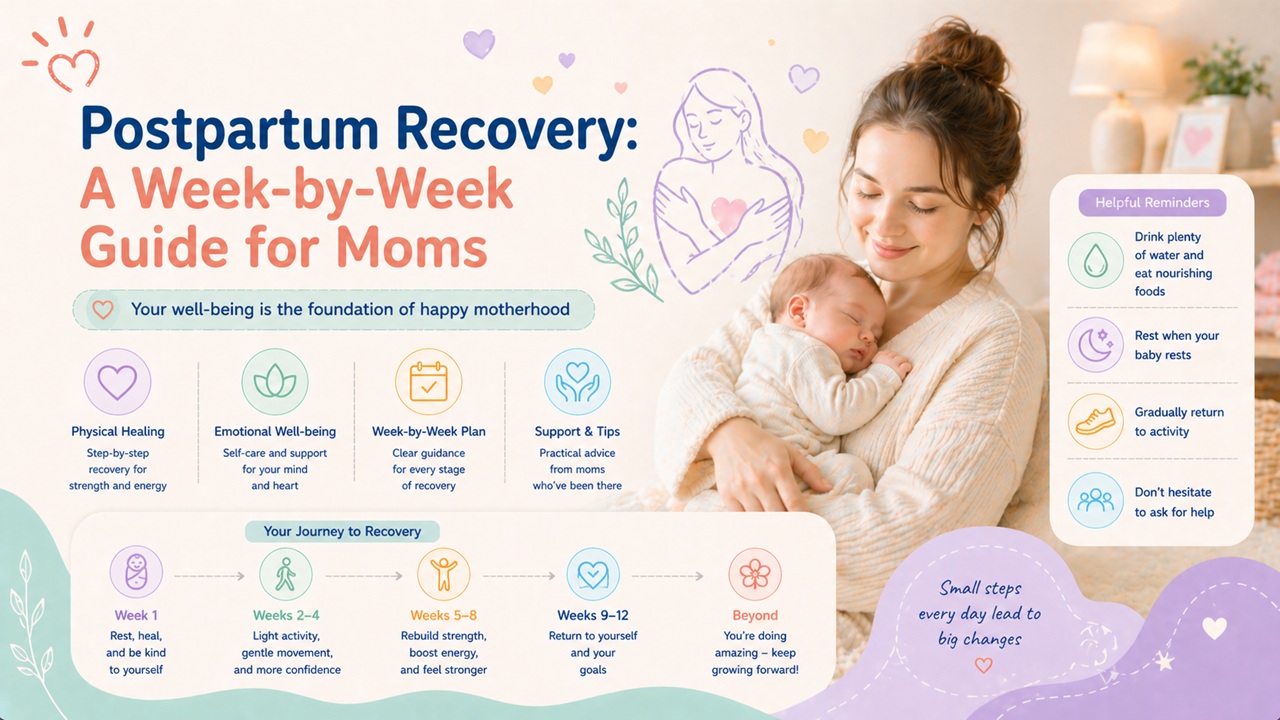
The first week postpartum is the most physically intense. Your uterus begins contracting back to its pre-pregnancy size — a process called involution — and these afterpains can feel like strong menstrual cramps, especially during breastfeeding. Lochia (postpartum bleeding) is heavy and bright red, similar to a very heavy period. You'll need maternity pads rather than tampons during this time.
If you had a vaginal delivery, perineal soreness is expected, particularly if you had stitches. Ice packs, peri bottles filled with warm water, witch hazel pads, and sitting on a donut cushion provide relief. For cesarean deliveries, incision care is the priority: keep the area clean and dry, watch for signs of infection (increasing redness, warmth, oozing, or fever), and avoid lifting anything heavier than your baby.
Fatigue is overwhelming during this week. Your body is recovering from a major physical event while simultaneously adapting to round-the-clock newborn care. Accept every offer of help, sleep when the baby sleeps (as much as this advice might feel impossible), and lower your expectations for everything that isn't feeding your baby and caring for your basic needs.
Weeks 2–3: Finding a Rhythm
Lochia transitions from bright red to pinkish-brown and gradually lightens. Afterpains typically subside by the end of week two. Perineal stitches begin dissolving, and soreness decreases noticeably. Breast engorgement peaks around days 3–5 postpartum and usually stabilizes once your milk supply regulates to your baby's demand.
Night sweats are common during these weeks as your body sheds the excess fluids retained during pregnancy. You may also experience hair shedding (telogen effluvium), which typically begins around 2–4 months postpartum and is a normal hormonal response — not permanent hair loss.
Emotionally, the "baby blues" peak around days 3–5 and can persist through the second week. Characterized by mood swings, tearfulness, anxiety, and feeling overwhelmed, baby blues affect up to 80% of new mothers and are driven by the dramatic hormonal drop after delivery. They typically resolve on their own by 2–3 weeks postpartum.
Weeks 4–6: Turning a Corner
By week four, most women feel significantly more physically recovered. Lochia lightens to yellow or white and may stop entirely. Energy levels improve, though sleep deprivation continues to take its toll. Many women receive medical clearance to resume exercise and sexual activity at their 6-week postpartum visit, though individual readiness varies widely.
This is when many partners return to work and visitors taper off, leaving the new mother more isolated. Building connection — whether through a postpartum support group, online community, or regular check-ins with friends — becomes especially important during this transition.
Baby Blues vs. Postpartum Depression
It's crucial to distinguish between normal baby blues and postpartum depression (PPD), which affects approximately 1 in 7 new mothers. While baby blues resolve by 2–3 weeks and involve temporary sadness and mood swings, PPD is characterized by:
- Persistent feelings of sadness, hopelessness, or emptiness lasting more than two weeks
- Difficulty bonding with your baby
- Withdrawing from family and friends
- Loss of interest in activities you used to enjoy
- Significant changes in appetite or sleep (beyond what's caused by the baby)
- Intense irritability or anger
- Thoughts of harming yourself or your baby
PPD is not a character flaw or a sign of weakness — it's a medical condition with effective treatments including therapy, medication, and support groups. If your symptoms persist beyond two weeks or intensify, reach out to your healthcare provider immediately. Postpartum Support International (1-800-944-4773) also offers a helpline and text support.
Sleep Deprivation Strategies
Chronic sleep loss is perhaps the single hardest aspect of early parenthood. While you cannot eliminate nighttime wake-ups during the newborn phase, you can manage their impact:
- Share night duties. If possible, alternate who handles nighttime feedings and diaper changes with your partner. Even one uninterrupted 4–5 hour stretch improves cognitive function significantly.
- Nap strategically. One daytime nap that coincides with your baby's longest sleep stretch is more restorative than multiple 10-minute dozes.
- Protect your sleep environment. Blackout curtains, white noise, and keeping your phone face-down can help you fall back asleep faster after wake-ups.
- Accept imperfection. The house will be messy. Meals will be simple. This is temporary, and your rest is more important than a tidy kitchen.
Nutrition for Recovery and Breastfeeding
Your body needs fuel to heal and produce milk (if breastfeeding). This isn't the time for restrictive diets. Focus on nutrient-dense foods: protein for tissue repair (eggs, lean meats, legumes), iron-rich foods to replenish blood loss (spinach, fortified cereals, red meat), calcium for bone health (dairy, fortified plant milks), and omega-3 fatty acids for brain health and mood stability (fatty fish, walnuts, flaxseed).
Stay hydrated — breastfeeding mothers need approximately 3.1 liters of fluid daily. Keep a water bottle within reach during every feeding session. If cooking feels impossible, batch-prep freezer meals before birth, accept meal deliveries from friends, or use simple no-cook options like yogurt parfaits, sandwiches, and pre-washed fruit.
Pelvic Floor Recovery
Pregnancy and childbirth place enormous stress on the pelvic floor muscles regardless of delivery method. Symptoms like urinary leakage, pelvic pressure, or pain during intimacy are common but not something you simply have to live with. Gentle pelvic floor exercises (Kegels) can begin within days of an uncomplicated vaginal delivery — start with short holds (3–5 seconds) and build gradually.
If symptoms persist beyond 6–8 weeks, ask your provider for a referral to a pelvic floor physiotherapist. These specialists can assess muscle function and create a targeted rehabilitation program. Research shows that pelvic floor physiotherapy is highly effective for postpartum incontinence and pain.
When to Call Your Doctor
While most postpartum symptoms resolve naturally, certain signs require immediate medical attention:
- Fever above 38°C (100.4°F)
- Foul-smelling vaginal discharge
- Heavy bleeding that soaks more than one pad per hour
- Severe headache or vision changes
- Calf pain, redness, or swelling (potential blood clot)
- Chest pain or difficulty breathing
- Incision that becomes red, hot, or oozing
- Thoughts of harming yourself or your baby
Building Your Support System
Recovery doesn't happen in isolation. Identify your support network before the baby arrives: your partner, family members, friends, a postpartum doula, lactation consultant, and healthcare provider each play different roles. Be specific when people offer help — "Could you bring dinner on Tuesday?" or "Could you hold the baby while I shower?" gets better results than vaguely saying "I'm fine."
Partner involvement is critical. Research consistently shows that fathers and co-parents who are actively involved in newborn care from the beginning develop stronger bonds with their children and provide better support to the recovering mother. Divide responsibilities explicitly rather than assuming roles will emerge organically.
How Magerly Reduces Parenting Anxiety
One of the greatest sources of anxiety for new parents is the nagging question: "Is my baby developing normally?" Magerly is designed to address exactly this concern. By providing evidence-based milestone checklists matched to your baby's age, the app gives you a clear picture of what to expect and when — reducing the temptation to spiral down internet rabbit holes at 3 AM.
Tracking your baby's growth, feeding patterns, and developmental achievements in Magerly also creates a sense of control during a period that often feels chaotic. When you can see a clear record of progress — your baby's first social smile, the day they started tracking objects, their weight gain trajectory — it reinforces that you're doing a good job, even on the days that feel hardest.
You Deserve to Heal
The postpartum period is temporary, but the way you care for yourself during these weeks sets the tone for your long-term health and your relationship with your child. Give yourself the same compassion you'd offer a friend. Ask for help without guilt. Celebrate small victories. And remember that recovering fully — not just physically but emotionally — is not selfish. It's the foundation for everything that comes next.