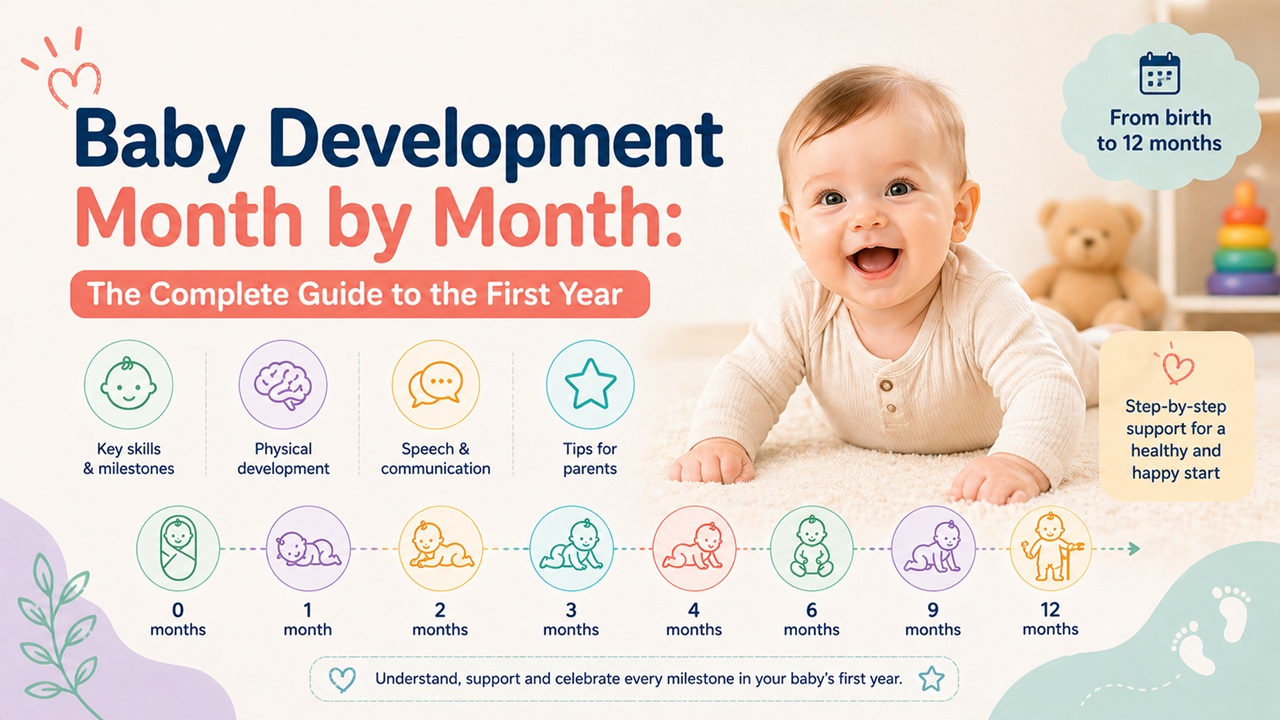

Baby Vision Development: What Babies See Month by Month
Your baby's eyes are open from the beginning, but vision matures gradually. Faces, contrast, light, movement, and everyday play all help the visual system practice.
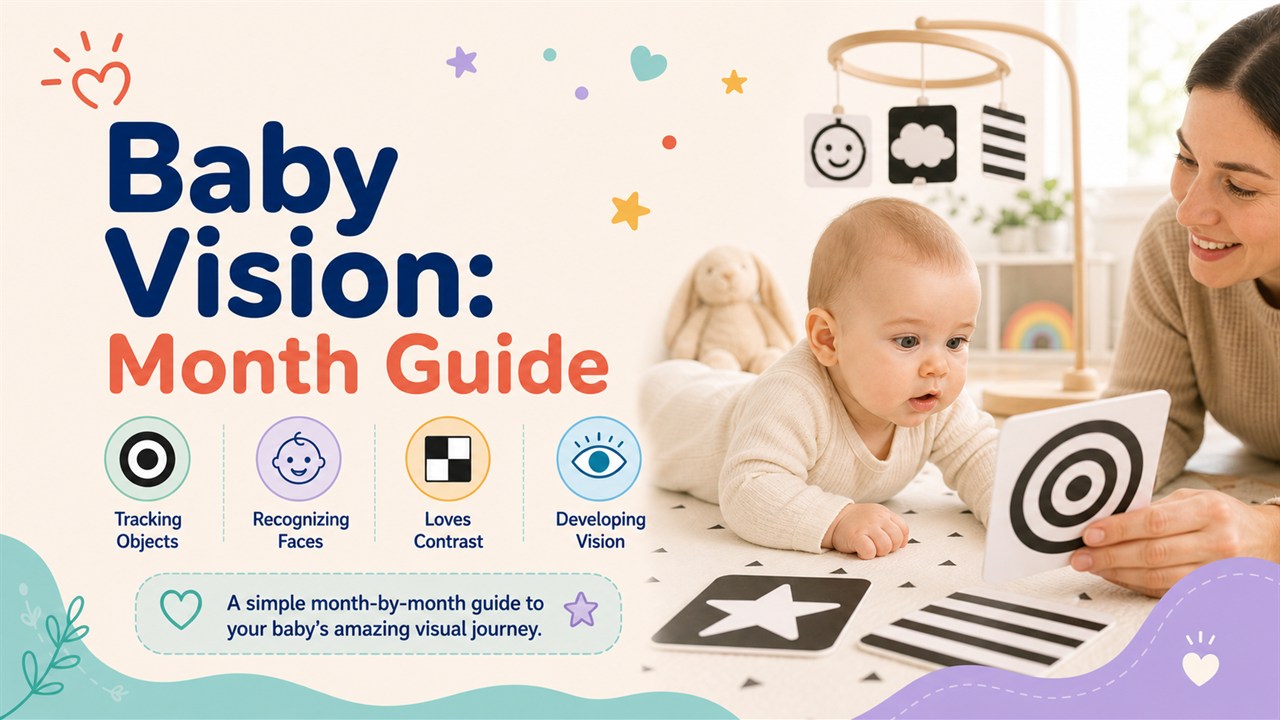
Baby vision is not fully mature at birth. Newborns can see light, shapes, movement, and faces best at close range. Over the first year, the eyes and brain practice focusing, tracking, coordinating both eyes, noticing color, and judging distance. This is why your baby may stare at your face one week and chase a rolling ball with their eyes a few months later.
Visual development works closely with motor development. Looking at a toy leads to reaching. Reaching leads to touching. Touching leads to more looking. This loop is one reason simple face-to-face play and floor time matter so much.
Birth to 2 months: close faces and contrast
Newborns see best up close, roughly the distance from your arms to your face during feeding. They are especially drawn to high-contrast patterns, edges, and human faces. You do not need complicated visual toys. Your face, slow expressions, and a simple black-and-white card are enough.
Short periods of eye crossing can happen in young infants as coordination develops, but eyes should gradually work together more consistently. Bring concerns to your pediatrician, especially if one eye always turns in or out.
2-4 months: tracking and social focus
By this stage many babies begin following moving objects more smoothly. Try slowly moving a rattle from side to side during alert time, pausing in the middle so your baby can catch up. Smiles, voice, and expression make this more interesting than any toy.
This is also when looking and early hand control begin to connect. A baby who watches a toy may start batting toward it, bringing hands to the midline, and studying fingers.
4-6 months: reaching, color, and depth practice
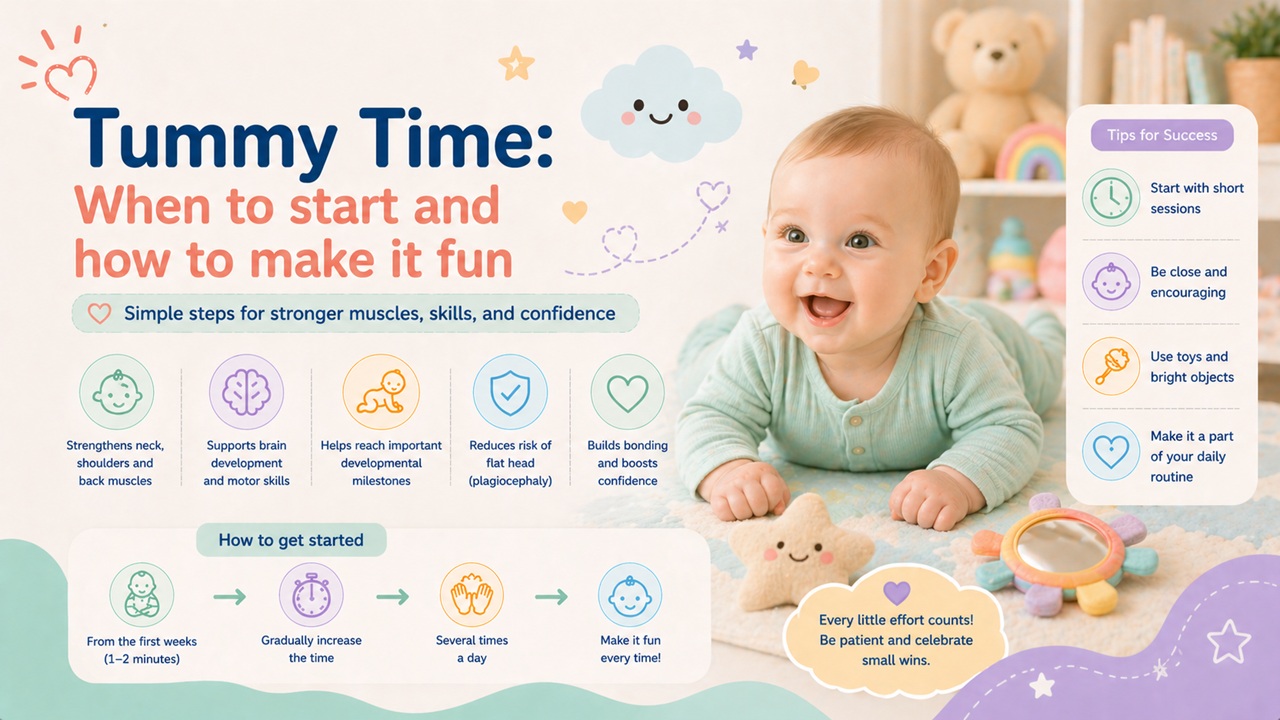
As head and trunk control improve, babies can look around with more stability. They begin reaching for what they see, watching toys fall, noticing familiar people across the room, and enjoying mirrors. Tummy time supports vision too because it changes the angle of the world and encourages looking up, scanning, and reaching.
Offer bright but not overwhelming toys, simple mobiles out of reach, and safe objects to track. Avoid screens as a visual activity for babies; real faces, movement, and objects are richer and more responsive.
7-12 months: recognition and visual problem solving
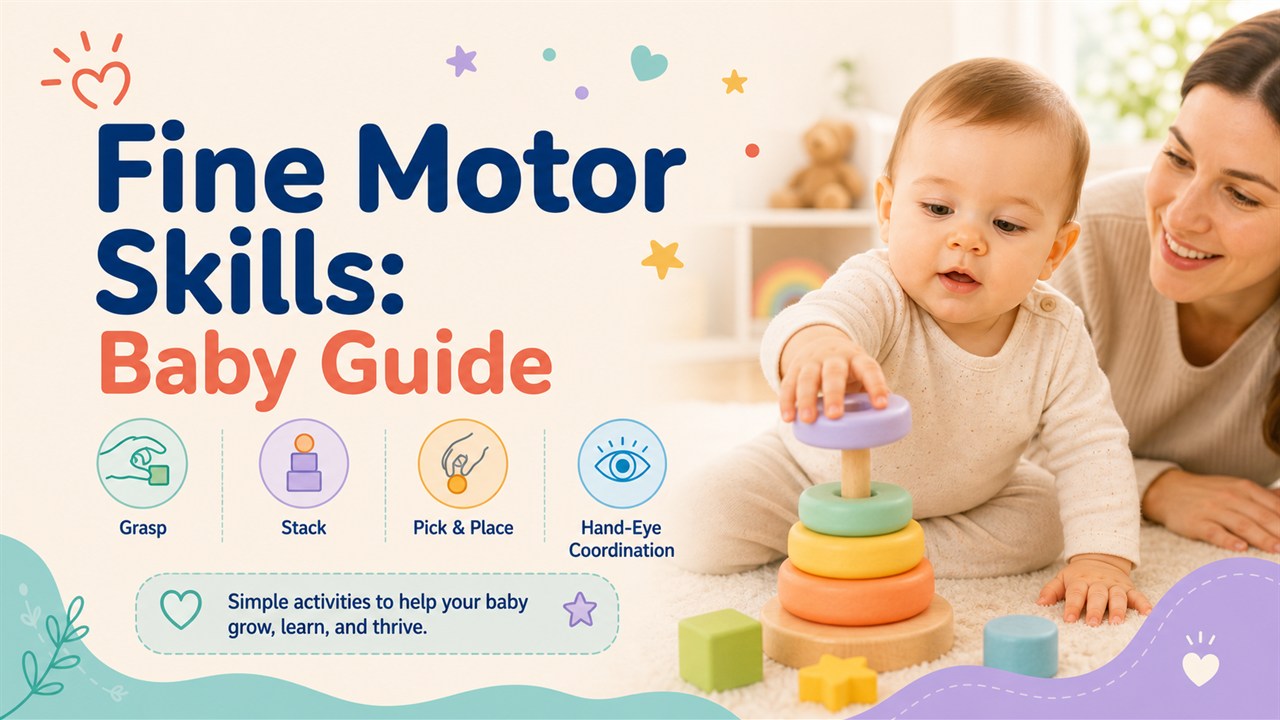
Older babies use vision for problem solving: finding a hidden toy, looking toward a named picture, crawling toward a favorite object, or watching where a snack lands. This is also when hand-eye coordination becomes much more visible. For more ideas, see our fine motor skills guide.
Simple games help: peekaboo, rolling a soft ball, hiding a toy partly under a scarf, pointing to pictures in a board book, or placing two toys in front of your baby and waiting to see which one they choose.
When to call the pediatrician
Ask your pediatrician promptly if you notice a white or cloudy pupil, constant eye turning, eyes that shake rhythmically, extreme light sensitivity, persistent tearing or discharge, droopy eyelid that covers the pupil, or if your baby does not seem to follow faces or objects as expected. If your baby was born prematurely, your care team may recommend extra eye screening.
How Magerly helps you connect the dots
Vision milestones can be subtle. Magerly helps you record when your baby starts tracking toys, recognizing faces, reaching for objects, or enjoying picture books. Pair this article with our first-year milestone guide to see how vision, movement, and communication develop together.
Your baby's visual world grows through ordinary moments: your face, a song, a soft toy, a book, a bright window, and the comfort of being watched by someone who knows them well.