
Baby Vaccination Schedule: A Complete Guide for Parents
Vaccines are one of the most effective ways to protect your baby from serious diseases. Here's everything you need to know about the recommended schedule, what to expect, and how to keep your child's immunization records organized.
Childhood vaccination is one of modern medicine's greatest achievements, preventing millions of cases of serious illness and death each year worldwide. As a new parent, the vaccination schedule can feel overwhelming — multiple shots across many appointments in the first 18 months alone. But understanding why each vaccine is given when it is, what to expect during and after visits, and how to keep organized makes the process far less stressful.
Why Vaccines Matter
Vaccines work by training your baby's immune system to recognize and fight specific pathogens without causing the disease itself. Before widespread vaccination, diseases like measles, whooping cough, and polio routinely killed or disabled thousands of children every year. Today, thanks to immunization programs, many of these diseases are rare in developed nations — but they haven't disappeared. Unvaccinated children remain vulnerable, and outbreaks still occur in communities with lower vaccination rates.
The timing of the vaccine schedule isn't arbitrary. It's designed to protect babies during the window when they're most vulnerable — after maternal antibodies (passed during pregnancy) begin to wane, typically around 2–6 months of age. Each dose in a multi-dose series builds on the previous one, creating stronger and longer-lasting immunity.
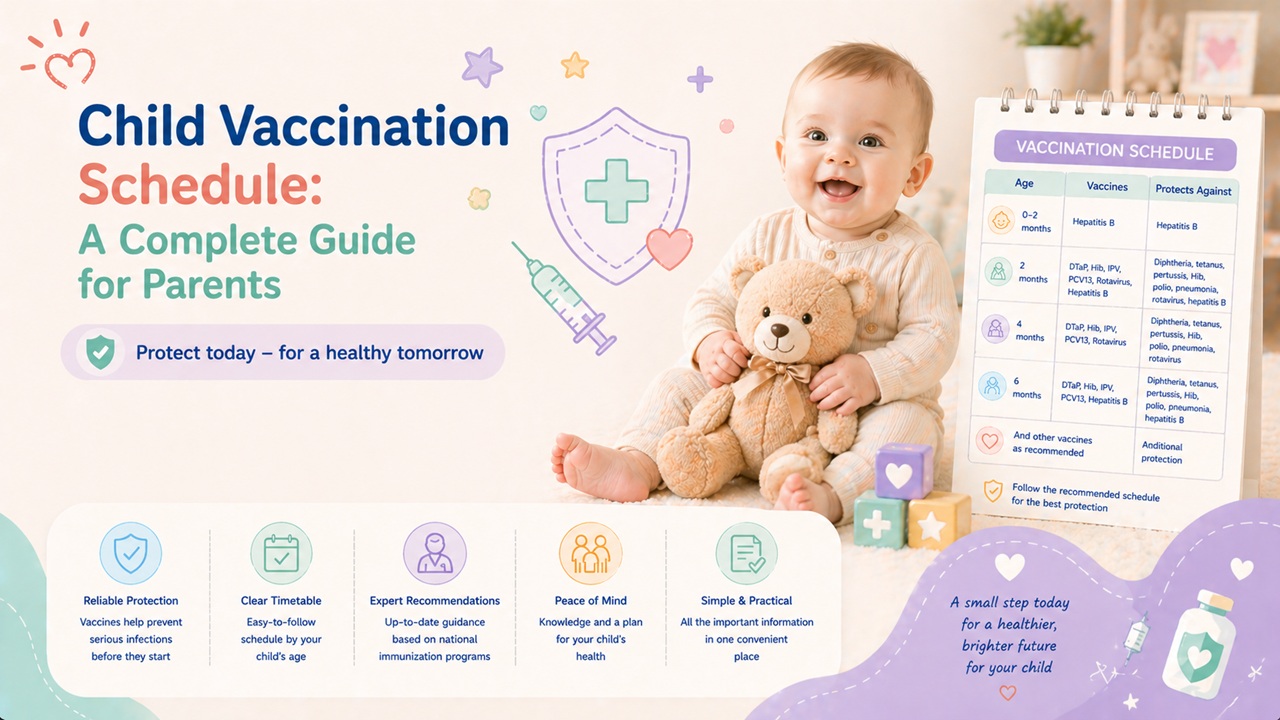
The Recommended Schedule: Birth to 18 Months
The following schedule is based on recommendations from the Centers for Disease Control and Prevention (CDC) and the American Academy of Pediatrics (AAP). Your pediatrician may adjust timing slightly based on your baby's health status.
At birth:
- Hepatitis B (HepB), 1st dose: Given before hospital discharge. Protects against a liver infection that can become chronic and cause long-term damage.
2 months:
- DTaP, 1st dose: Protects against diphtheria, tetanus, and pertussis (whooping cough).
- IPV, 1st dose: Inactivated poliovirus vaccine prevents poliomyelitis.
- Hib, 1st dose: Guards against Haemophilus influenzae type b, which can cause meningitis and pneumonia.
- PCV13, 1st dose: Pneumococcal conjugate vaccine prevents pneumococcal infections including meningitis and blood infections.
- RV, 1st dose: Rotavirus vaccine (oral) prevents severe diarrhea and vomiting caused by rotavirus.
- HepB, 2nd dose: Second dose of the hepatitis B series.
4 months:
- DTaP, 2nd dose
- IPV, 2nd dose
- Hib, 2nd dose
- PCV13, 2nd dose
- RV, 2nd dose
6 months:
- DTaP, 3rd dose
- PCV13, 3rd dose
- RV, 3rd dose (depending on brand; some require only 2 doses)
- HepB, 3rd dose (can be given between 6–18 months)
- IPV, 3rd dose (can be given between 6–18 months)
- Influenza (flu): Annual flu vaccine begins at 6 months, with two doses given 4 weeks apart the first year.
12–15 months:
- MMR, 1st dose: Measles, mumps, and rubella vaccine.
- Varicella, 1st dose: Chickenpox vaccine.
- Hib, final dose: Booster completing the Hib series.
- PCV13, 4th dose: Booster completing the pneumococcal series.
- Hepatitis A, 1st dose: Protects against hepatitis A infection (2nd dose given 6 months later).
15–18 months:
- DTaP, 4th dose
What to Expect at Each Visit
Well-baby visits that include vaccinations follow a predictable pattern. Your pediatrician will first assess your baby's growth, development, and overall health, then discuss which vaccines are due. Multiple vaccines are often given at the same appointment — research has repeatedly confirmed that receiving several vaccines simultaneously is safe and doesn't overwhelm the immune system.
The actual injections are brief — a few seconds each. Most babies cry immediately but calm within minutes, especially if you nurse or offer a pacifier right after. Some clinics offer comfort measures like sugar water on a pacifier (for young infants) or distraction techniques for older babies.
Common Side Effects and How to Manage Them
Mild side effects are normal signs that the immune system is responding to the vaccine. They typically appear within 24–48 hours and resolve on their own within 1–3 days:
- Injection site reactions: Redness, swelling, or tenderness at the injection site. A cool, damp cloth can provide relief.
- Mild fever: Temperature up to 38.5°C (101.3°F) is common, especially after DTaP. Infant acetaminophen or ibuprofen (6+ months) can be used if your baby is uncomfortable — consult your pediatrician for dosing.
- Fussiness and decreased appetite: Your baby may be irritable and eat less for a day or two. Extra cuddles and shorter, more frequent feeding sessions help.
- Sleepiness: Some babies sleep more than usual in the day or two following vaccines. This is normal.
Serious reactions are extremely rare (occurring in fewer than 1 in a million doses for most vaccines). Seek immediate medical attention if your baby develops high fever (above 40°C/104°F), seizures, severe allergic reaction (hives, swelling of face/throat, difficulty breathing), or inconsolable crying lasting more than 3 hours.
Myths vs. Facts
Myth: Vaccines cause autism. This claim originated from a since-retracted 1998 study whose author lost his medical license for ethical violations and data manipulation. Dozens of large-scale studies involving millions of children across multiple countries have found no link between vaccines and autism.
Myth: Too many vaccines overwhelm the immune system. Babies encounter thousands of antigens daily through normal activities like eating and breathing. The total antigen load in the entire vaccine schedule is tiny by comparison — fewer antigens than a baby encounters in a single day of normal life.
Myth: Natural immunity is better. While surviving a disease does produce immunity, the risks of the disease itself (brain damage from measles, death from whooping cough, paralysis from polio) vastly outweigh the minimal risks of vaccination. Vaccines provide protection without requiring your child to suffer the disease.
Myth: Vaccines contain dangerous ingredients. Vaccine ingredients (adjuvants, preservatives, stabilizers) are present in minuscule quantities that have been extensively safety-tested. The amount of aluminum in vaccines, for example, is less than what a breastfed baby ingests naturally in a single day.
Keeping Vaccination Records
Your baby's vaccination record is an important medical document you'll need for daycare enrollment, school registration, travel, and future healthcare. Most pediatricians provide a paper immunization card at your first visit — keep it in a safe, consistent location and bring it to every well-baby appointment.
Many states also maintain electronic immunization registries that your provider reports to automatically. Ask your pediatrician how to access your state's registry as a backup.
Travel Vaccines
If your family plans to travel internationally, your baby may need additional vaccines or an accelerated schedule depending on the destination. Some vaccines (like yellow fever) can be given as early as 6–9 months for travel to endemic areas. Consult your pediatrician or a travel medicine clinic at least 4–6 weeks before any international trip to ensure your baby is adequately protected.
Tracking Appointments with Magerly
With so many doses spread across so many visits, keeping track of what's been given and what's coming next can be challenging. Magerly helps parents stay organized by providing health milestone reminders that include vaccination appointments. You can log completed vaccines with dates, set reminders for upcoming visits, and maintain a clear digital record alongside your baby's developmental milestones.
Having all your child's health information in one place — growth data, developmental achievements, and vaccination history — means you're always prepared for pediatrician visits. When your doctor asks "Has she had her 6-month shots?" you'll have the answer instantly in Magerly rather than digging through papers or trying to remember.
Protecting Your Baby's Future
Vaccination is an act of love — both for your own child and for the community of vulnerable people (newborns too young to be vaccinated, immunocompromised individuals, elderly family members) who rely on herd immunity for protection. By following the recommended schedule, you're giving your baby the strongest possible start while helping to keep preventable diseases from making a comeback. Talk to your pediatrician if you have questions or concerns — they're your best resource for evidence-based guidance specific to your child's needs.