
Baby Social Smile: What It Means and How to Encourage It
A baby smile can change the whole room. It is also an early sign of social connection: your baby is beginning to notice faces, voices, timing, and the joy of back-and-forth interaction.
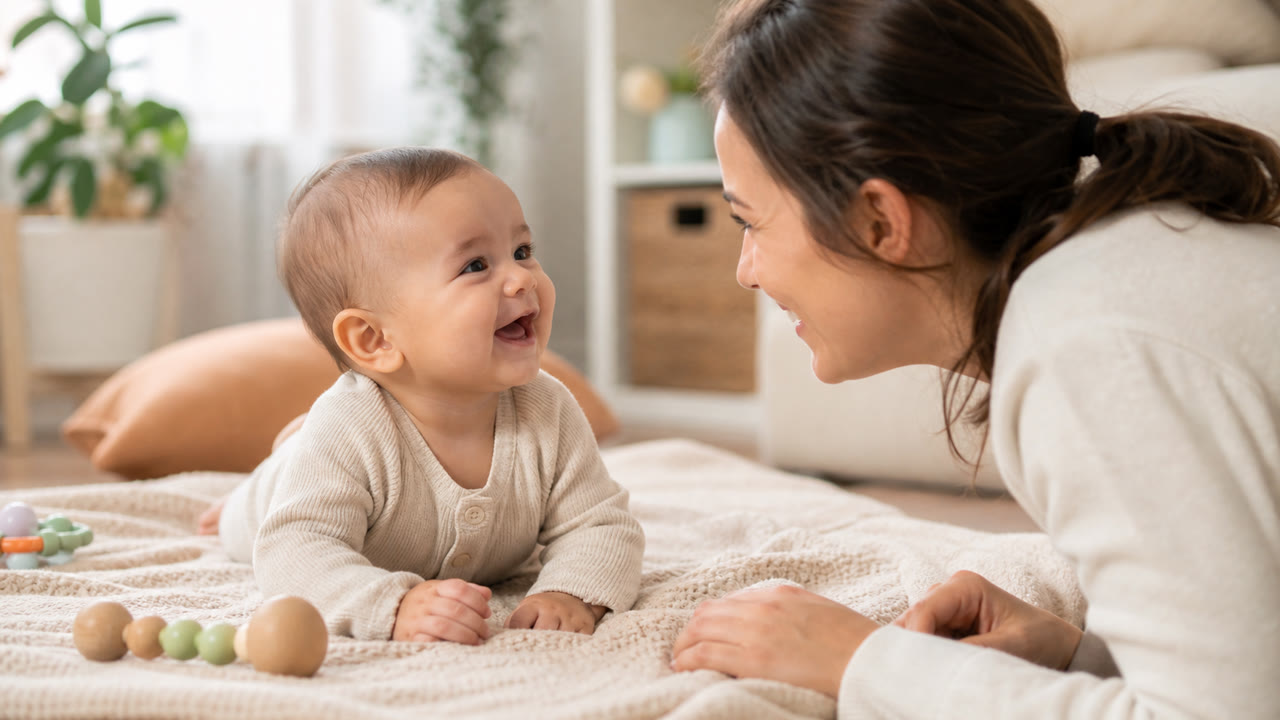
In the earliest weeks, babies may smile during sleep or after feeding. Those sweet expressions are real moments for parents, but they are often reflexive. A social smile is different: your baby smiles in response to a face, voice, touch, or playful pause. It is one of the first clear signs of back-and-forth communication.
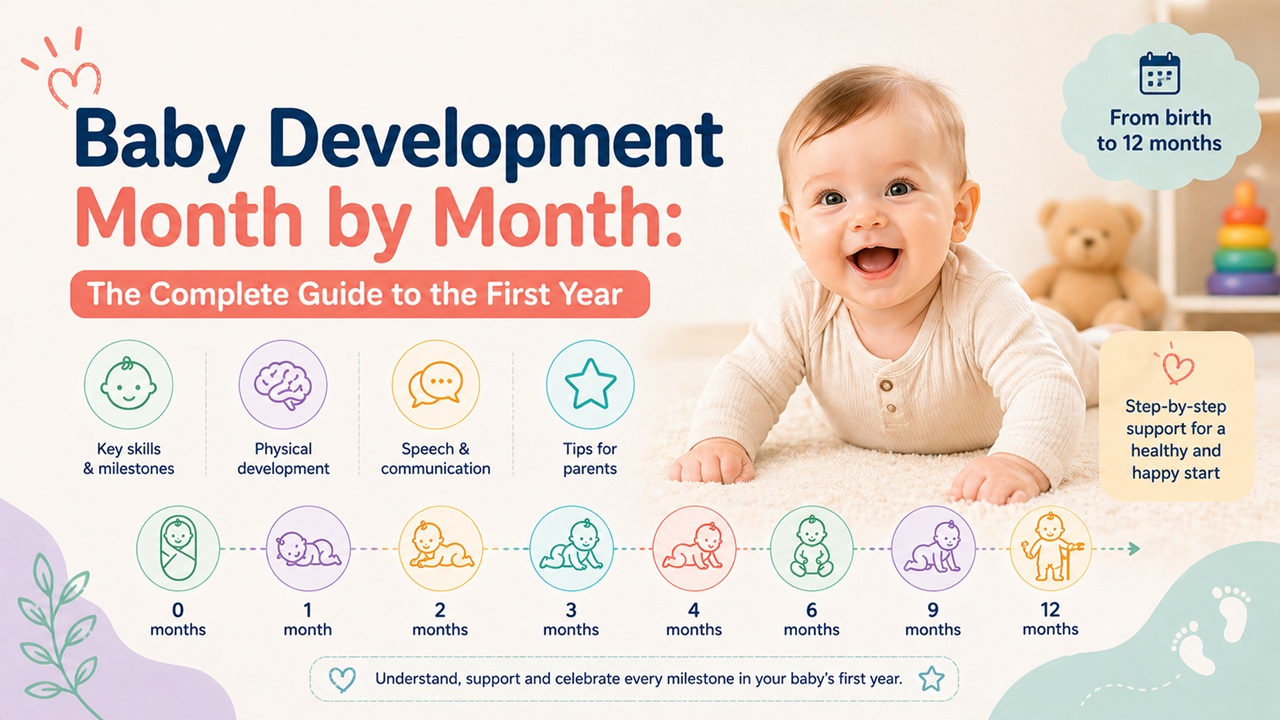
Many babies begin social smiling around the second month, with more frequent smiles over the next weeks. Timing varies, and a single milestone never tells the whole story. Look for a growing pattern of eye contact, calming to familiar voices, turning toward faces, and responding to interaction.
Why social smiles matter
A social smile is not just cute. It helps build the relationship between baby and caregiver. When you smile, pause, and respond, your baby learns that communication changes the world. Their face, sound, and movement can bring you closer.
This back-and-forth rhythm supports emotional security and early language. Long before first words, babies practice conversation through gaze, facial expression, coos, kicks, and pauses.
How to encourage smiles without pressure
- Get close enough for your baby to see your face clearly.
- Use a warm voice, then pause so your baby has time to respond.
- Repeat simple sounds or expressions your baby enjoys.
- Choose calm moments when your baby is fed, rested, and alert.
- Stop when your baby looks away, fusses, or seems tired.
The goal is not to perform until your baby smiles. The goal is to offer enjoyable connection. Some babies smile quietly; others respond with their whole body. Some need more time to warm up. Temperament matters.
Games that build social connection
Try a slow peekaboo with your hands, a familiar greeting song, or a diaper-change chat where you describe what you are doing. Mirror your baby gently: if they coo, coo back; if they kick, smile and pause. These tiny exchanges teach turn-taking.
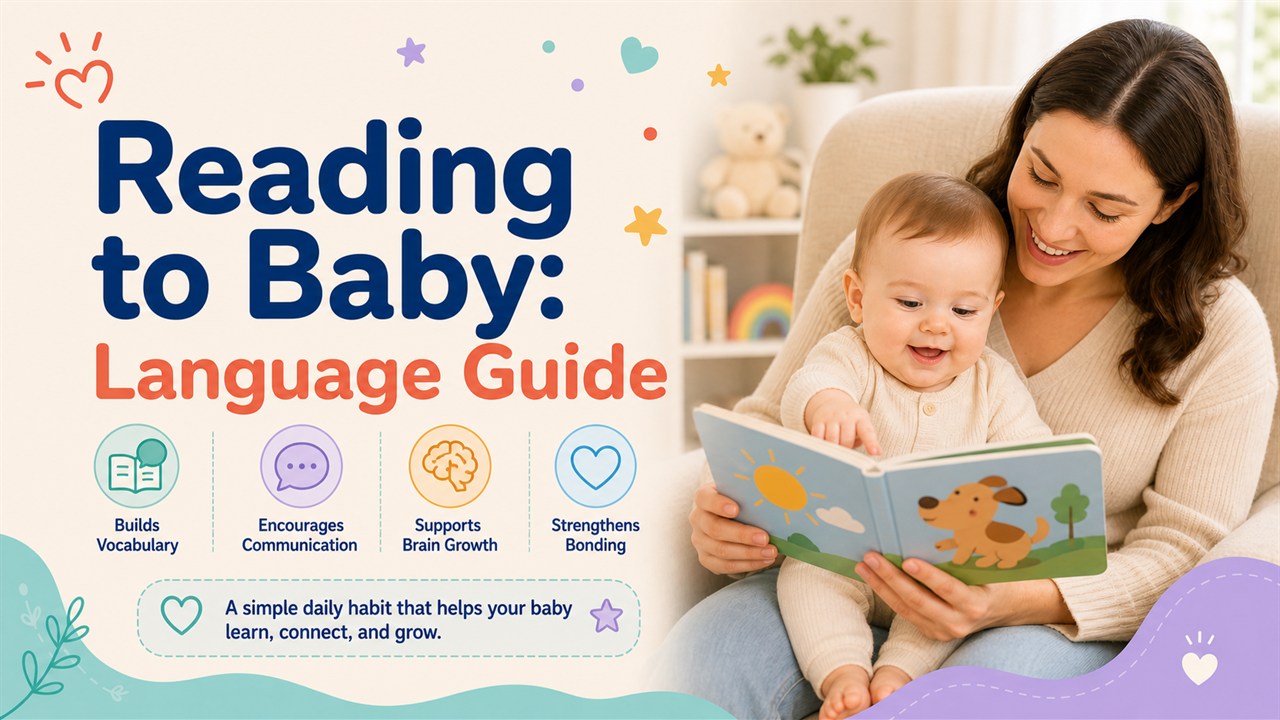
Reading also supports this skill. Hold a board book near your face, look between the picture and your baby, and react to their expressions. For more ideas, see reading to babies.
When to mention concerns
Bring up concerns with your pediatrician if your baby rarely responds to faces or voices, does not seem to make eye contact, is very hard to soothe, loses social responses they had before, or you simply feel worried. It is always reasonable to ask.
Tracking smiles, coos, and favorite games in Magerly can help you notice patterns. A note like "smiled when Dad sang" or "watched my face during bath" becomes a small record of social growth.
Your baby does not need constant entertainment. They need repeated moments of being seen, heard, and answered. A smile is one beautiful sign that the conversation has already begun.