
Safe Sleep Environment for Babies: A Practical Parent Checklist
Safe sleep advice can feel repetitive, but repetition is useful when everyone is tired. A clear setup removes guesswork at naps, bedtime, and middle-of-the-night wakeups.
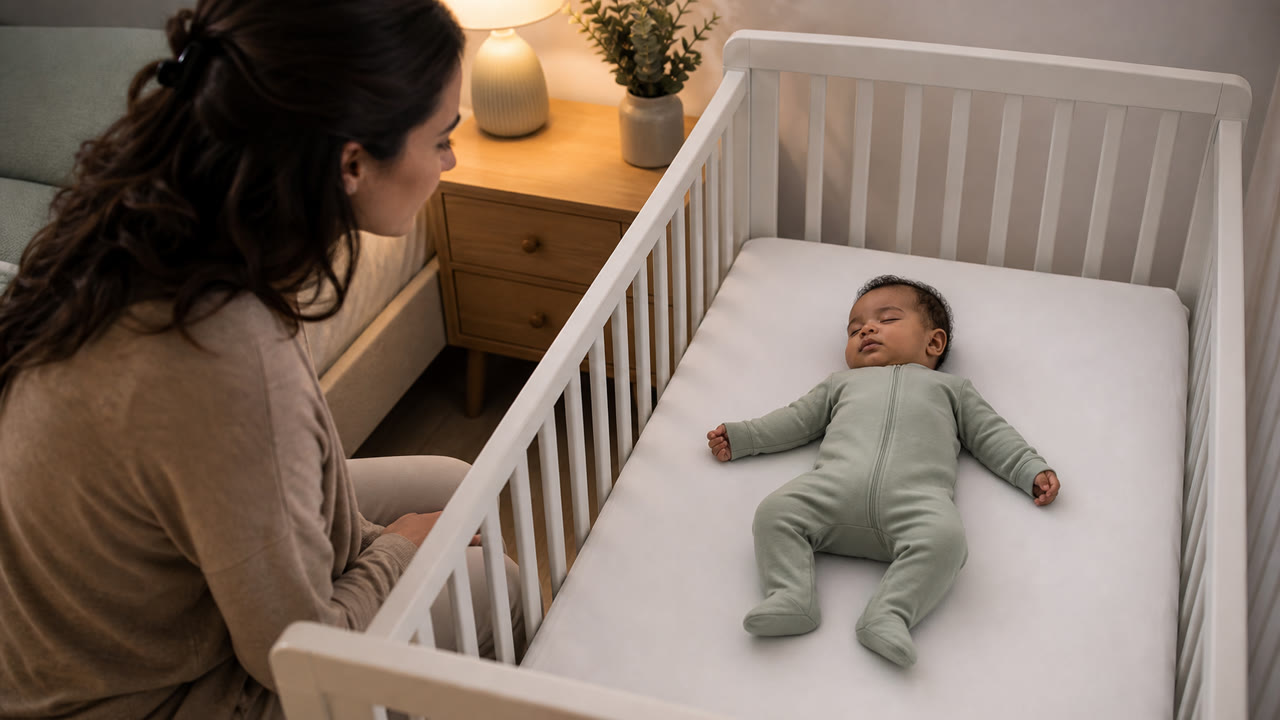
A safe sleep environment is simple on purpose. Place your baby on their back for every sleep, use a firm and flat sleep surface, and keep the sleep space free from pillows, loose blankets, bumper pads, stuffed toys, and soft objects. This applies to naps, nighttime, travel, and those moments when everyone is very tired.
This article is a practical checklist, not a replacement for medical guidance. If your baby was premature, has breathing concerns, reflux, or another health condition, ask your pediatrician how safe sleep guidance applies to your situation.
The basic setup
- Use a crib, bassinet, portable crib, or play yard that meets current safety standards.
- Choose a firm, flat mattress with a tight fitted sheet.
- Place your baby on their back at the start of every sleep.
- Keep the sleep space empty: no pillows, loose blankets, bumpers, toys, positioners, or weighted products.
- Avoid inclined sleepers and products that are not made for infant sleep.
If your baby falls asleep in a car seat, swing, stroller, carrier, or sling, move them to a firm flat sleep surface as soon as practical. Devices made for transport or soothing are not the same as a safe sleep space.
Room-sharing without bed-sharing
Many families find it easier to keep the baby in the same room, close to the adult bed, while using a separate baby sleep surface. This makes feeding and comforting easier while keeping pillows, adult bedding, and soft mattresses away from the baby.
If you feel so sleepy that you might fall asleep while feeding or holding your baby, make a plan before the night starts. Keep the crib or bassinet clear and close, and ask another adult for help when possible.
What about rolling?
Always place your baby down on their back. Once a baby can roll both ways independently, many pediatric sources say you do not need to keep turning them back all night. The sleep space still needs to stay empty, because a rolling baby can move into anything nearby.
When your baby begins trying to roll, stop swaddling and switch to a sleep sack or wearable blanket that allows free movement of the arms. Check product guidance and ask your pediatrician if you are unsure.
Warmth without loose blankets
Overheating can make sleep less safe and less comfortable. Dress your baby in light layers appropriate for the room, and use a wearable blanket if extra warmth is needed. A good rule of thumb is to check the chest or back of the neck rather than hands and feet, which can feel cool even when the baby is comfortable.
Make safe sleep part of the routine
A routine helps because it makes the safe choice automatic: diaper, feed, short song, into the crib on the back. Use the same setup for naps and bedtime so grandparents, babysitters, and tired parents all know the plan. For broader sleep rhythm help, see our baby sleep schedule guide.
Safe sleep is not about perfection. It is about making the safest option the easiest option, especially when you are exhausted. Keep the surface firm, flat, separate, and clear, then ask for support when the nights feel unmanageable.