
Baby Overstimulation Signs: How to Notice and Help
A busy room, several new faces, an exciting game, or simply a long awake period can become too much for a baby whose nervous system is still learning to organize experience.

Overstimulation is not a parenting failure, and it does not mean your baby dislikes play or people. It means the amount, speed, or intensity of input has exceeded what they can comfortably process at that moment.
Signals can be subtle
Early signs may include looking away, becoming suddenly still, yawning, hiccupping, rubbing the face, arching, spreading fingers, jerky movements, or losing interest. Crying and frantic movement may appear later. Hunger, discomfort, pain, and tiredness can look similar, so consider the whole situation.
Lower the sensory load
- Pause the game and move to a quieter, dimmer place.
- Use a steady voice and slower movements.
- Hold or rock your baby if they seek contact; give space if they turn away.
- Offer familiar feeding or sleep routines when those needs are likely.
Try changing one thing at a time and wait. A fast sequence of bouncing, shushing, toys, and position changes can add more input. Our co-regulation guide explains how your calm presence helps.
Plan for high-input days
During travel, celebrations, or visitors, leave room for feeds, naps, floor time, and a quiet retreat. If crying is unusual, persistent, accompanied by fever, breathing difficulty, poor feeding, unusual sleepiness, or you suspect pain, contact a healthcare professional rather than assuming overstimulation.
Common triggers by age and situation
For a newborn, several visitors, bright lights, frequent passing from person to person, or a long wake window may be enough. An older baby may become overloaded by a busy play space, noisy restaurant, long shopping trip, or several toys presented at once. The same activity can be enjoyable one day and too much the next.
Thresholds often become lower when a baby is hungry, teething, unwell, recovering from a vaccination, learning a new skill, or sleeping poorly. Before removing every stimulating activity, ask whether timing, duration, or the number of competing inputs can be adjusted.
Early, middle, and late cues
- Early: looking away, slower movement, staring into space, yawning, or losing interest.
- Building: finger spreading, squirming, arching, rubbing the eyes, hiccups, or abrupt movements.
- Late: intense crying, frantic kicking, pushing away, or difficulty accepting comfort.
Acting at the early stage usually requires less effort. Pause, lower your voice, and allow a few quiet minutes. If you notice the signs late, do not add guilt to the situation. A baby can still recover with time and steady support.
Build a low-stimulation reset
Choose a familiar place, reduce conversation, dim harsh light, and remove extra toys. Hold the baby upright against your body if they want contact, or place them safely on a mat if being held makes them push away. Slow walking, humming, or stillness may work better than rapid bouncing.
A reset is not a rigid routine. Try one response for a minute or two while watching breathing, muscle tension, and eye contact. Then adapt. Feeding can help when hunger is likely, but it does not need to become the automatic response to every difficult moment.
Prevention without avoiding life
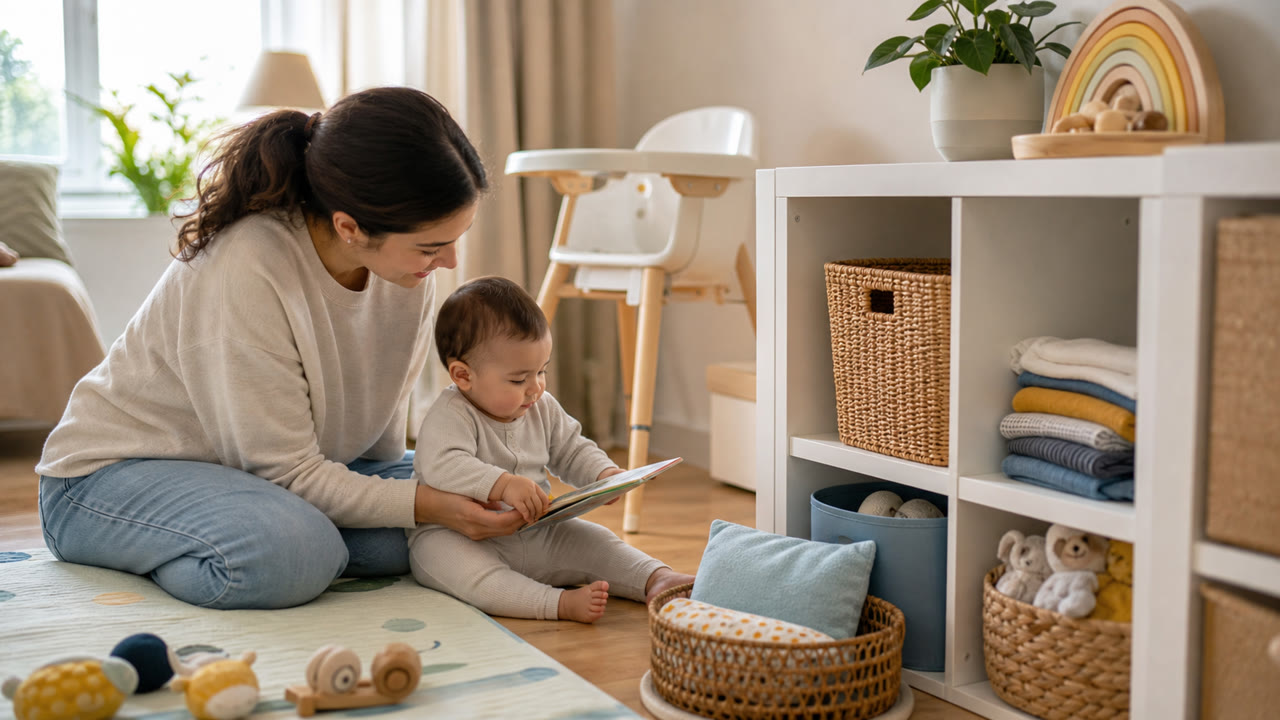
Bring a carrier or stroller canopy for a visual break, schedule a quiet period after an outing, and tell visitors that the baby may need pauses. At home, rotate a few toys instead of displaying everything. During play, wait for the baby to re-engage before adding a new sound or movement.
Seek medical advice when behavior changes suddenly, your baby is difficult to wake, cannot feed normally, has trouble breathing, has a fever, vomits repeatedly, or cries in a way that suggests pain. Overstimulation is common, but it should not become an explanation for signs of illness.
Common questions about overstimulation
Is overstimulation the same as overtiredness?
They overlap but are not identical. Overtiredness comes from being awake longer than the baby can manage; overstimulation comes from more sensory or social input than the baby can process. A long busy wake period can produce both at once.
Should I leave a gathering immediately?
Not always. First try a quieter room, fewer people, dimmer light, or a familiar hold. If the baby cannot settle or repeatedly becomes distressed, leaving may be the kindest choice. Planning an exit is not a failure.
Do sensitive babies need less play?
They need play matched to their pace. Offer one simple activity, wait for engagement, and stop at early cues. Sensitive babies still benefit from movement, conversation, and exploration when these arrive in manageable amounts.
How long does recovery take?
Some babies settle within minutes; others need feeding, sleep, or a long quiet period. Watch the child's breathing, body tension, gaze, and ability to reconnect rather than expecting a fixed recovery time.