
Baby Hearing Development: What Babies Notice and How to Respond
Babies begin listening before birth, then spend the first year connecting familiar voices and everyday sounds with people, places, and meaning.
Hearing supports language, social connection, and awareness of the environment. Development varies, and a baby may respond differently when tired, hungry, deeply focused, or in a noisy room. Look for patterns across ordinary days rather than testing with sudden loud sounds.
How responses change
Newborns may startle, blink, pause sucking, or become still after a sound. Over the next months, babies often quiet to a familiar voice, turn toward sound, and begin experimenting with coos and babbles. Later, they may respond to their name and recognize familiar words before they can say them.
Support listening naturally
- Talk during feeding, dressing, and walks using a warm, varied voice.
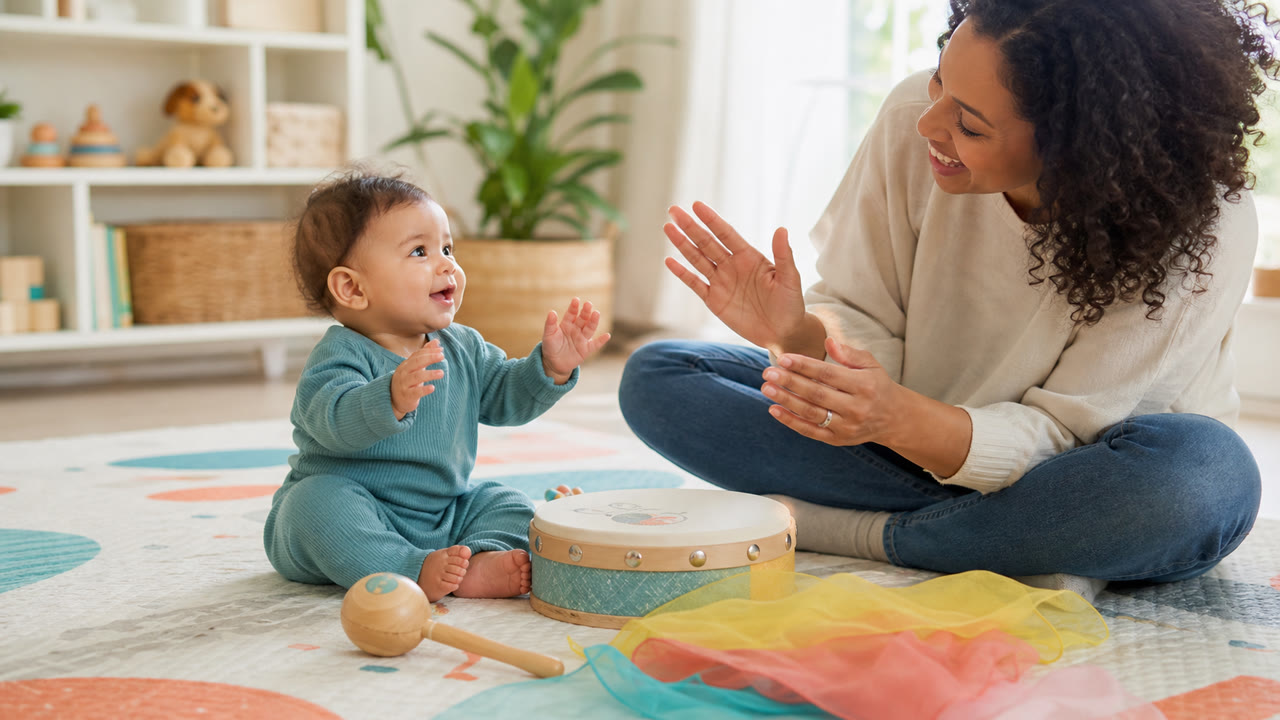
- Sing short songs and pause so your baby can move or vocalize back.
- Offer safe sound-makers one at a time and keep volume gentle.
- Reduce background television or music when you want to share attention.
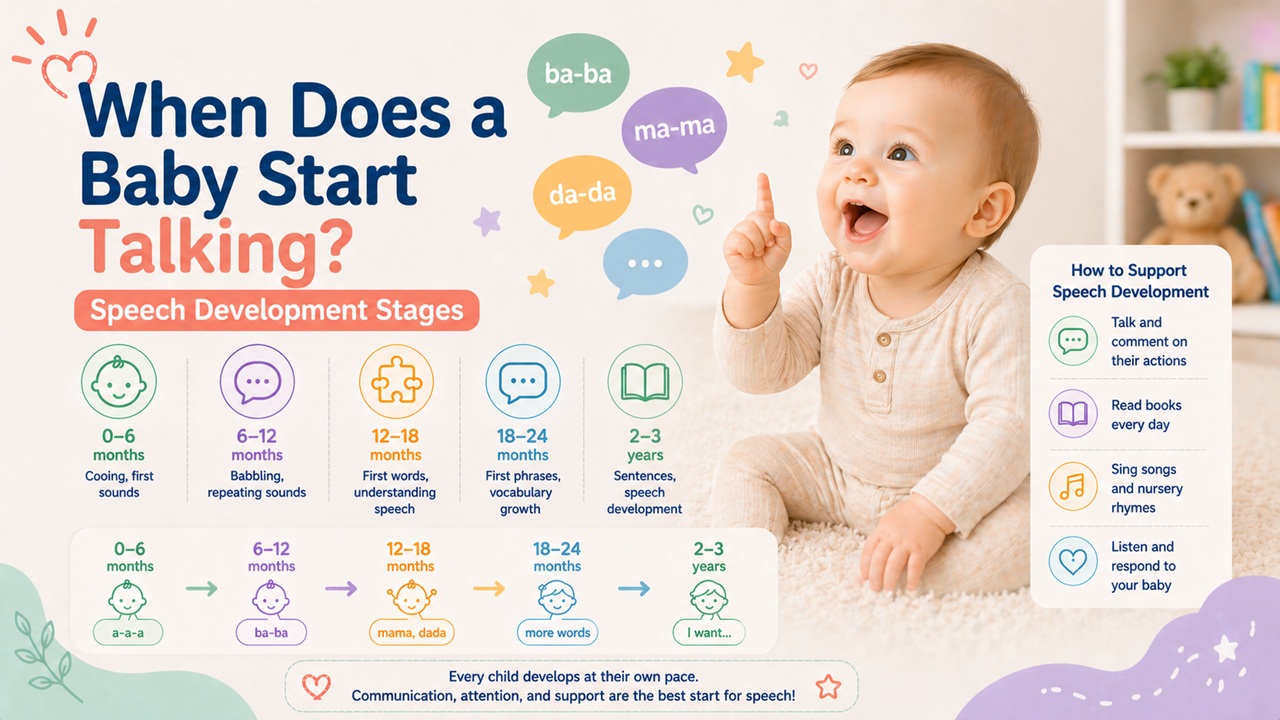
Listening and early speech grow together. See our guide to baby language development for more responsive conversation ideas.
Screening and reasons to follow up
A newborn hearing screen is an important first check, but hearing can change later. Contact your pediatrician or hearing specialist if your baby rarely reacts to sound, responds only from one side, stops responding as before, or you have any concern. Early assessment gives families clearer information and earlier access to support.
A practical timeline for the first year
During the first three months, many babies react to a sudden sound, settle to a familiar voice, or change their sucking rhythm when someone speaks. From about four to six months, they may search for a voice, enjoy squeals, and notice changes in tone. In the second half of the year, turning toward quieter sounds, responding to a name, and copying speech-like rhythms become more noticeable.
These are broad patterns, not a pass-or-fail checklist. Prematurity, ear infections, temperament, and the setting can affect what you see. Use corrected age when your pediatrician recommends it, and compare your baby with their own earlier responses rather than with a single online timeline.
Everyday listening games
- Speak from one side, pause, and give your baby time to look or turn before changing position.
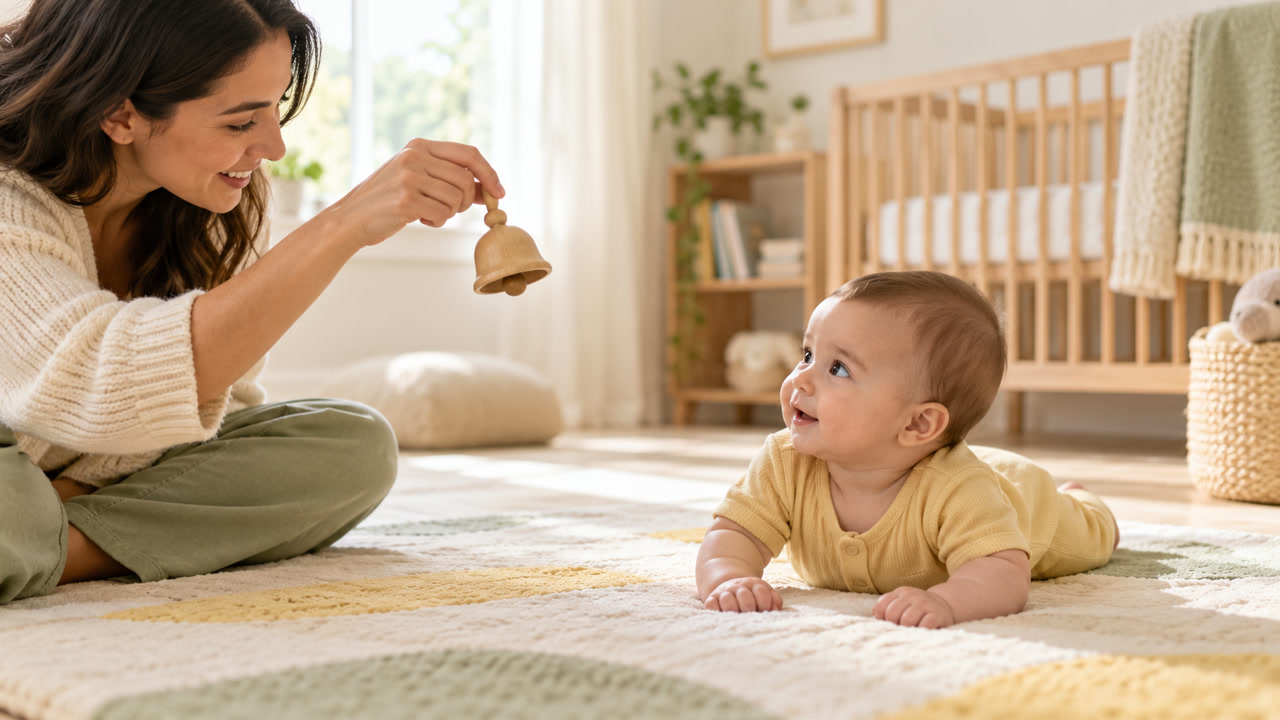
- Make a gentle sound with a rattle, then show the object so sound and source connect.
- Repeat a syllable your baby makes and wait for another turn.
- Name familiar sounds such as running water, a closing door, birds, or a washing machine.
Keep toys outside the mouth and away from the ears, and avoid loud demonstrations. If adults need to raise their voices over a toy, television, or music, the environment is too loud for useful listening practice.
Understanding newborn hearing screening
A pass means the screening found a typical response at that time; it does not guarantee that hearing will always remain unchanged. A refer result does not confirm hearing loss. Fluid, movement, or test conditions can affect the first result, so completing the recommended follow-up is the important next step.
Keep a record of the result and any follow-up appointment. Children with certain infections, family history, NICU care, or other risk factors may need later monitoring even after an initial pass.
Signs worth discussing
Bring up concerns if your baby does not startle to very loud everyday sounds, rarely calms to familiar voices, does not turn toward sound as expected, responds more reliably on one side, or stops making sounds they used before. Repeated ear infections, persistent fluid, or delayed speech also deserve attention.
Parents often notice small changes first. You do not need to prove that a problem exists before asking for an evaluation. A pediatrician, audiologist, or early-intervention service can help separate normal variation from a hearing issue and explain the next steps.
Common questions about baby hearing
Why does my baby ignore me sometimes?
A baby who is tired, feeding, watching something closely, or surrounded by noise may not respond every time. Look for a range of responses across several calm situations. Consistently absent or one-sided responses are more useful to report than a single missed turn.
Can household noise damage hearing?
Ordinary conversation and routine home sounds are generally different from prolonged high-volume exposure. Keep speakers and noisy toys away from the ears, lower background sound, and use hearing protection designed for infants at unavoidable loud events.
Can ear infections affect development?
Fluid and infection can temporarily reduce how clearly sound reaches the ear. Most children recover, but repeated infections or persistent fluid should be discussed with a clinician, especially when speech or responsiveness is also a concern.
Should I test hearing at home?
Home observations are valuable, but startling a baby with loud noises is neither precise nor safe. Record what you notice and ask for an age-appropriate professional hearing assessment when concerned.