
Baby’s First Shoes: When They Need Them and How to Choose
First shoes are mainly protection for outdoor walking, not equipment that teaches a baby to walk or shapes healthy feet.
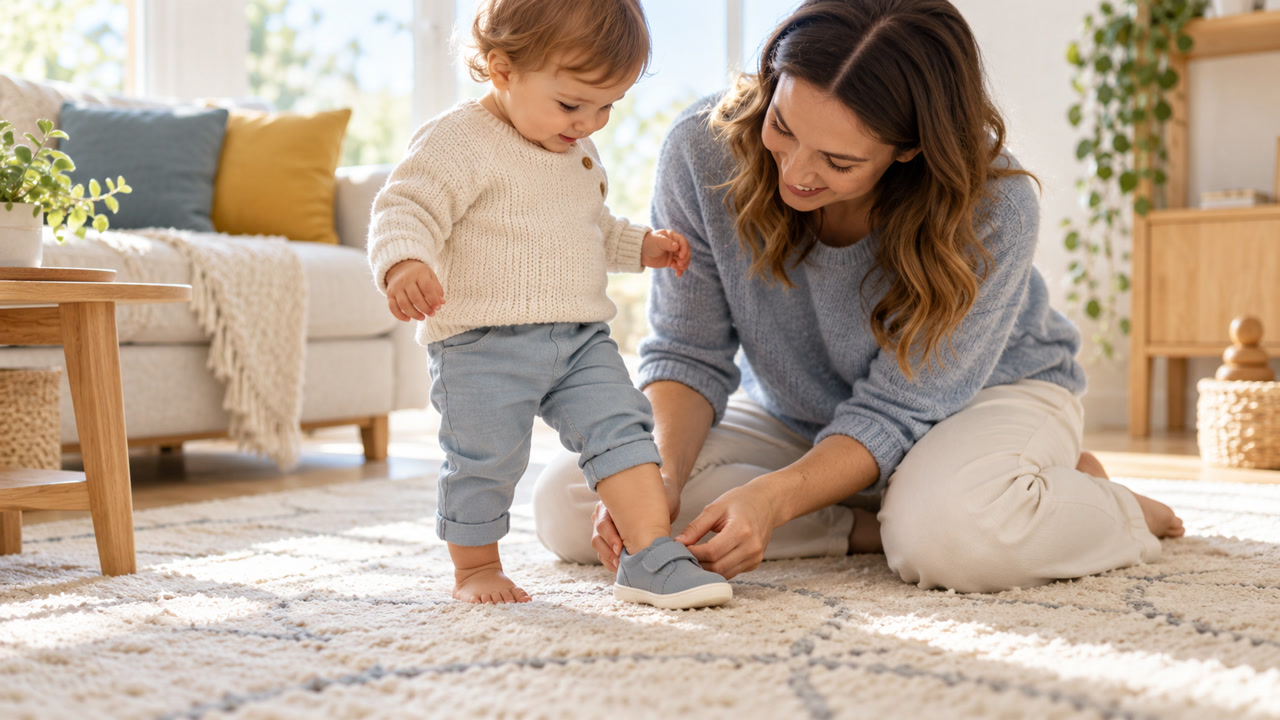
Indoors on a safe surface, barefoot practice or nonslip socks allow a new walker to feel the floor and move the feet naturally. Shoes become useful when your child is walking outside or needs protection from heat, cold, rough ground, or sharp objects.
Choose light, flexible protection
- Look for a flexible, nonslip sole that bends near the ball of the foot.
- Choose a wide toe box so toes can spread.
- Use a secure closure that holds the heel without squeezing.
- Prefer breathable, lightweight materials.
Special arches, stiff high backs, wedges, and reinforced heels are not needed for the average child unless a clinician recommends them for a specific condition.
Check the fit while standing
Measure both feet and fit the larger one. There should be room for the longest toe without the shoe sliding or the heel lifting excessively. Let your child walk in both shoes and watch for red marks, pressure, toe curling, or a changed gait.
Feet grow quickly, so inspect fit at least monthly during the first walking months. The broader timeline is covered in our baby walking milestones guide.
Know when to ask for help
Early walkers often use a wide stance and fall frequently. Talk with your pediatrician if walking is painful, one side moves very differently, your child suddenly limps, toe walking persists, or you have concerns about progress. Shoes should not be used to correct a gait problem without an assessment.
Know when shoes are actually useful
A baby who is cruising along furniture indoors does not need structured shoes for support. Bare feet provide sensory information from the floor and allow the toes to grip and adjust. Nonslip socks or soft booties can provide warmth when the surface is cold.
Move to protective shoes when the child regularly walks outside, attends a setting that requires footwear, or encounters rough, hot, cold, or dirty surfaces. Shoes protect; they do not accelerate the walking milestone.
A fitting-room checklist
- Measure both feet while the child is standing and fit the larger foot.
- Check that the widest part of the foot aligns with the widest part of the shoe.
- Leave growing room in front without allowing the foot to slide.
- Make sure the heel stays secure and the closure does not pinch.
- Watch the child walk on a firm surface before deciding.
Shopping later in the day can account for normal foot expansion. Use the socks the child will normally wear. Size labels vary between brands, so judge the actual fit rather than buying only by the printed number.
Check shoes after purchase
During the first uses, inspect the feet for red marks, blisters, pressure at the toes, or irritated skin. Notice whether the child suddenly trips more, curls the toes, refuses the shoes, or changes the way they place one foot.
Check fit monthly because early walking feet can grow quickly. Remove stones, smooth wrinkled insoles, and replace shoes with worn nonslip tread. Hand-me-down shoes may be acceptable only when they fit correctly, remain flexible, and are not shaped heavily by the previous wearer.
Normal variation and warning signs
New walkers commonly use a wide stance, hold the arms high, take uneven steps, and fall. Flat-looking arches and some inward or outward foot position can also reflect normal development. Stiff corrective shoes are not a general solution.
Ask your pediatrician about pain, swelling, a sudden limp, persistent walking on one side of a foot, one leg working very differently, frequent falls that do not improve, or loss of a skill. An assessment should guide any specialized footwear or orthotic device.
Common questions about first shoes
Do ankle-high shoes provide better support?
Height alone does not make a shoe better for a typically developing child. Comfort, flexibility, fit, traction, and secure closure matter more unless a clinician recommends a specific design.
How much growing room is appropriate?
There should be space beyond the longest toe without the foot sliding inside. Because measuring methods vary, use a fitting guide from the brand and check the child while standing and walking.
Are sandals suitable for first walkers?
They can be when the sole is flexible and nonslip, the heel is secure, and the toes are protected for the environment. Loose flip-flops and backless styles are harder for new walkers to control.
Does a child need shoes before walking?
Usually only warmth and protection are needed. Socks or soft booties should not squeeze the toes or leave deep marks. Structured walking shoes can wait until outdoor steps begin.